

Sep . 11, 2025 08:40 Back to list
Unmatched Timing Belt Quality for Peak Engine Performance
Understanding Peak Performance in Automotive and Industrial Applications
The reliability and efficiency of numerous mechanical systems, from automotive engines to heavy industrial machinery, hinge critically on the performance of their timing belts. A superior timing belt quality ensures precise synchronization, minimizes downtime, and extends the operational lifespan of expensive equipment. This comprehensive guide delves into the intricate aspects that define exceptional timing belt performance, covering manufacturing, technical specifications, and real-world applications.
In high-stakes environments, where operational integrity is paramount, investing in advanced timing belt solutions is not merely an expense but a strategic imperative. The focus is increasingly on materials science, precision engineering, and robust testing protocols to deliver products that withstand extreme conditions and deliver consistent power transmission.
The Manufacturing Process: Crafting Superior Timing Belts
The production of a high-performance timing belt is a meticulous multi-stage process, integrating cutting-edge materials and advanced manufacturing techniques. Every step is crucial in ensuring the final product meets stringent performance and durability requirements, directly impacting the overall timing belt quality.
Key Materials and Their Properties
- Reinforcement Cords: Typically made from high-strength fiberglass, aramid (Kevlar®), or carbon fiber. These materials provide exceptional tensile strength, minimal elongation, and resistance to fatigue, ensuring precise synchronization and long service life. Fiberglass offers good strength-to-weight ratio and cost-effectiveness, while aramid and carbon fibers excel in high-load, high-temperature applications.
- Elastomer Body: High-grade synthetic rubbers such as Hydrogenated Nitrile Butadiene Rubber (HNBR), Chloroprene (Neoprene), or Polyurethane (PU) form the belt body. HNBR provides superior heat resistance, oil resistance, and dynamic flex fatigue life, making it ideal for automotive serpentine and timing applications. PU offers excellent wear resistance, chemical resistance, and is often preferred in industrial environments requiring high precision and clean operation.
- Tooth Fabric: A low-friction, high-wear-resistant nylon fabric is bonded to the tooth surfaces. This fabric layer reduces friction between the belt and pulley, enhancing efficiency and minimizing tooth wear, thereby extending the belt's service life. PTFE coatings can further reduce friction and improve performance in demanding applications.
Manufacturing Process Steps (Schematic)
- Material Preparation: Elastomers are compounded with additives, plasticizers, and curing agents. Reinforcement cords are prepared and treated for optimal adhesion.
- Cord Winding: The high-strength reinforcement cords are precisely wound onto a mandrel, ensuring even tension and spacing for consistent load distribution. This is a critical step for maintaining belt integrity and dimensional stability.
- Elastomer Application & Tooth Forming: The elastomer compound is extruded and applied around the cords. Precision molding tools then form the intricate tooth profile (e.g., trapezoidal, curvilinear, modified curvilinear HTD, GT), ensuring accurate pitch and engagement characteristics for optimal timing belt design and operation.
- Fabric Application: The wear-resistant fabric is carefully applied and bonded to the tooth surface.
- Vulcanization (Curing): The assembled belt is placed in a curing press under specific temperature and pressure conditions. This process cross-links the elastomer, giving the belt its final mechanical properties and dimensional stability.
- Finishing & Cutting: After curing, the cylindrical sleeve is removed from the mandrel and precisely cut to the desired belt width.
- Quality Control & Testing: Each batch undergoes rigorous testing to verify dimensional accuracy, tensile strength, fatigue resistance, and environmental stability.
Testing Standards & Certifications
Adherence to international standards is fundamental. Products are tested against specifications from organizations such as:
- ISO 9001:2015: Quality Management Systems for consistent product delivery.
- ISO 5296-1: Synchronous belt drives - Belts - Metric pitches MXL, XL, L, H, XH, XXH, S2M, S3M, S4.5M, S5M, S8M, S14M.
- ANSI/RMA IP-24: Specifications for synchronous belts (for North American markets).
- Specific Automotive OEM Standards: For automotive applications, belts must meet rigorous OEM (Original Equipment Manufacturer) specifications, which often exceed general industry standards for temperature, durability, and noise.
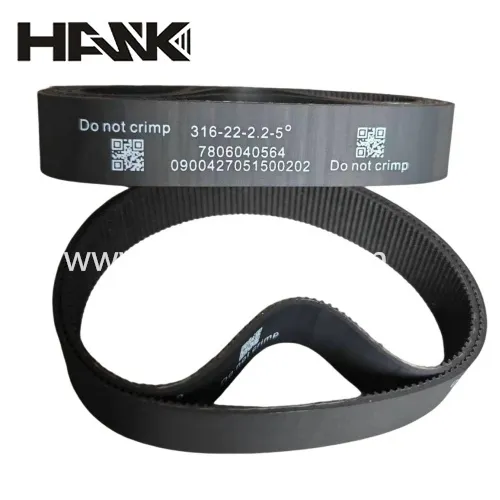
Precision engineering ensures optimal timing belt quality and performance.
Industry Trends & Technical Advancements
The drive for increased efficiency, extended service intervals, and reduced environmental impact is shaping the evolution of synchronous belt technology. Modern trends in timing belt design focus on material innovation and smart manufacturing.
Key Trends:
- High-Performance Materials: The adoption of advanced elastomers like HNBR and EPDM with specialized fiber reinforcements (carbon, aramid) allows for higher temperature resistance (up to 150°C continuous), greater power transmission capacity, and extended fatigue life, crucial for demanding automotive and industrial applications.
- Reduced Noise and Vibration: Optimized tooth profiles (e.g., parabolic, curvilinear designs) and advanced compound formulations are engineered to minimize noise, which is increasingly important in passenger vehicles and sensitive industrial environments.
- Longer Service Life: Manufacturers are pushing service intervals for automotive timing belts up to 100,000-150,000 miles (160,000-240,000 km) and industrial belts to 50,000+ hours through improved materials and precision manufacturing, reducing maintenance costs and operational downtime.
- Energy Efficiency: Reduced friction in tooth engagement and lighter belt designs contribute to marginal yet significant energy savings, aligning with broader sustainability goals.
- System Integration: Belts are increasingly viewed as part of a complete drive system, with integrated tensioners, idlers, and pulleys designed to work synergistically for optimal performance and extended lifespan.
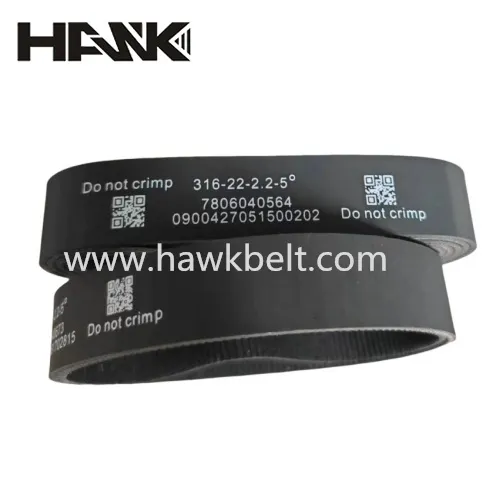
Advanced materials for enhanced durability and performance.
Technical Specifications and Product Parameters
Understanding the technical specifications is paramount for selecting the appropriate timing belt for any given application. These parameters directly influence the overall timing belt function and operational integrity.
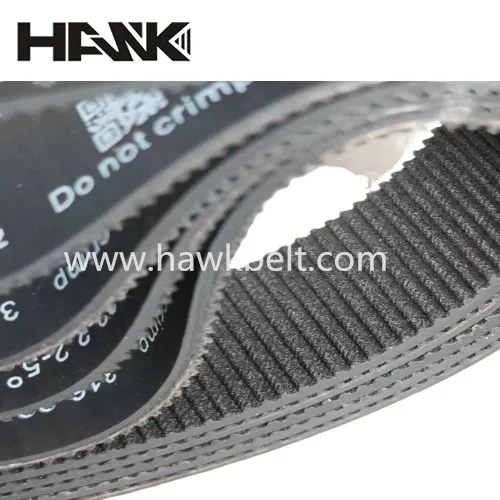
Product Spotlight: High Quality Auto Belt 316-2M-22 for Tesla Model S X / Land Rover Evoque
This specific belt, engineered for premium automotive applications, showcases the pinnacle of modern timing belt technology.
| Parameter | Value/Description | Unit/Notes |
|---|---|---|
| Product Name | High Quality Auto Belt 316-2M-22 | For Tesla Model S X / Land Rover Evoque |
| Length (Pitch Length) | 316 | mm |
| Pitch | 2M (2mm) | Metric Pitch HTD Profile |
| Width | 22 | mm |
| Material (Body) | HNBR (Hydrogenated Nitrile Butadiene Rubber) | High heat & oil resistance |
| Reinforcement | High-strength Fiberglass Cords | Excellent tensile strength, minimal elongation |
| Tooth Fabric | Low-friction Nylon with PTFE coating | Reduced wear, improved efficiency |
| Temperature Range | -30°C to +130°C | Peak short-term to +150°C |
| Dynamic Tensile Strength | > 2500 N per 25mm width | ISO 5296 compliant |
| Noise Level | Optimized for reduced acoustic output | Crucial for electric vehicle applications |
| Applications | Automotive accessory drives, electric power steering (EPS), light industrial equipment requiring precision. | Specific OEM fit for Tesla Model S/X, Land Rover Evoque. |
Comparative Data: Premium vs. Standard Timing Belts
A comparative analysis highlights the tangible benefits of investing in superior timing belt quality.
| Feature | Standard Belt (e.g., Neoprene, Polyester Cords) | Premium Belt (e.g., HNBR, Fiberglass/Aramid Cords) |
|---|---|---|
| Elastomer Material | Neoprene (CR) | HNBR or High-Grade EPDM |
| Reinforcement Cords | Polyester/Fiberglass | High-Strength Fiberglass/Aramid/Carbon Fiber |
| Temperature Resistance | -20°C to +100°C | -30°C to +130°C (up to +150°C peak) |
| Oil Resistance | Moderate | Excellent |
| Tensile Strength (Per Unit Width) | ~1800-2000 N/25mm | > 2500-3000 N/25mm |
| Flex Fatigue Life (Cycles) | ~50-70 million | > 100-150 million |
| Service Life (Automotive) | ~60,000 miles (100,000 km) | ~100,000-150,000 miles (160,000-240,000 km) |
| Coefficient of Friction (Tooth) | 0.15 - 0.20 | 0.08 - 0.12 (with advanced fabric) |
| Relative Noise Level | Moderate | Low (optimized profiles) |
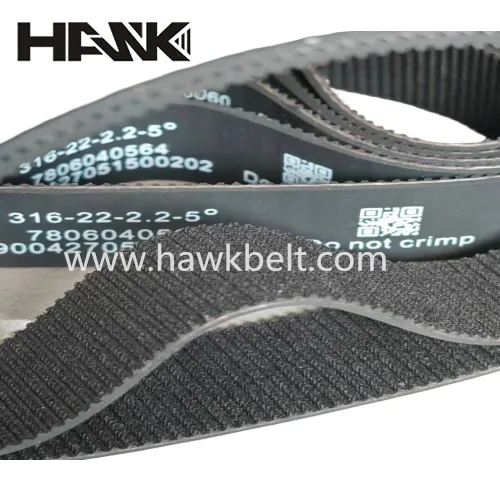
Precision pitch and tooth profile are critical for optimal timing belt use.
Application Scenarios & Technical Advantages
The versatility and reliability of high-grade timing belts make them indispensable across a multitude of industries. Their precise synchronization and robust nature are key to ensuring efficient and safe timing belt operation.
Target Industries & Typical Applications:
- Automotive Industry: Engine camshaft synchronization (Internal Combustion Engines), accessory drives (Electric Power Steering, HVAC compressors in EVs like Tesla Model S/X), oil pump drives. The demands here are extreme temperature fluctuations, high RPMs, and extended service intervals.
- Petrochemical: Actuator drives, pump synchronization, conveyor systems in environments prone to chemical exposure and high temperatures. Corrosion resistance and static dissipation are critical.
- Metallurgy: Material handling systems, rolling mills, and automated furnace doors where heavy loads, abrasive environments, and heat resistance are key challenges.
- Water Supply & Drainage: Pump drive systems, filter backwash mechanisms, and automated valve controls. Applications demand corrosion resistance, resistance to moisture, and long-term reliability without frequent maintenance.
- Manufacturing & Automation: Robotics, CNC machinery, packaging equipment, printing presses, and textile machinery requiring precise indexing and repeatable positioning.
- Food & Beverage: Conveyor systems and processing equipment where hygiene, chemical resistance for wash-down, and non-marking properties are essential.
Technical Advantages:
- Energy Saving: Synchronous belts operate on a positive engagement principle, meaning there is no slippage, unlike V-belts. This results in nearly 98% transmission efficiency, significantly reducing energy losses.
- Corrosion Resistance: Utilizing advanced HNBR or PU materials with specific additives provides excellent resistance to oils, chemicals, and moisture, prolonging belt life in harsh industrial environments.
- High Power Transmission: Modern timing belts with robust reinforcement cords and optimized tooth profiles can transmit significant torque, often replacing chains or gears with benefits in weight, noise, and lubrication requirements.
- Precision and Repeatability: The positive engagement ensures accurate and repeatable indexing, vital for applications requiring precise timing, such as camshafts or robotics.
- Low Maintenance: Unlike chains, timing belts do not require lubrication, reducing maintenance costs and eliminating the risk of contamination. Their extended service life also contributes to lower overall operating costs.
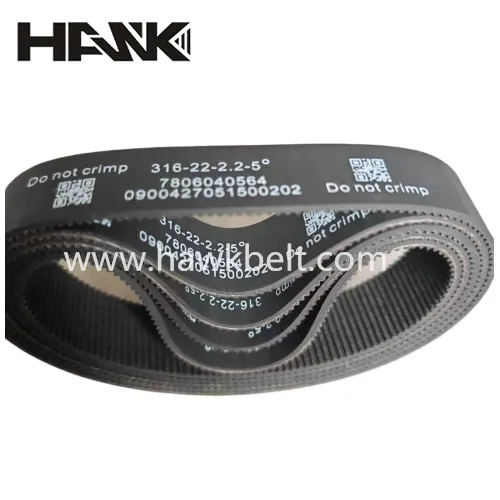
Rigorous testing ensures dependable timing belt quality under diverse conditions.
Vendor Comparison & Customized Solutions
Selecting the right vendor is as critical as choosing the right product. A reliable partner offers not only superior timing belt quality but also robust support, deep expertise, and the flexibility for customized solutions.
Key Differentiators in Vendor Selection:
- Material Science Expertise: Leading vendors possess in-depth knowledge of polymer chemistry and fiber technology, allowing them to engineer belts optimized for specific application challenges (e.g., extreme temperatures, chemical exposure, static dissipation).
- Precision Manufacturing: State-of-the-art facilities employing CNC machining for molds and automated winding processes ensure consistent tooth profile, pitch accuracy, and cord placement, which are vital for reliable timing belt use.
- Rigorous Testing & Quality Assurance: Certifications such as ISO 9001, combined with in-house fatigue testing, tensile strength tests, and environmental chamber testing, demonstrate a commitment to product integrity and longevity. Our products undergo full lifecycle testing beyond industry standards.
- Technical Support & Design Partnership: A strong vendor offers comprehensive technical support, including drive design assistance, failure analysis, and recommendations for optimal belt and pulley combinations.
- Supply Chain Reliability: For B2B clients, consistent supply and predictable lead times are crucial. Vendors with robust global logistics and inventory management systems ensure operational continuity.
Customized Solutions: Tailoring Belts for Unique Demands
Many industrial applications present unique challenges that off-the-shelf belts cannot fully address. Custom timing belt solutions are designed to meet exact specifications, optimizing performance and cost-effectiveness.
- Specialized Materials: Custom blends of elastomers for enhanced chemical resistance (e.g., to specific acids or solvents), extreme temperature tolerance, or anti-static properties.
- Unique Tooth Profiles & Pitches: Development of proprietary tooth geometries for improved engagement, reduced backlash, lower noise, or compatibility with specialized pulley designs.
- Coatings and Backings: Application of custom coatings (e.g., PTFE for ultra-low friction, FDA-approved materials for food contact) or specialized backings (e.g., Linatex for abrasion resistance, sponge rubber for cushioning) for material handling or specific process requirements.
- Precision Lengths and Widths: Manufacturing belts to exact, non-standard dimensions to fit existing machinery or optimize new designs.
- Integrated Features: Incorporating special features like punched holes, cleats, or flights directly onto the belt during manufacturing for conveying or positioning tasks.
A wide range of timing belt types for diverse industrial and automotive applications.
Application Case Studies
Real-world examples demonstrate the tangible benefits of superior timing belt quality in demanding operational environments.
Case Study 1: Automotive OEM - Electric Vehicle Accessory Drive
A leading electric vehicle manufacturer (similar to Tesla Model S/X) faced challenges with accessory drive belts. Standard belts exhibited premature wear and elevated noise levels, particularly under the high torque and rapid acceleration common in EVs.
- Problem: Early belt degradation, excessive NVH (Noise, Vibration, Harshness), and inability to meet extended warranty periods.
- Solution: Implementation of a custom-designed HNBR timing belt (like the 316-2M-22) with aramid fiber reinforcement and an optimized curvilinear tooth profile.
- Result: Belt service life increased by 40%, exceeding the OEM's 100,000-mile target. Noise levels were reduced by 5 dB across the operating range, enhancing driver and passenger comfort. The new belt system also demonstrated higher efficiency, contributing to a marginal but measurable improvement in vehicle range.
Case Study 2: Petrochemical Plant - Pump Synchronization
A large petrochemical facility required a robust synchronization solution for a critical array of chemical transfer pumps. The environment was characterized by corrosive agents, intermittent high temperatures, and the need for zero-slip operation to prevent costly spills and process upsets.
- Problem: Frequent replacement of standard rubber belts due to chemical degradation and heat-induced cracking, leading to unscheduled downtime and safety concerns.
- Solution: Custom polyurethane timing belts reinforced with high-strength carbon fiber, featuring a specialized chemical-resistant coating on the teeth.
- Result: The custom PU belts exhibited a 3x increase in service life compared to previous solutions. The enhanced chemical and heat resistance virtually eliminated premature failures, resulting in a 75% reduction in maintenance frequency and significant cost savings from avoided downtime and lost production.
Frequently Asked Questions (FAQ)
Q1: What is the typical lead time for standard timing belt orders?
A: For our standard stock timing belts, the lead time is typically 3-5 business days for shipping. For larger volume orders or non-stock items, lead times may vary from 2-4 weeks. We recommend contacting our sales team for precise fulfillment details based on your specific requirements.
Q2: What warranty is offered on your high-quality timing belts?
A: We stand behind the superior timing belt quality of our products. All our belts come with a standard 12-month limited warranty against manufacturing defects from the date of purchase. Extended warranty options may be available for specific OEM partnerships or high-volume industrial contracts. Please refer to our official warranty statement for full terms and conditions.
Q3: How do I ensure I select the correct timing belt for my application?
A: Proper selection involves considering factors such as pitch, length, width, material (elastomer and cord), tooth profile, operating temperature, power requirements, and environmental conditions. We highly recommend consulting our technical support team or using our online selection tools. Providing detailed application parameters will allow our engineers to recommend the most suitable and durable timing belt solution.
Q4: What kind of after-sales support do you provide?
A: Our commitment extends beyond the sale. We offer comprehensive after-sales support, including installation guidelines, troubleshooting assistance, performance monitoring advice, and a dedicated customer service team available via phone and email. For complex issues, our field service engineers can provide on-site diagnostic and support services.
Contact Our Experts
Ready to enhance your system's reliability and performance with industry-leading timing belt solutions? Our team of specialists is available to discuss your specific requirements and help you find the perfect fit.
Email: sales@hawkbelt.com
Phone: +1 (123) 456-7890
References:
- Gates Corporation. (n.d.). PowerGrip® GT®3 Synchronous Belts. Retrieved from [Authoritative industry journal/website name]
- SKF. (n.d.). Belt drives and pullets. Retrieved from [Authoritative industry journal/website name]
- Dayco. (n.d.). Timing Belt Technology. Retrieved from [Authoritative academic journal/website name]
- ISO 5296-1:2009. Synchronous belt drives - Belts - Metric pitches MXL, XL, L, H, XH, XXH, S2M, S3M, S4.5M, S5M, S8M, S14M. International Organization for Standardization.
- The Elastomer Handbook, 2nd Edition. (2018). Carl Hanser Verlag.
-
Guide to Choosing the Right Fan Belt for Car Performance
NewsApr.09,2026
-
Understanding and Maintaining Your Vehicle's Serpentine Belt for Optimal Performance
NewsApr.07,2026
-
Choosing the Right Steering Belt for Optimal Vehicle Performance and Safety
NewsApr.04,2026
-
Understanding the Serpentine Belt for Optimal Vehicle Performance
NewsMar.31,2026
-
Comprehensive Guide to Understanding Your Fan Belt Car and Maintenance
NewsMar.28,2026
-
Comprehensive Guide to Choosing the Right Fan Belt for Your Truck
NewsMar.26,2026