

Mar . 28, 2026 02:05 Back to list
Comprehensive Guide to Understanding Your Fan Belt Car and Maintenance
Understanding Your Fan Belt Car: A Comprehensive Guide
Your car’s fan belt, also known as a serpentine belt, is a critical component responsible for powering essential systems like the alternator, power steering pump, and air conditioning compressor. A failing fan belt car can lead to overheating, power steering failure, and a dead battery. This guide will explore the function of fan belts, signs of wear, replacement intervals, and how to choose the right belt for your vehicle. Understanding your fan belt and performing regular inspections can save you from costly repairs down the road. Ensuring proper functionality is paramount for a safe and reliable driving experience.
The Crucial Role of a Fan Belt Car
The fan belt acts as the engine's lifeline, transferring power from the crankshaft to various accessories. Without a functioning belt, your alternator won't charge the battery, the power steering will become difficult, and your air conditioning will cease to operate. Modern vehicles often use a single serpentine belt to drive multiple components, while older cars may have multiple V-belts. Choosing a high-quality fan belt from a reputable manufacturer like HawkBelt ensures reliable performance and longevity.
Key Benefit: A correctly functioning fan belt prevents overheating, maintains electrical systems, and keeps your vehicle comfortable, especially during extreme weather conditions.
Recognizing the Signs of a Worn Fan Belt
Identifying a failing fan belt is crucial for preventing breakdowns. Common signs include: squealing or chirping noises (especially when starting the engine or using accessories), visible cracks or fraying on the belt's surface, glazing or shiny appearance, and difficulty steering or a dimming dashboard light. If you notice any of these symptoms, it's time to inspect and potentially replace the belt. Ignoring these warning signs can lead to complete belt failure and significant engine damage. Proactive maintenance is always the best approach.
Warning Signs to Look For:
• Squealing or chirping noises
• Visible cracks or fraying
• Glazing or shiny appearance
• Difficulty steering or dimming lights
V-Belt vs. Serpentine Belt: Understanding the Differences
Older vehicles typically used multiple V-belts to drive individual accessories. These belts are shaped like a "V" and are prone to slippage and require regular adjustments. Modern vehicles predominantly use a single serpentine belt, which is wider and flatter, providing more efficient power transfer and requiring less maintenance. The serpentine belt design also allows for automatic tensioning, reducing the risk of slippage. Selecting the correct belt type for your vehicle is critical for optimal performance.
Choosing the Right Fan Belt Car for Your Vehicle
Selecting the correct fan belt is critical for ensuring optimal performance and longevity. Refer to your vehicle's owner's manual to identify the correct belt type and size. Consider the material of the belt – rubber, EPDM, or reinforced polymer – each offering varying degrees of durability and resistance to wear. Investing in a high-quality belt from a trusted brand like HawkBelt ensures you receive a reliable and long-lasting product.
Replacement Intervals and Professional Inspection
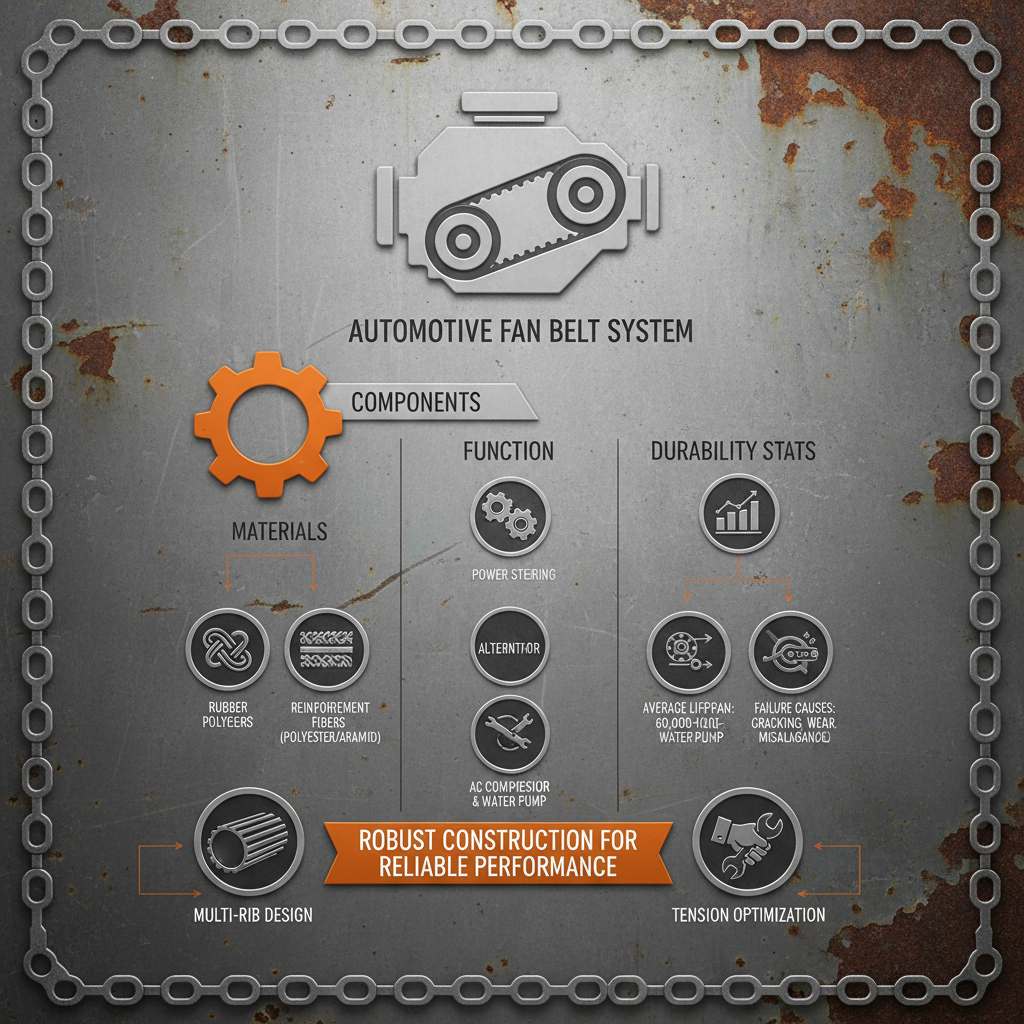
Most manufacturers recommend replacing the fan belt every 60,000 to 100,000 miles. However, this interval can vary depending on driving conditions and belt quality. Regularly inspect the belt for signs of wear, and consider having a professional mechanic inspect it during routine maintenance. A mechanic can accurately assess the belt's condition and recommend replacement if necessary. Preventative maintenance is significantly cheaper than dealing with a broken belt and potential engine damage.
Conclusion: Maintaining Your Vehicle with a Reliable Fan Belt
Investing in a quality fan belt and performing regular inspections are essential for ensuring your vehicle's reliability and preventing costly repairs. By understanding the signs of wear and choosing the right belt for your vehicle, you can enjoy a safe and smooth driving experience. Don't wait for a breakdown – prioritize your vehicle's maintenance today!
Frequently Asked Questions (FAQs)
How often should I replace my fan belt?
Generally, a fan belt should be replaced every 60,000 to 100,000 miles or every 3-5 years, whichever comes first. However, factors like driving conditions, climate, and belt quality can influence this interval. It's best to check your vehicle’s owner’s manual for specific recommendations. Regular visual inspections are also crucial – if you notice any signs of wear, replace the belt immediately, regardless of mileage. A proactive approach can prevent unexpected breakdowns and potential engine damage. Choosing a high-quality fan belt can also extend its lifespan.
Can I replace a fan belt myself?
Replacing a fan belt can be a DIY project for experienced car owners with the right tools and knowledge. However, it involves working with engine components and potentially dealing with tensioners and pulleys. If you're not comfortable with these tasks, it's best to leave it to a qualified mechanic. Incorrect installation can lead to belt slippage, engine damage, or even injury. Proper tensioning of the belt is crucial for optimal performance and longevity.
What is the cost of replacing a fan belt?
The cost of replacing a fan belt varies depending on the vehicle's make and model, the type of belt used, and labor rates. Typically, you can expect to pay between $100 and $300 for both the belt and the labor. The price of the belt itself can range from $20 to $100, depending on the quality and brand. Choosing a reputable mechanic and using a high-quality belt like those offered by HawkBelt can ensure a long-lasting repair.
What happens if a fan belt breaks while driving?
If a fan belt breaks while driving, several critical systems will stop functioning. This can lead to overheating, power steering failure, and a dead battery. If overheating occurs, pull over immediately and turn off the engine to prevent engine damage. A broken fan belt can also cause the vehicle to lose power and potentially stall. In some cases, it may be possible to limp the vehicle to a safe location, but it's always best to have it towed to a mechanic. Regular inspections and timely replacement can prevent this dangerous situation.
-
Comprehensive Guide to Selecting High Performance drive belts
NewsApr.16,2026
-
Guide to Choosing the Right Fan Belt for Car Performance
NewsApr.09,2026
-
Understanding and Maintaining Your Vehicle's Serpentine Belt for Optimal Performance
NewsApr.07,2026
-
Choosing the Right Steering Belt for Optimal Vehicle Performance and Safety
NewsApr.04,2026
-
Understanding the Serpentine Belt for Optimal Vehicle Performance
NewsMar.31,2026
-
Comprehensive Guide to Understanding Your Fan Belt Car and Maintenance
NewsMar.28,2026