

Nov . 06, 2025 12:20 Back to list
Timing Belt Motor | Precision Motion, Quiet High Torque
A Field Note on the Timing Belt Motor in EPS and Beyond
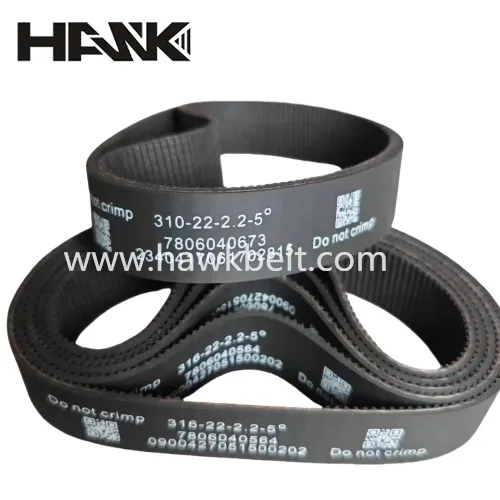
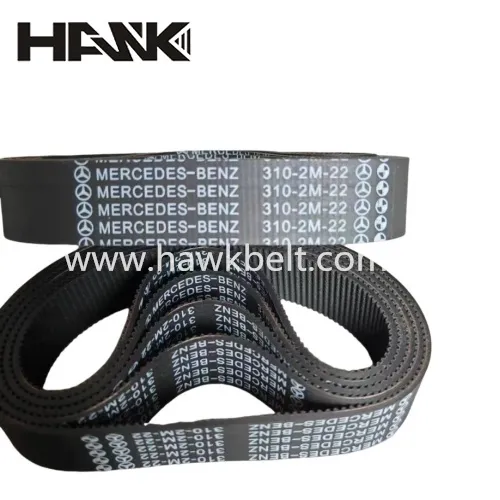
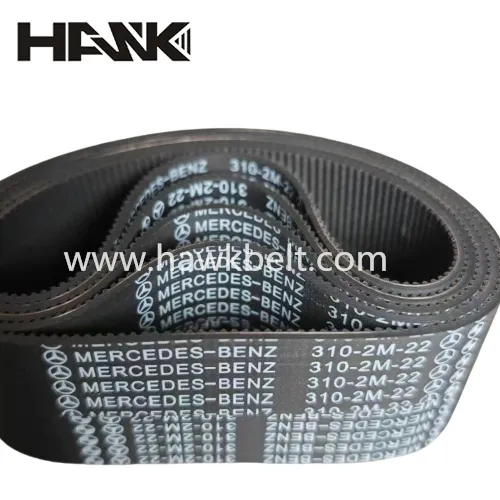
If you’ve ever torn down an electric power steering (EPS) module on a Mercedes W166 or W205, you know the “motor” part gets all the glory while the humble belt quietly does the precision work. To be honest, that’s where reliability lives. The Steering Rack Belts 310-2M-22 (OE: 310-2M-22) is a tidy example: a compact synchronous belt designed for EPS drive transfer—lightweight, quiet, and surprisingly tough.
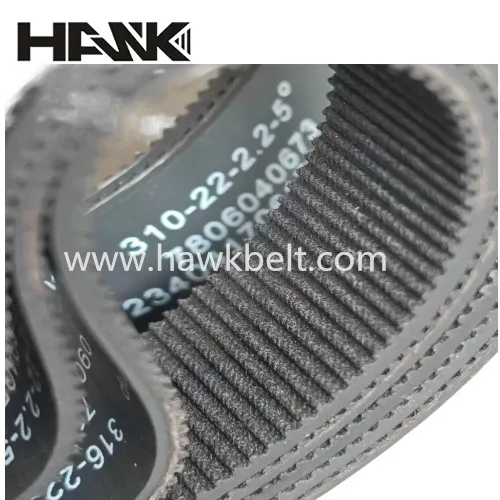
Industry trend check: OEMs are shifting from chain and gear sets to belts in low-noise assist systems. The reason is simple—predictable tooth engagement and lower NVH. In fact, many customers say belt-driven EPS “just feels cleaner” on center. And yes, service teams like the predictable wear pattern.
Product snapshot: Steering Rack Belts 310-2M-22
| Pitch / Profile | 2M (2 mm), synchronous |
| Tooth Count | 310 |
| Width | 22 mm |
| Materials | CR / HNBR rubber, polyamide tooth fabric, glass/aramid cord (as specified) |
| Weight | ≈0.22 kg (real-world use may vary) |
| Models | Mercedes-Benz W166/W205/W212/W218/W222/W447; multi-brand cross: Toyota, Hyundai, Peugeot, Kia, Mitsubishi, Honda, Subaru, BMW, BENZ |
Where it fits in the Timing Belt Motor conversation
In EPS modules, a compact motor drives a 2M belt which actuates the rack. That makes the belt the critical torque translator. HNBR brings heat and oil resistance; CR offers cost-effective damping. Temperature ranges: CR ≈ −30°C to +100°C; HNBR ≈ −40°C to +140°C. Tooth shear is the key failure mode—hence the fabric overlay and controlled cord tension.
Process flow (how it’s made)
- Compounding: CR/HNBR blended to ASTM D2000 call-outs; additive package tuned for ozone and oil.
- Calendaring: polyamide fabric for tooth face; adhesion promoters applied.
- Cord layup: glass or aramid cords set to pitch control (runout ≤0.3 mm typical).
- Molding & vulcanization: controlled cure; post-grind for tooth geometry.
- QA: tensile (ISO 37), elongation, tooth shear, pitch tolerance, 100% visual + optical inspection.
Testing, certifications, and service life
Typical lab data (HNBR variant): tensile ≥12 MPa; elongation ≥150%; tooth shear >650 N (22 mm strip); noise Δ ≤1.5 dB(A) vs. benchmark at 1 m; heat aging per ISO 188 shows
Applications and feedback
- Passenger vehicles (EPS assist on W166/W205/W212/W218/W222/W447)
- Light EV conversions using belt-driven steering assist
- Bench rigs for motor-in-loop testing (low backlash needed)
What technicians say: “Drop-in fit, quieter on cold start,” and “no glazing after 30k km check.” I guess that’s what you want to hear.
Vendor comparison (quick take)
| Vendor | Certs | Lead Time | Customization | Notes |
|---|---|---|---|---|
| HawkBelt (Hebei, China) | IATF 16949, RoHS/REACH | 7–15 days | HNBR/CR mix, cord type, private label | Strong EPS niche, fair MOQ |
| Generic Import | Mixed | 14–30 days | Limited | Price-led; variable QA |
| OEM Dealer | OEM spec | Stock/fast | None | Highest price; consistent |
Customization and sourcing
From No. 386 Xuyang Avenue, Renze District, Xingtai City, Hebei Province, China, the factory supports logo emboss, HNBR upgrades, and cord swaps (glass → aramid) for higher tooth shear. For tight packaging in Timing Belt Motor drives, ask for low-friction tooth fabric and noise-optimized profiles.
Case notes
- Taxi fleet (W212): belt upgrade to HNBR reduced cold squeal; no visible tooth wear at 60k km check.
- Reman shop: mixed-brand EPS racks standardized on 310-2M-22 width 22 mm—inventory simplified, fewer comebacks.
Bottom line: for compact assist drives and the broader Timing Belt Motor ecosystem, geometry accuracy and rubber chemistry beat raw motor torque every time.
References
- IATF 16949:2016 – Automotive Quality Management Systems.
- ASTM D2000 – Classification System for Rubber Products in Automotive Applications.
- ISO 37 – Rubber, vulcanized or thermoplastic — Determination of tensile stress-strain properties.
- ISO 188 – Rubber, vulcanized or thermoplastic — Accelerated ageing and heat resistance tests.
- DIN 7721-1 – Toothed belt drives — Terminology and definitions.
- EU RoHS Directive 2011/65/EU and REACH (EC) No 1907/2006 for material compliance.
-
Comprehensive Guide to Selecting High Performance drive belts
NewsApr.16,2026
-
Guide to Choosing the Right Fan Belt for Car Performance
NewsApr.09,2026
-
Understanding and Maintaining Your Vehicle's Serpentine Belt for Optimal Performance
NewsApr.07,2026
-
Choosing the Right Steering Belt for Optimal Vehicle Performance and Safety
NewsApr.04,2026
-
Understanding the Serpentine Belt for Optimal Vehicle Performance
NewsMar.31,2026
-
Comprehensive Guide to Understanding Your Fan Belt Car and Maintenance
NewsMar.28,2026