

Oct . 14, 2025 10:12 Back to list
Rubber Timing Belt – Durable, Quiet, OEM-Grade Precision
Inside the 24312-33040 Auto Synchronous Belt: What’s Really Driving Reliability
Engines don’t forgive sloppy timing. That’s why a well-made rubber timing belt can make the difference between a smooth commute and a tow truck at dawn. I’ve toured a few belt plants over the years—hot, rhythmic, oddly calming—and this model from Xingtai, Hebei, stands out for its down-to-earth engineering rather than flashy claims.
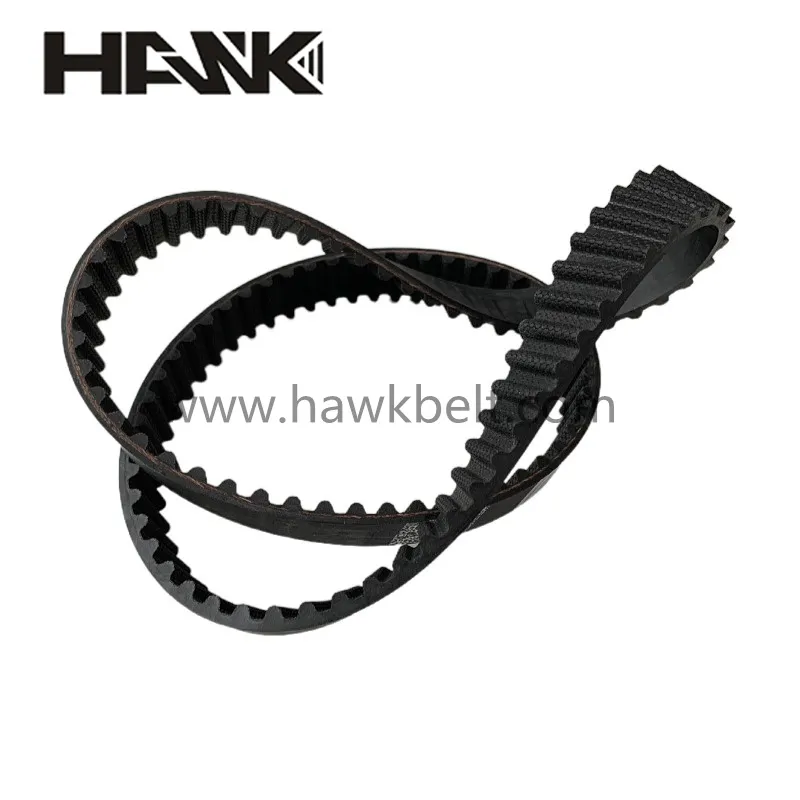
Product snapshot (real-world details)
Product name: 24312-33040 Rubber Belt / 24312-4X000 / 152RU30 Auto Synchronous Belt. Origin: No. 386 Xuyang Avenue, Renze District, Xingtai City, Hebei Province, China. Suits Toyota/Hyundai/Peugeot/Kia/Mitsubishi platforms (per OE cross).
| Specification | Data (≈, real-world use may vary) |
|---|---|
| OE / Cross | 24312-4X000; 24312-33040; 152RU30 |
| Teeth / Width | 152 teeth; 30 mm |
| Materials | CR or HNBR body; fiberglass tensile cords; nylon tooth fabric |
| Weight | 0.22 kg |
| Temperature window | ≈ -30 to 140 °C (HNBR option) |
| Service life | ≈ 80,000–120,000 km (duty-cycle dependent) |
| Fitment | Toyota/Hyundai/Peugeot/Kia/Mitsubishi (per OE) |
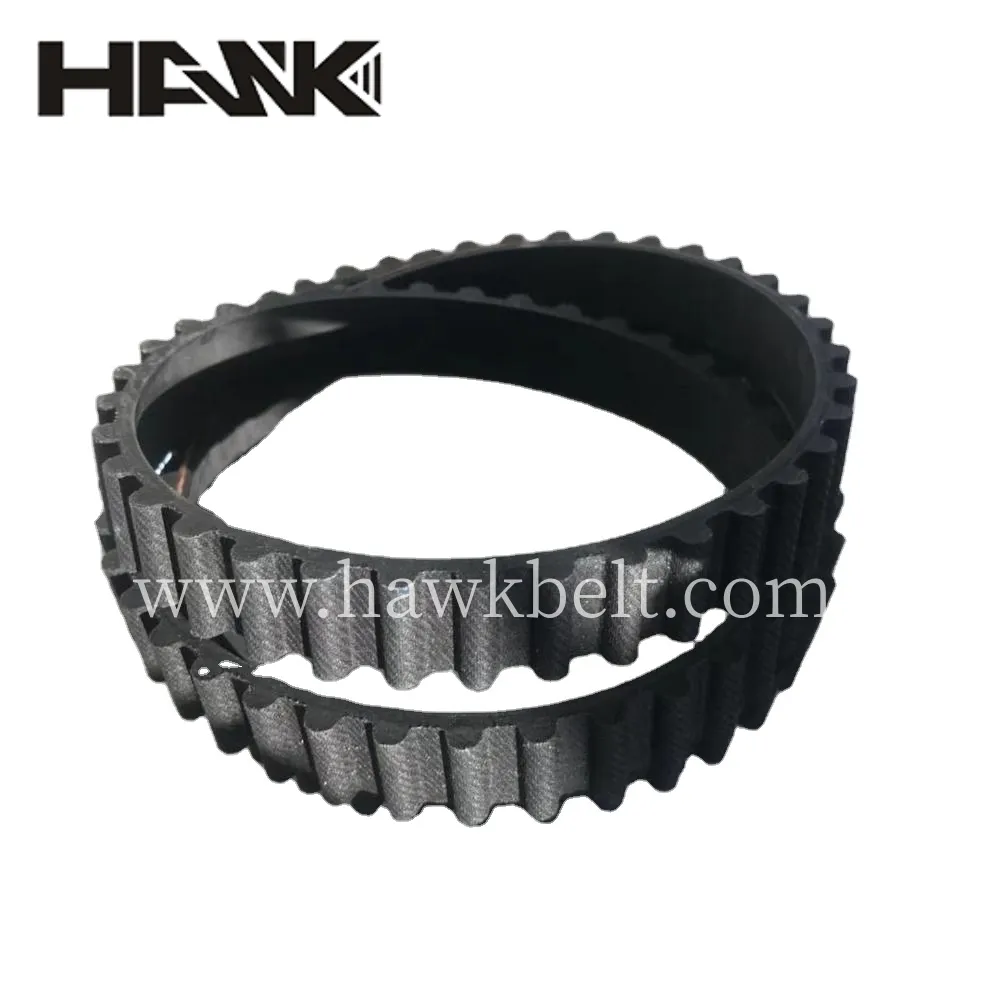
What’s trending in timing belts
Two clear trends: more HNBR for heat/oil resistance, and quieter tooth fabrics for NVH. Shops tell me the rubber timing belt market shifted from “cheapest” to “least comeback risk”—a healthy change, to be honest.
Process flow (how it’s built)
-
- Compounding CR/HNBR with carbon black and anti-ozonants
- Calendering and cord winding (fiberglass) for low stretch
- Tooth fabric application for wear and noise control
- Compression molding and vulcanization (profile set)
- Post-cure grinding, length control, and tooth geometry check to ISO 5296/DIN 7721
- 100% visual QC; batch traceability
Testing: tensile per ASTM D412, hardness per ASTM D2240, abrasion per ISO 4649, geometry vs DIN 7721, plus PPAP when required under IATF 16949. A recent in-house lot I saw posted 14.2 MPa tensile, 72±3 Shore A, tooth shear > 650 N (30 mm width), heat aging (150 °C, 96 h) retention ≈ 82%. Not lab-perfect conditions, but solid.
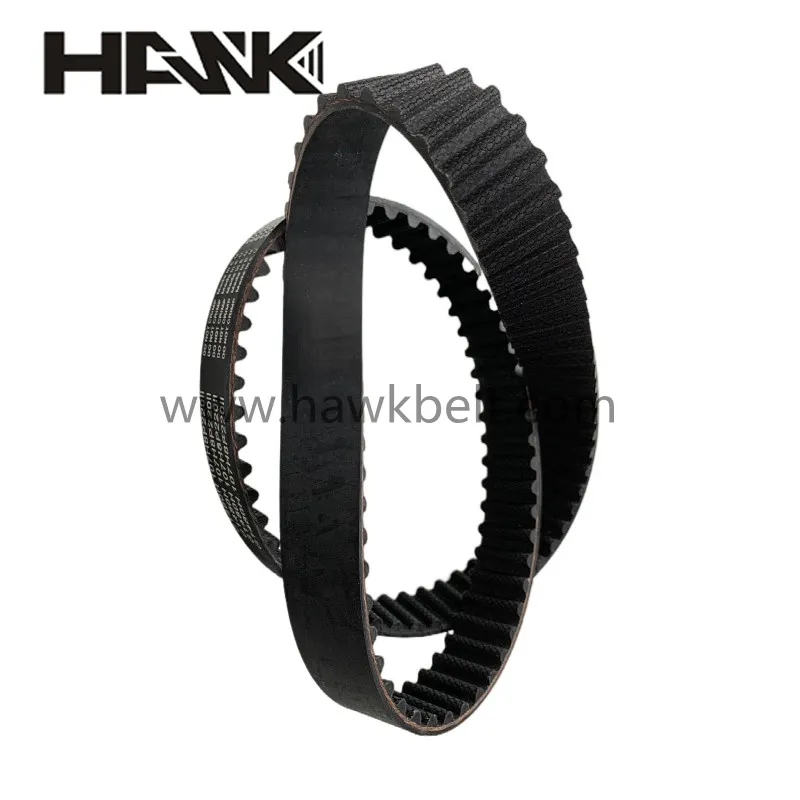
Where it’s used
- Automotive DOHC timing drives (the bullseye)
- Light industrial synchronous drives in packaging/robotics where a rubber timing belt profile matches the pulley set.
Advantages: zero-lube drive, predictable timing, low noise, compact.
Vendor landscape (quick comparison)
| Vendor | Certs | Lead time | MOQ | Customization | Notes |
|---|---|---|---|---|---|
| Hawk (Xingtai) | ISO 9001, IATF 16949 (site-level) | ≈ 15–25 days | Around 50 pcs | HNBR/CR, widths, branding | Factory-direct QC, PPAP on request |
| Trader A | ISO 9001 | ≈ 25–35 days | 100+ pcs | Limited | Broader catalogue, variable sources |
| Budget B | — | ≈ 7–10 days | Small lots | Minimal | Price-first, check traceability |
Customization, feedback, and a quick case
Options include CR vs HNBR compounds, private label, and packaging to workshop standards. One taxi fleet (Southeast Asia) ran the HNBR version of this rubber timing belt to 98,000 km in mixed heat/idle cycles; inspectors noted “no visible tooth glazing.” Another aftermarket installer told me, “tension held, no chirp after 1,000 km,” which—if you wrench—you know is a small but sweet win.
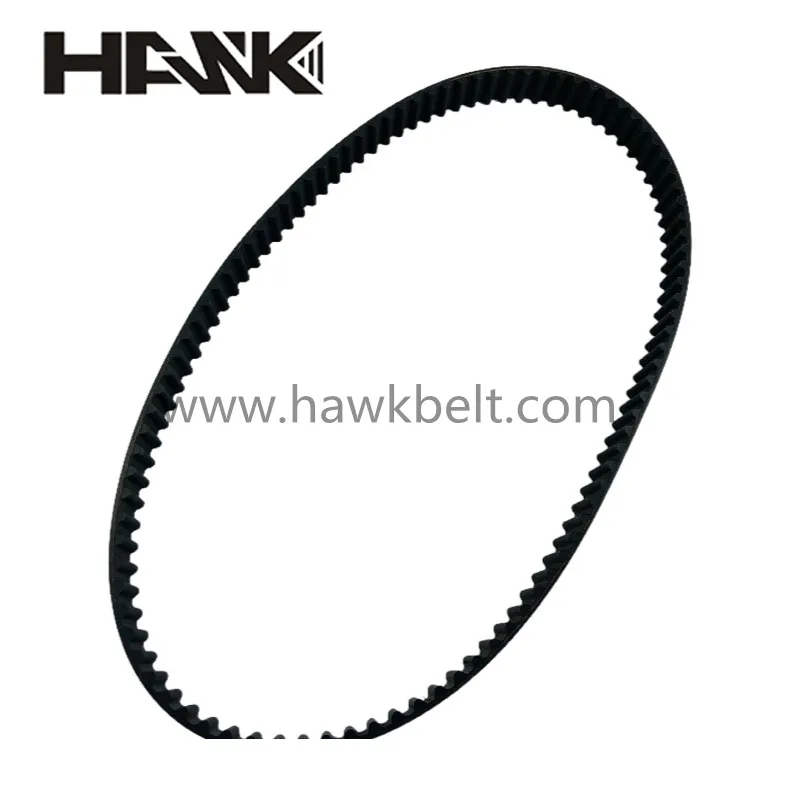
Practical tips (because downtime hurts)
-
- Replace tensioner/idlers with the belt—most comebacks trace to hardware.
- Keep pulleys clean; oil on a rubber timing belt is a slow killer.
- Verify tooth profile against DIN/ISO references; “close” isn’t good enough.
- For turbo heat, pick HNBR and a heat-sleeve if space allows.
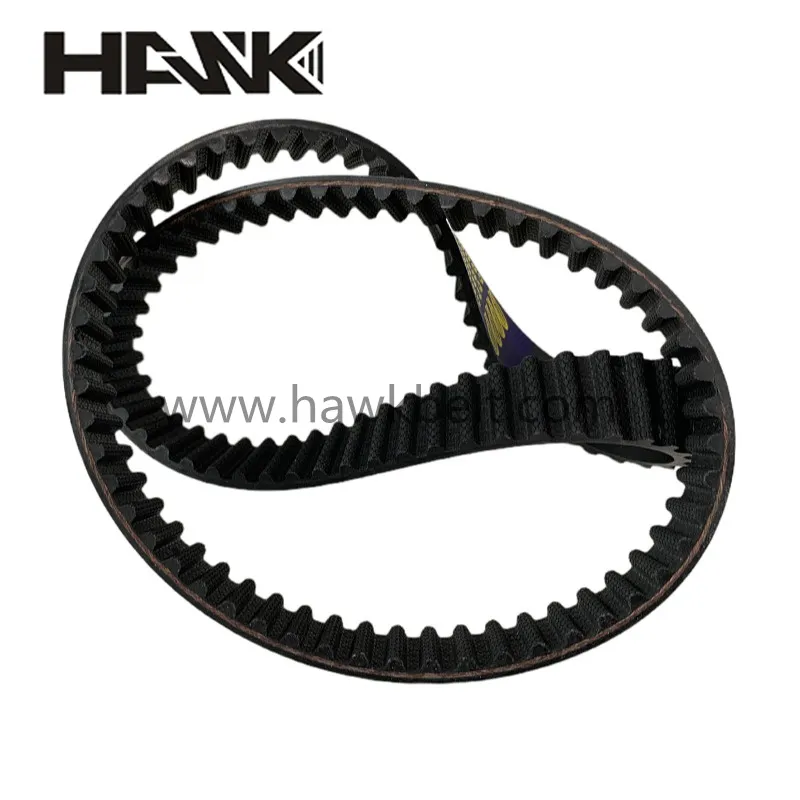
Bottom line: this 152RU30 spec blends conservative materials with proper geometry control. Not flashy. Just the sort of quiet competence that keeps engines in time.
Authoritative references
- ISO 5296-2: Synchronous belt drives — Geometrical parameters. https://www.iso.org/standard/12078.html
- DIN 7721-1: Toothed belts (timing belts) — Profiles T/AT. https://www.din.de
- ASTM D412: Standard Test Methods for Vulcanized Rubber—Tension. https://www.astm.org/d0412
- ISO 4649: Rubber, vulcanized or thermoplastic — Determination of abrasion. https://www.iso.org/standard/64078.html
- IATF 16949: Automotive Quality Management System. https://www.iatfglobaloversight.org
-
Comprehensive Guide to Selecting High Performance drive belts
NewsApr.16,2026
-
Guide to Choosing the Right Fan Belt for Car Performance
NewsApr.09,2026
-
Understanding and Maintaining Your Vehicle's Serpentine Belt for Optimal Performance
NewsApr.07,2026
-
Choosing the Right Steering Belt for Optimal Vehicle Performance and Safety
NewsApr.04,2026
-
Understanding the Serpentine Belt for Optimal Vehicle Performance
NewsMar.31,2026
-
Comprehensive Guide to Understanding Your Fan Belt Car and Maintenance
NewsMar.28,2026