

Oct . 01, 2025 11:55 Back to list
Rubber Belt with Teeth: Precision, Quiet Power—Why Choose?
Timing Belts Are Having a Moment: Inside the 105MR22 Story
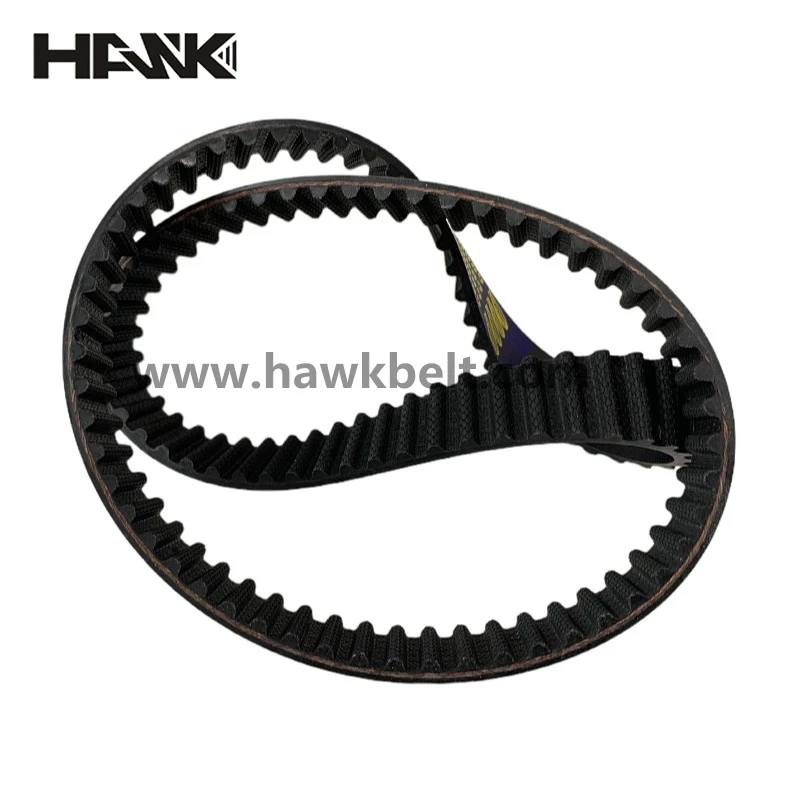
The rubber belt with teeth might not look glamorous, but it quietly decides whether your engine sings or sulks. This piece takes a candid look at the Japanese Automobiles Auto Car Spare Parts Synchronous Timing Belt 105MR22 for Kia—made in No. 386 Xuyang Avenue, Renze District, Xingtai City, Hebei Province, China—and why more mechanics are asking for HNBR timing belts, not just “whatever fits.”
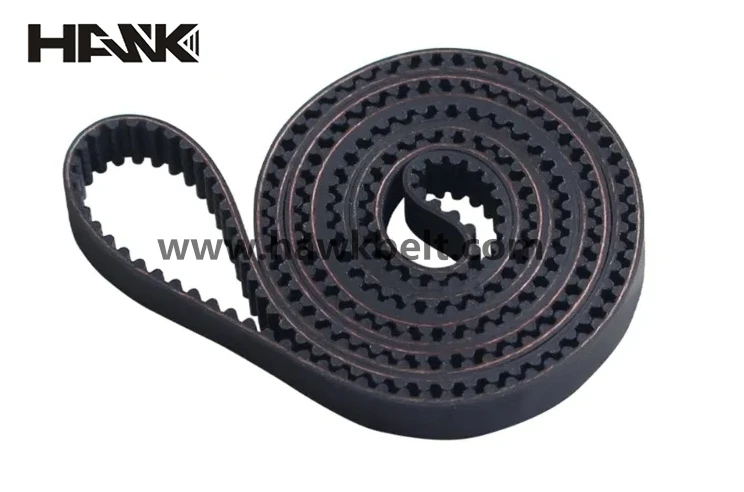
Industry trends you can feel in the bay
- EVs are pushing suppliers to clean up tolerances and improve tooth fabrics—surprisingly, the quality improvements spill over to ICE belts.
- HNBR is taking over from CR in harsh climates thanks to heat and oil resistance. Many customers say the “set and forget” interval feels longer with HNBR, even if the manual doesn’t change.
- Shorter lead times: post-2023, regional stocking hubs are back. Actually, that’s been a lifesaver for smaller garages.

Core specifications (real-world, not just brochure)
| Product | 105MR22 Timing Belt (OE: 105MR22) |
| Models | Mitsubishi / Volvo / Toyota / Kia / Isuzu / Hyundai |
| Tooth count | 105 |
| Width | 22 mm |
| Materials | CR or HNBR; fiberglass cord; PA tooth fabric (PTFE-treated in some builds) |
| Weight | ≈ 0.22 kg |
| Hardness | ≈ 72±3 Shore A (real-world use may vary) |
| Temp range | CR: -20 to 110°C; HNBR: -30 to 140°C (duty-dependent) |

How it’s made (process flow)
- Compounding: CR/HNBR blended with carbon black, anti-ozonants, and heat stabilizers.
- Cord winding: precision placement of fiberglass (or optional aramid) cords for low stretch.
- Compression molding: tooth profile set in heated molds; PA fabric bonded to tooth face.
- Vulcanization: controlled cure for modulus and adhesion.
- Finishing: edge grinding, length calibration, lot coding.
- QC: pitch tolerance, tooth shear, and dynamic fatigue checks.
Test references: ASTM D412 (tensile), ASTM D2240 (hardness), ASTM D573 (heat aging), ISO 4649 (abrasion), ISO 5296-2 (static tests for synchronous belts). Typical lab snapshots: tooth shear ≥ 900 N; cord elongation ≤ 0.3% at rated load; oil-aging tensile retention ≥ 80% (HNBR).

Where it works best
Daily-driven Kia/Hyundai 1.4–2.0L engines, older Toyota and Mitsubishi platforms, and certain Isuzu/Volvo applications. In fleets, HNBR versions handle stop-start heat cycling better. Service life is commonly 90,000–120,000 km, but always follow the engine’s interval. And yes, replace idlers and water pump while you’re in there—cheaper than a comeback.
Vendor comparison (quick take)
| Vendor | Material options | Certifications | Lead time | MOQ | Warranty | Price |
|---|---|---|---|---|---|---|
| HawkBelt (Hebei) | CR / HNBR | ISO 9001, IATF 16949 (supplier chain) | 10–20 days | ≈ 50–100 pcs | 12 months | Value |
| OEM Brand A | HNBR | IATF 16949 | 20–35 days | ≈ 200 pcs | 12–24 months | Premium |
| Aftermarket B | CR | ISO 9001 | 7–25 days | ≈ 50 pcs | 6–12 months | Economy |
Note: indicative values; always verify current certificates and lead times.
Customization & support
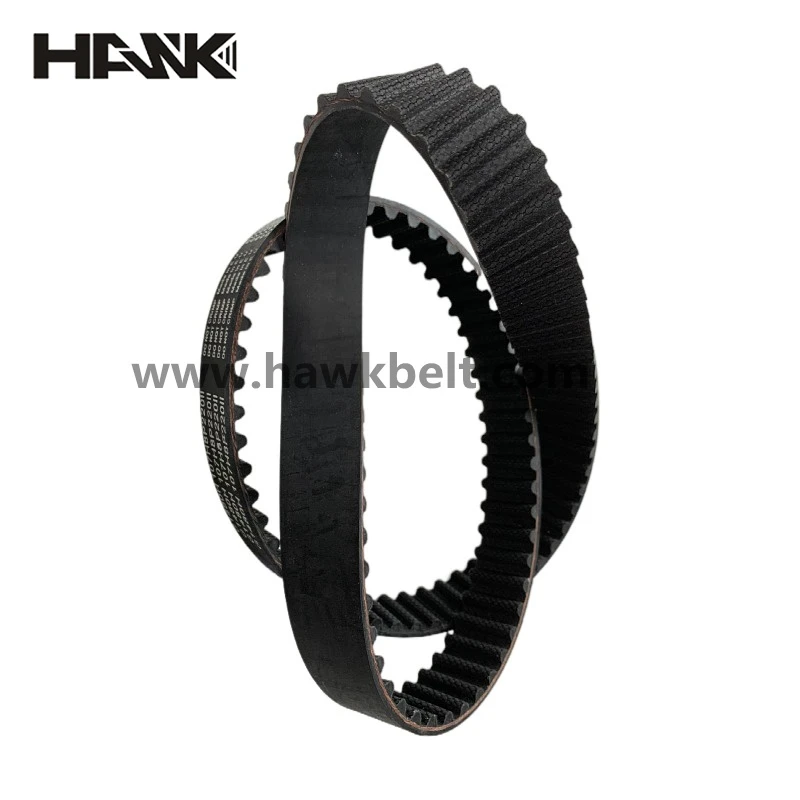
Options include CR vs HNBR compounds, private-label printing, tooth fabric upgrades, and special widths/tooth counts. For fleets, I usually recommend HNBR with PA+PTFE fabric on high-heat routes—less dust, quieter meshing, better retention after oil splash.
Field notes (mini case studies)
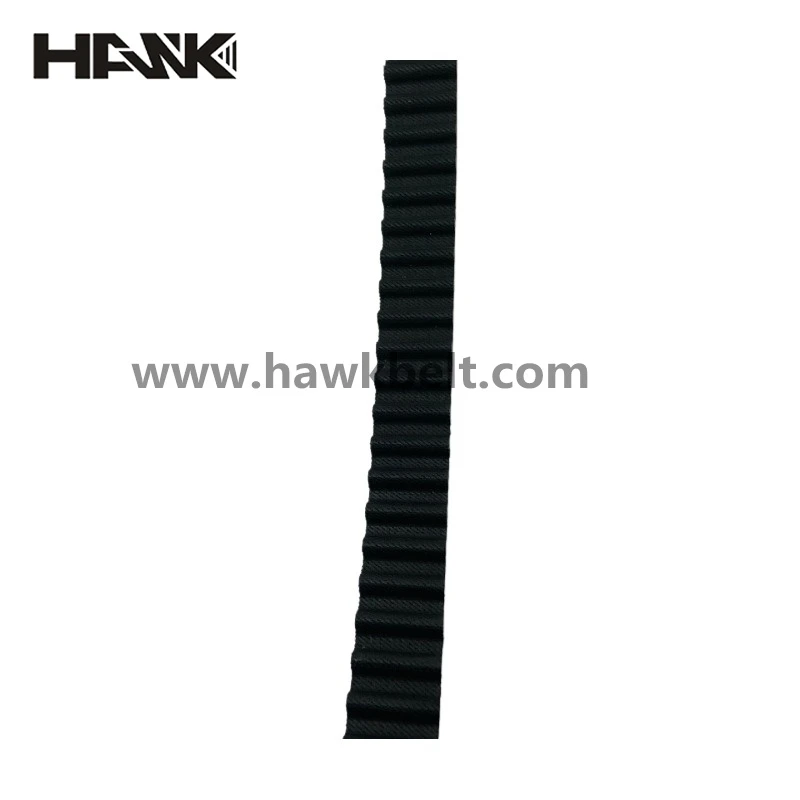
- Kia taxi fleet, coastal city: HNBR 105MR22 ran two cycles (≈ 100,000 km each) with cleaner teeth wear; mechanic reported “noticeably less whine at cold start.”
- Independent shop, older Toyota: switched from CR to HNBR after premature cracking; next inspection at 70,000 km showed normal micro-fissures only—no pitch walk.
If you’ve been burned by budget belts, a rubber belt with teeth built on HNBR and tight pitch control is, to be honest, a relief. Many garages told me the come-back rate dropped the same quarter they standardized.
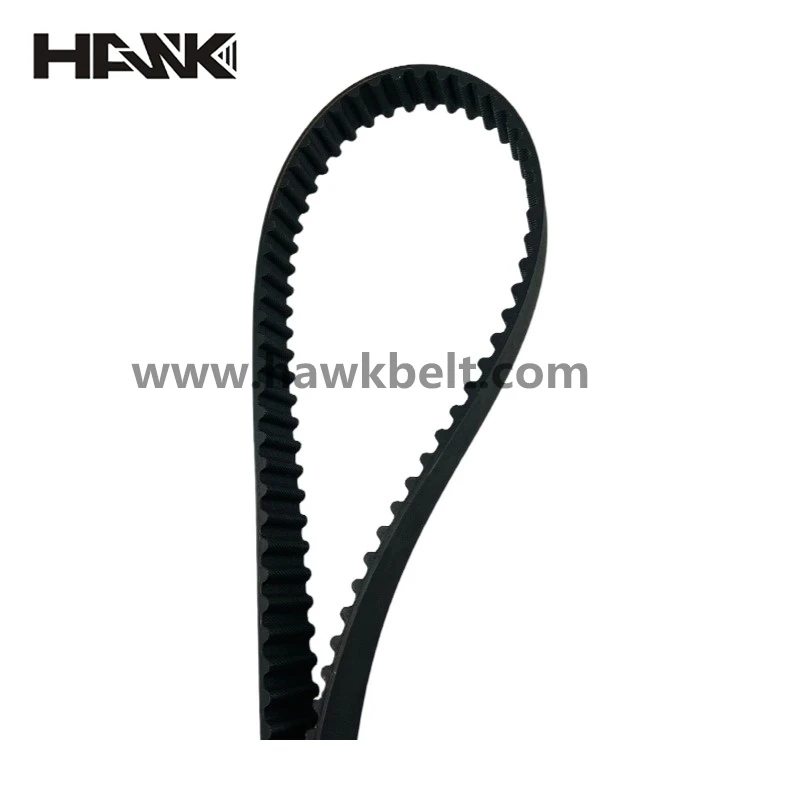
Final tip: pair any rubber belt with teeth change with new tensioner, idlers, and seals. It seems obvious, but it’s the difference between a one-off job and a reputation.
Authoritative references
- ISO 5296-2: Synchronous belt drives — Belts — Part 2: Determination of static tensile strength. https://www.iso.org
- ASTM D412: Standard Test Methods for Vulcanized Rubber and Thermoplastic Elastomers—Tension. https://www.astm.org
- IATF 16949:2016 Automotive Quality Management System. https://www.iatfglobaloversight.org
- ISO 4649: Rubber, vulcanized or thermoplastic — Determination of abrasion resistance. https://www.iso.org
-
Comprehensive Guide to Selecting High Performance drive belts
NewsApr.16,2026
-
Guide to Choosing the Right Fan Belt for Car Performance
NewsApr.09,2026
-
Understanding and Maintaining Your Vehicle's Serpentine Belt for Optimal Performance
NewsApr.07,2026
-
Choosing the Right Steering Belt for Optimal Vehicle Performance and Safety
NewsApr.04,2026
-
Understanding the Serpentine Belt for Optimal Vehicle Performance
NewsMar.31,2026
-
Comprehensive Guide to Understanding Your Fan Belt Car and Maintenance
NewsMar.28,2026