When evaluating the total cost of vehicle maintenance, many fleet managers and independent operators focus solely on the initial serpentine belt price without considering the long-term implications of material quality. A belt is not merely a rubber loop; it is a critical power transmission component that drives the alternator, power steering pump, and air conditioning compressor. In heavy-duty environments, such as those involving excavators or commercial transport, the failure of a single belt can lead to catastrophic downtime and expensive secondary repairs.
The complexity of modern engine layouts means that a belt must withstand extreme thermal cycling and constant frictional stress. Whether you are sourcing a Pk Belt for a passenger car or a heavy-duty Timing Belt for industrial machinery, the relationship between the upfront cost and the service interval is the most critical metric. Low-cost alternatives often utilize inferior rubber compounds that stretch under load, leading to slippage and reduced efficiency in power transmission, which ultimately increases fuel consumption and wear on pulleys.
Understanding the variables that influence pricing—from the use of Hydrogenated Nitrile Butadiene Rubber (HNBR) to the precision of the glass fiber tension members—allows buyers to make informed decisions. This analysis explores the technical drivers behind serpentine belt price and provides a framework for selecting components that balance economical operation with industrial-grade reliability, ensuring that the investment protects the engine's overall longevity.


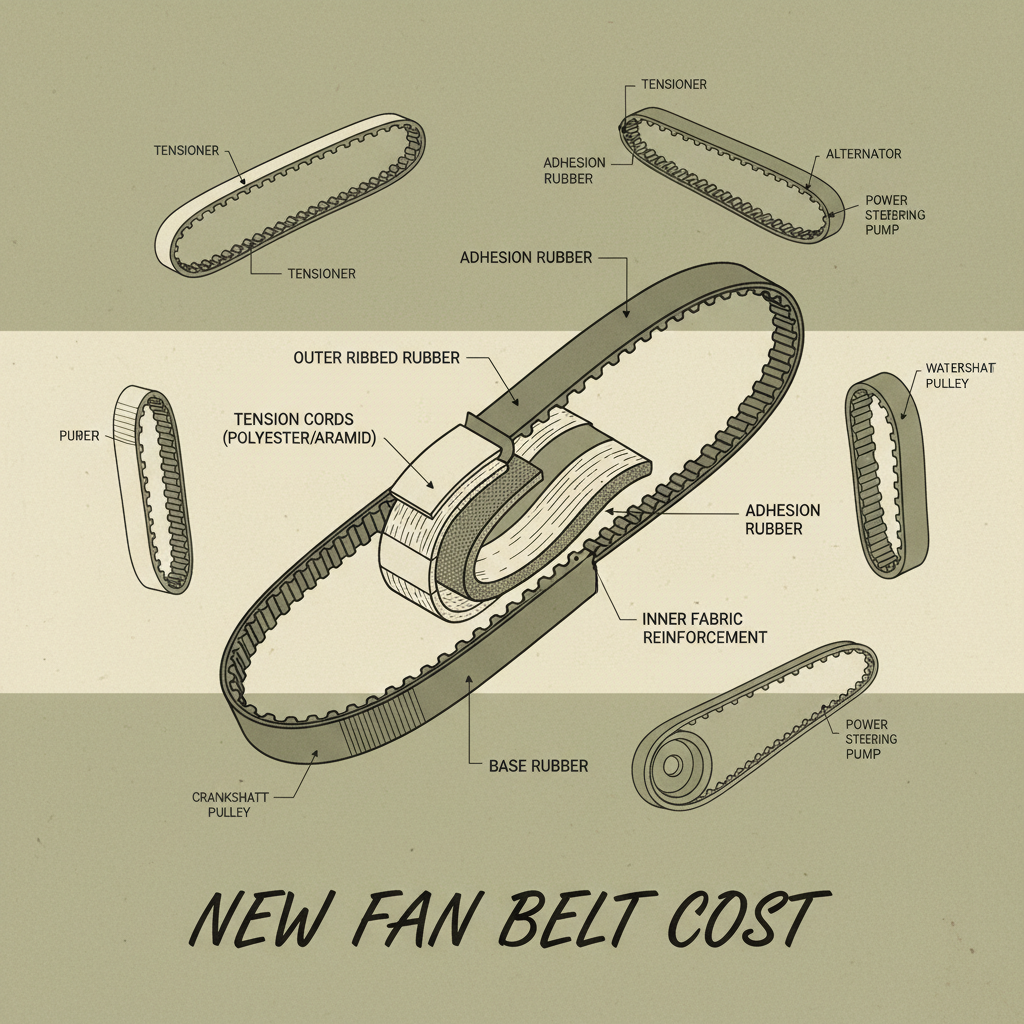
A professional-grade belt is a composite structure designed to handle high torque without slipping. The core consists of high-strength tension members, typically made from glass fiber cords, which provide the necessary flexibility while maintaining extremely low elongation. This structural integrity is what prevents the belt from stretching over time, which is a primary cause of noise and inefficiency in power transmission systems.
Surrounding the tension members is the rubber compound, such as Chloroprene Rubber (CR) or Hydrogenated Nitrile Butadiene Rubber (HNBR). These materials are chosen for their specific resistance to heat, oil, and ozone. The exterior is often reinforced with nylon fabric to reduce the friction coefficient and increase wear resistance, allowing the belt to engage smoothly with pulleys without premature degradation of the teeth or ribs.
Material selection is the most significant driver of quality and price. For instance, HNBR is significantly more expensive than standard CR but offers vastly superior heat and oil resistance, making it essential for high-performance engines and industrial excavators. When a belt operates in an environment with high ambient temperatures and oil exposure, the use of premium elastomers prevents the rubber from softening and cracking, thereby extending the replacement interval.
The true value of a belt is found in its power transmission efficiency; using high-strength glass fiber cords ensures minimal power loss through stretching, which directly reduces the operational cost per hour of engine use.
Beyond materials, the precision of the manufacturing process—such as the tooth profile and pitch accuracy—determines the level of noise and vibration. A belt with a precise fit ensures silent driving and non-slip engagement, reducing the strain on the engine's bearings and pulleys. For buyers, the trade-off is clear: investing in a belt with superior material specifications reduces the frequency of emergency replacements and prevents costly unplanned downtime.
Analyzing the ROI of belt selection requires looking at the lifecycle cost rather than the purchase price. A standard belt may have a lower entry cost but requires more frequent tensioning and replacement. In contrast, a belt engineered with CR or HNBR and reinforced nylon fabric maintains its dimensions and grip for a longer period, reducing the labor costs associated with frequent maintenance intervals.
When comparing the efficiency of different rubber types, the ability to maintain a low friction coefficient while resisting thermal degradation is key. This efficiency is particularly evident in synchronous belts where timing precision is paramount. The following data illustrates the relative durability and efficiency gains when moving from basic materials to industrial-grade composites.
Different machinery requires specialized belt profiles. For example, Excavator Belts must handle extreme torque and vibration in dusty, outdoor environments, necessitating materials that resist abrasion and environmental pollutants. In contrast, Motorcycle Belts and Pk Belts are optimized for higher rotational speeds and compactness, where heat dissipation and lightweight construction are the primary design goals.
The application of Synchronous Belts, such as those used for Mitsubishi or Volvo systems, requires absolute timing accuracy. These belts utilize a specific tooth pitch (e.g., 9.525mm or 8.000mm) to ensure that the engine's valves and pistons remain synchronized. In these scenarios, the requirement for "non-slip engagement" is not just a preference but a technical necessity to prevent catastrophic engine failure.
The industry is shifting toward the use of advanced synthetic elastomers that offer a broader operating temperature range. The integration of more durable nylon fabrics is reducing the friction coefficient further, allowing for more efficient power transmission with less heat generation. This evolution is driven by the need for "economical operation," where the goal is to maximize the hours of service before the first sign of wear appears.
Another trend is the move toward customization. Many manufacturers now offer the ability to adjust rubber materials and rope materials according to specific customer requirements, allowing for the creation of belts tailored to unique environmental stressors. This OEM capability ensures that specialized machinery can operate with components that are perfectly matched to their load profiles.
Finally, there is an increasing focus on "silent driving" technology. By optimizing the tooth geometry and the adhesion between the tensile member and the tooth fabric, manufacturers are producing belts that significantly reduce acoustic pollution in industrial settings, improving the working environment without sacrificing transmission power.
One of the most common challenges in belt installation is improper tensioning, which can lead to either premature wear from over-tightening or slippage from under-tightening. The solution lies in using belts with high-strength glass fiber cords that maintain low elongation, providing a more stable tension window throughout the belt's lifespan.
Another issue is contamination from oil and grease, which can degrade the rubber compound. By utilizing HNBR (Hydrogenated Nitrile Butadiene Rubber), operators can ensure that the belt remains resilient even when exposed to automotive fluids. This prevents the "slipping" effect and ensures that power is transmitted efficiently to the accessories regardless of minor leaks in the engine bay.
Lastly, compatibility between the belt and the pulley is essential. A mismatch in pitch or profile can lead to rapid tooth wear. Adhering to strict industry standards for pitch and height (such as the RU, YU, and ZA specifications) ensures a seamless fit and optimal engagement, which is critical for the long-term stability of the system.
| Material | Key Feature | Primary Application | Durability Level |
|---|---|---|---|
| CR (Chloroprene) | Balanced Cost/Perf | Standard Automotive | Medium |
| HNBR | Heat/Oil Resistance | Industrial Excavators | Very High |
| Glass Fiber | Low Elongation | Timing/Synchronous | High |
| Nylon Fabric | Wear Resistance | High-Speed Pk Belts | High |
| Standard Rubber | Economy Pricing | Light Utility | Low |
| Custom Compound | Tailored Spec | OEM Specialized | Variable |
The price is primarily determined by the material composition and the precision of the tension members. Belts using HNBR instead of standard CR are more expensive due to their superior heat and oil resistance. Additionally, the use of high-strength glass fiber cords and reinforced nylon fabric increases the cost but significantly extends the belt's operational lifespan and efficiency.
The choice depends on the function of the drive. A Timing Belt is a synchronous belt with teeth used to maintain a precise relationship between engine components (like the crankshaft and camshaft). A Pk Belt is a ribbed belt used to drive accessories like the alternator or water pump. Timing belts require absolute non-slip engagement, while Pk belts focus on high-friction grip and flexibility.
Glass fiber is preferred because it offers excellent flexibility while maintaining extremely low elongation. This ensures that the belt does not stretch under high loads, which would otherwise lead to slippage, noise, and a loss of power transmission efficiency. This stability is critical for maintaining the correct tension without constant manual adjustment.
Yes, professional manufacturers can customize the rubber material, rope material, and overall appearance, including the color and authorized logos. This is particularly useful for OEM partners who need belts to withstand specific environmental conditions, such as extreme Arctic cold or intense tropical heat, ensuring the product is optimized for the intended application.
Key indicators include visible cracking on the ribs or teeth, a high-pitched squealing sound during startup (slippage), or fraying edges. In synchronous belts, any sign of tooth wear or "glazing" is a critical warning. Replacing the belt immediately prevents unplanned downtime and protects the pulleys from excessive wear.
The rubber compound determines the coefficient of friction and the belt's resistance to deformation. High-quality compounds like HNBR maintain their shape and grip under high temperatures, ensuring that power is transferred from the pulley to the accessory without slipping. This results in lower energy loss and a more consistent performance of the engine's auxiliary systems.
Selecting a drive belt based solely on the initial serpentine belt price is a common mistake that often leads to increased long-term costs. The true value of a belt is measured by its ability to resist thermal degradation, maintain tension through high-strength glass fiber, and provide non-slip engagement in demanding environments. By prioritizing materials like HNBR and precision-engineered tooth profiles, operators can ensure higher power transmission efficiency and significantly reduce the risk of unexpected engine failure.
For those seeking industrial-grade reliability and the ability to customize components for specific machinery, partnering with an experienced manufacturer is essential. Whether you require standard V belts, Pk belts, or specialized synchronous belts, focusing on material integrity and OEM precision will yield the best return on investment. To explore professional belt solutions tailored to your equipment, you can visit www.hawkbelt.com for detailed technical specifications and procurement options.