Maintaining optimal engine temperature is a critical challenge in automotive engineering, where the engine fan belt serves as the essential link between the crankshaft and the cooling system. When this component fails, the transition from a functioning vehicle to an overheating engine happens in a matter of minutes, potentially leading to catastrophic cylinder head warping.
For fleet managers and automotive procurement specialists, the selection of a drive belt is not merely about fitting a part number but about balancing tensile strength, heat resistance, and frictional efficiency. The evolution from simple rubber bands to complex HNBR and CR composite structures has redefined how power is transmitted under extreme thermal stress.
Understanding the technical nuances of belt construction—from the glass fiber tension members to the nylon fabric outer layers—allows for more precise maintenance scheduling and reduced unplanned downtime. This analysis explores the critical engineering factors that determine the lifespan and performance of modern automotive belts.

Technical Architecture of High-Performance Drive Belts

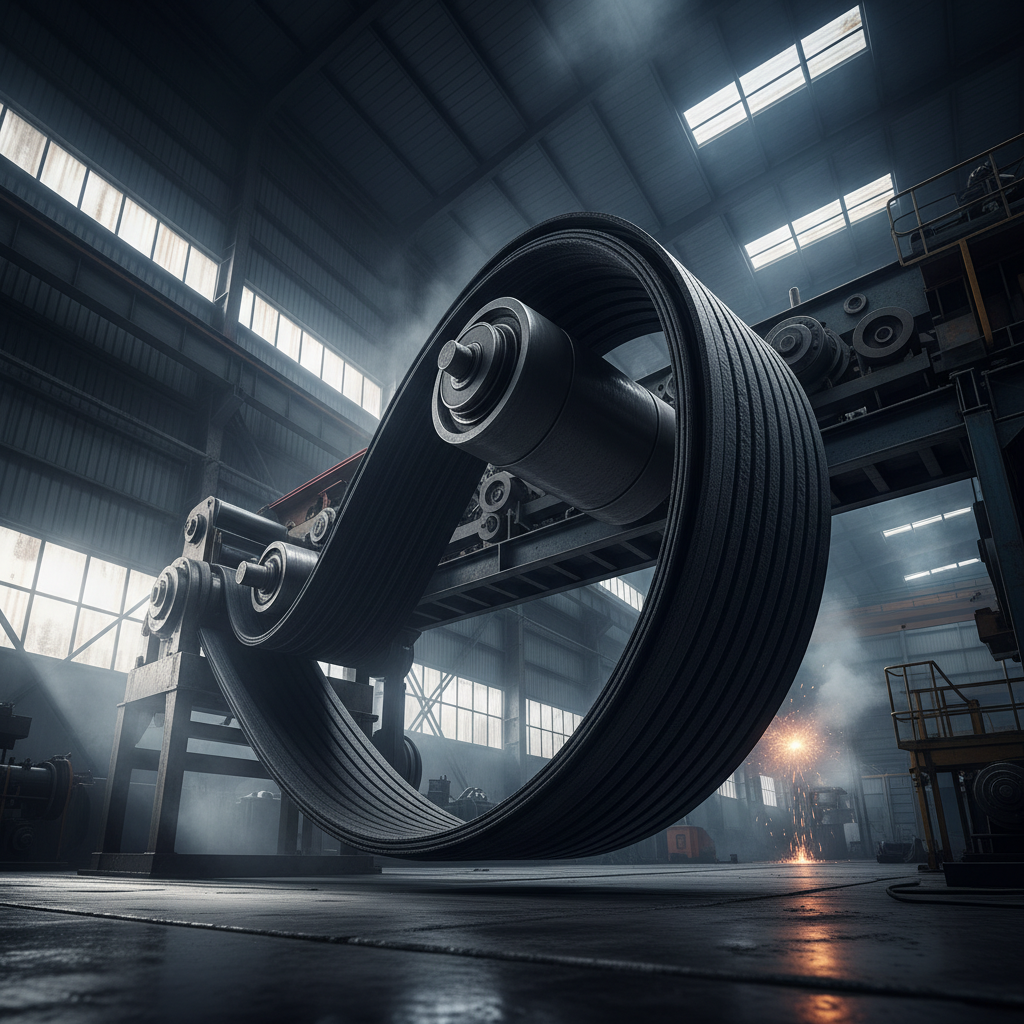
A modern engine fan belt is a sophisticated multi-layered composite rather than a simple piece of rubber. At its core lies the tension member, typically composed of strengthened glass fiber cords, which ensures the belt maintains low elongation and high flexibility even under peak torque loads.
Surrounding the core is the rubber matrix, which forms the teeth or ribs. This layer is responsible for the actual engagement with the pulley. Depending on the application, materials like Chloroprene Rubber (CR) or Hydrogenated Nitrile Butadiene Rubber (HNBR) are used to provide the necessary heat and oil resistance, preventing the rubber from degrading when exposed to engine leaks.
The final layer is the nylon fabric cover, which reduces the friction coefficient and enhances wear resistance. This architecture ensures that the belt can operate silently without the need for external lubrication, while maintaining a non-slip engagement that is critical for consistent cooling fan operation.
Material Trade-offs Between CR and HNBR Rubber
Selecting the right elastomer is the most pivotal decision in belt engineering. Chloroprene Rubber (CR) offers a balanced profile of durability and cost, making it suitable for standard passenger vehicles where temperature fluctuations are moderate.
HNBR, or Hydrogenated Nitrile Butadiene Rubber, provides significantly superior resistance to heat and aggressive automotive fluids. This makes it the primary choice for timing belts and high-stress fan belts in turbocharged engines or heavy industrial equipment where the risk of oil contamination is higher.
While CR is more economical, HNBR extends the service interval and reduces the likelihood of premature cracking. For procurement officers, the decision typically hinges on the operating environment: standard urban transit favors CR, whereas mining or heavy construction applications demand the robustness of HNBR.
Critical Application Scenarios in Heavy Duty Machinery
In the realm of excavator belts and heavy machinery, the demands on the drive system are exponentially higher than in automotive use. These systems must handle sudden load spikes and operate in dusty, abrasive environments that can erode the belt surface.
For instance, in hydraulic cooling systems for excavators, the belt must maintain precise tension to ensure the fan can dissipate heat from high-pressure oil coolers. Any slip in the belt results in an immediate rise in hydraulic fluid temperature, which can lead to seal failure and system leakage.
Moreover, the integration of PK belts (Poly-V) in these applications allows for a more compact design with higher surface contact area, which improves power transmission efficiency compared to traditional V-belts. This is essential for maximizing the output of the engine while minimizing the physical footprint of the accessory drive.
Evaluating Power Transmission Efficiency and Slip Rates
The efficiency of an engine fan belt is measured by its ability to transmit torque without energy loss through slippage or internal friction. A high-quality synchronous belt, for example, eliminates slip entirely through a toothed engagement mechanism.
When comparing standard drive belts to high-specification components, the primary difference lies in the "creep" and "slip" metrics. Components engineered with high-strength glass fiber cords exhibit less stretching over time, meaning the tension remains constant and the energy transfer remains efficient.
engine fan belt Performance Metrics
The data indicates that belts utilizing HNBR and reinforced cores maintain a higher percentage of their original tension and heat resistance over a 50,000km cycle compared to entry-level rubber compounds, directly impacting the overall fuel efficiency and cooling reliability of the vehicle.
Procurement Strategies for Industrial Belt Replacement
For professional buyers, the procurement of automotive belts should shift from a "price-per-unit" model to a "total cost of ownership" (TCO) model. A cheaper belt that requires replacement every 30,000km is significantly more expensive than a premium belt lasting 80,000km when labor and downtime are factored in.
Key evaluation factors include the pitch (e.g., 9.525mm for RS or 8.000mm for YU), the material of the tension member, and the OEM compatibility. Ensuring the belt matches the specific requirements of manufacturers like Mitsubishi, Volvo, or Toyota is non-negotiable for maintaining warranty and performance.
Additionally, verifying the OEM capabilities of the supplier—such as the ability to provide customized branding or specific rubber colors for inventory tracking—can streamline the supply chain for large-scale fleet operators.
Future Trends in Synchronous and Poly-V Technology
The industry is moving toward belts that can withstand higher rotational speeds with lower internal heat generation. We are seeing an increase in the adoption of advanced synthetic polymers that offer a lower coefficient of friction, further reducing the energy required to drive the fan.
Integration of smart monitoring is another potential direction, where belt wear could be predicted through acoustic analysis or tension sensors. This would transition maintenance from a fixed-interval schedule to a condition-based approach, preventing catastrophic failures before they occur.
Furthermore, the demand for belts in electric and hybrid vehicles is evolving. While the traditional "fan belt" may be less common in full EVs, the need for high-efficiency belts for auxiliary systems and hybrid cooling loops remains a critical area of development for rubber manufacturers.
Selection Guide for Automotive Belt Specifications
Selecting the correct belt requires a precise match between the engine's torque output and the belt's structural properties. The following table provides a decision matrix for choosing the right belt type based on the application and required performance.
Whether selecting a Timing Belt for internal synchronization or a PK Belt for external accessories, the priority must always be the balance between durability and transmission efficiency.
| Belt Type | Primary Material | Best Use Case | Key Advantage |
|---|---|---|---|
| Timing Belt (HNBR) | HNBR / Glass Fiber | Internal Engine Sync | Zero-slip Precision |
| PK Belt (Poly-V) | CR / EPDM | Alternator & Fan | High Surface Area |
| V-Belt (Standard) | CR / Rubber | Light Industrial | Easy Installation |
| Excavator Belt | Reinforced HNBR | Heavy Construction | Extreme Oil Resistance |
| Motorcycle Belt | High-Density Rubber | Compact Drives | High Flexibility |
| Synchronous Belt | Rubber / Nylon | Precision Machinery | Exact Timing Control |
For users seeking specific part numbers or customized OEM solutions, reviewing the technical catalogs available through www.hawkbelt.com can provide the necessary specifications for a perfect fit.
Frequently Asked Questions
Conclusion
The engine fan belt is a small component with a massive impact on vehicle reliability. By moving beyond simple replacement and focusing on material science—specifically the advantages of HNBR and glass fiber reinforcement—operators can significantly reduce the risk of overheating and engine failure.
Ultimately, the choice of belt should be driven by the specific stressors of the application, whether it be the harsh environment of a construction site or the precise needs of a modern passenger car. For those evaluating high-performance drive solutions, detailed product specifications can be found at www.hawkbelt.com.