Selecting a replacement drive belt involves more than just finding a part that fits; it requires a balance between operational durability and budget. When buyers search for an engine belt price, they are often navigating a complex market where the lowest cost rarely equates to the lowest total cost of ownership.
The volatility in raw material costs, such as ethylene propylene diene monomer (EPDM) and specialized polyester cords, directly influences market pricing. Furthermore, the shift toward smaller pulley diameters in modern engine designs has forced a technical evolution in belt construction to prevent premature fatigue and separation.
Understanding the variables that drive pricing—from material composition to manufacturing precision—allows fleet managers and procurement specialists to make informed decisions that prioritize long-term engine health over short-term savings.


The cost of a belt is primarily dictated by the chemical composition of its four main layers: the top fabric, the tension member, the adhesion rubber, and the rubber ribs. Higher-end belts utilize EPDM (Ethylene Propylene Diene Monomer) or CR (Chloroprene Rubber), which offer superior resistance to heat, oil, and ozone compared to standard rubber blends.
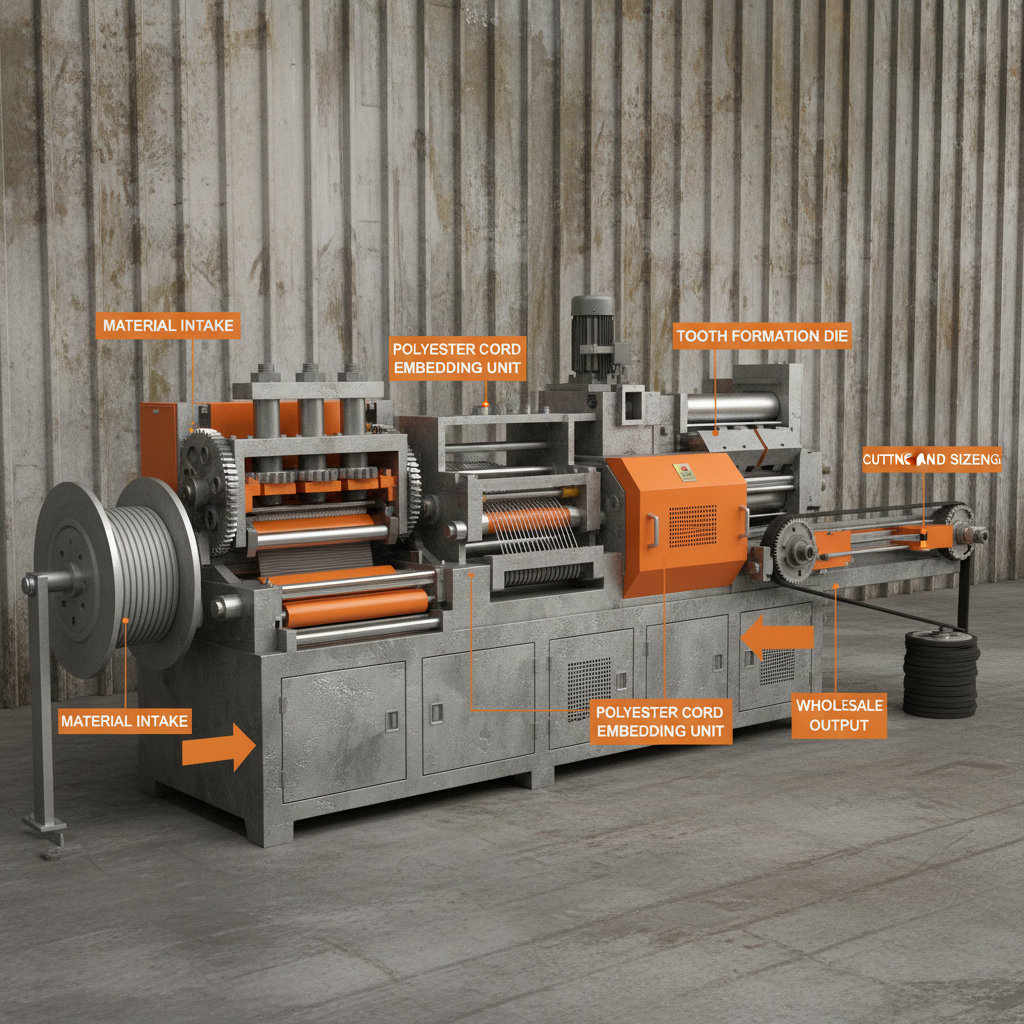
Furthermore, the tension member—typically made from specially treated polyester cords—determines the belt's shock resistance. The precision of the bonding process between these cords and the adhesion rubber prevents separation, a critical factor that justifies a higher price point for industrial-grade belts.
Durability in engine belts is measured by bending fatigue resistance. As a belt travels around a pulley, it undergoes constant compression and tension. Belts designed with low deformation characteristics maintain their structural integrity longer, especially when operating under high tension, which ensures smooth driving and reduces the frequency of replacements.
Thermal management is another critical technical factor. Heat is generated primarily through the internal friction of the rubber during bending. Materials that generate less heat during these cycles naturally exhibit a longer service life and are less prone to cracking, making them more suitable for high-temperature engine environments.
Noise reduction is often a byproduct of superior material density and precise rib geometry. By minimizing vibration and slip through optimized adhesion and tension member support, manufacturers can provide a product that increases the overall refinement of the engine's operation.
One of the most significant challenges in modern engine design is the trend toward smaller pulley diameters to save space and reduce weight. However, a smaller radius increases the severity of the belt's bend, which accelerates the separation between the cord and the compression rubber.
Belts engineered for small pulley diameters must prioritize a thin profile and low deformation rates to mitigate bending fatigue and prevent premature structural failure.
To address this, advanced belts incorporate reverse bending designs and high-strength synthetic fabrics. These enhancements ensure that the belt does not "creep" or stretch excessively, maintaining high power efficiency even in compact drive systems.
When comparing different belt options, it is helpful to use a relative performance index rather than a flat price. This allows buyers to see how much additional "life" or "efficiency" they are purchasing for every incremental increase in cost.
For instance, an EPDM belt may have a higher initial purchase price than a standard CR belt, but its superior heat resistance often leads to a lower replacement frequency in high-load industrial applications.
The ideal belt choice varies significantly by equipment type. In an excavator belt application, for example, the belt must withstand extreme shock loads and debris exposure, necessitating high-strength polyester cords and abrasion-resistant outer fabrics. In contrast, a motorcycle belt requires high flexibility and low noise for a smooth urban ride.
Procurement specialists should evaluate the environment—specifically temperature peaks and pulley sizes—before finalizing a budget. Choosing a low-cost belt for a high-heat environment often leads to premature failure and costly unplanned downtime.
Manufacturing has transitioned from simple rubber molding to complex multi-layer chemical bonding. Current standards emphasize the "one-stop experience" in production, where design, material sourcing, and quality control are integrated to ensure consistency across large batches.
Companies like Xingtai Hake Rubber Products Co., Ltd. have adapted to these changes by specializing in a broad range of products including Timing Belts, PK Belts, and V-Belts. Their ability to customize rubber materials and cord types allows them to meet specific OEM requirements for diverse international markets.
The integration of advanced design concepts ensures that modern belts can support reverse driving and high-power efficiency, capabilities that were rarely seen in traditional belt manufacturing.
To optimize the balance between engine belt price and durability, buyers should employ a weighted evaluation matrix. This involves scoring potential suppliers on material quality, OEM capability, and their ability to customize technical specifications like color or fabric type.
A key trade-off often exists between high tension and belt elasticity. While high tension increases power efficiency, it can increase the load on the engine's bearings. A balanced design, utilizing EPDM with a tailored polyester tension member, typically offers the best compromise.
Ultimately, the goal is to minimize the total cost of ownership by reducing the combined cost of the part and the labor required for installation.
| Application Scenario | Recommended Material | Primary Technical Requirement | Relative Suitability |
|---|---|---|---|
| High-Heat Engine Bay | EPDM Rubber | Thermal Stability | High |
| Heavy Excavator Use | Reinforced Polyester | Shock Resistance | High |
| Compact Pulley System | Low-Deformation EPDM | Bending Fatigue Resistance | Very High |
| General Automotive | Chloroprene (CR) | Oil & Wear Resistance | Medium |
| Light Motorcycle | Synthetic Fabric / CR | Flexibility & Noise Reduction | High |
| Reverse Drive Systems | High-Adhesion EPDM | Consistent Rib Grip | High |
The price is primarily driven by the raw materials used, specifically the type of rubber (EPDM vs. CR) and the quality of the tension cords. Higher-grade materials offer better heat and oil resistance, which increases the manufacturing cost but extends the belt's service life. Additionally, precision engineering for small pulley diameters and OEM customizations also contribute to price differences.
Smaller pulleys increase the bending stress on the belt. To prevent the rubber from separating from the internal cords (delamination), you need a belt with high bending fatigue resistance and low deformation. Selecting a standard belt for a small pulley often leads to rapid wear and failure, making specialized thin-profile belts a necessary investment.
EPDM (Ethylene Propylene Diene Monomer) is generally superior for high-temperature applications. It generates less heat during the bending cycle and maintains its elastic properties at higher thermal thresholds compared to Chloroprene Rubber (CR). This makes EPDM the preferred choice for modern, compact engines that operate at high temperatures.
Common indicators include visible cracking on the ribs, fraying of the edges, or a high-pitched squealing sound during engine startup or acceleration. Additionally, any noticeable slack or "glazing" (a shiny appearance on the ribs) indicates that the belt has lost its grip and tension, posing a risk of sudden failure.
Yes, many professional manufacturers offer OEM services. This includes processing authorized logos, customizing the brand, and adjusting the rubber material or rope material based on specific operational needs. Customization allows businesses to align the belt's performance exactly with their machine's requirements while maintaining brand consistency.
Not necessarily. A high-priced belt is only "better" if its specifications match the application. For example, a high-temp EPDM belt is overkill for a low-heat, light-duty application and will not provide extra value. The key is matching the material properties (like oil resistance or shock absorption) to the specific demands of the engine environment.
Navigating the complexities of engine belt procurement requires a shift in perspective from initial cost to lifetime value. By analyzing the material composition—specifically the use of EPDM and reinforced polyester—and matching it to the technical demands of the pulley system, operators can significantly reduce unplanned downtime.
Whether sourcing for heavy machinery or automotive fleets, the focus should remain on bending fatigue resistance and thermal stability. Investing in precision-engineered belts ensures not only a smoother drive but also a more sustainable and cost-effective maintenance cycle.