

- Arabic
- French
- Russian
- Spanish
- Portuguese
- Turkish
- Armenian
- English
- Albanian
- Amharic
- Azerbaijani
- Basque
- Belarusian
- Bengali
- Bosnian
- Bulgarian
- Catalan
- Cebuano
- Corsican
- Croatian
- Czech
- Danish
- Dutch
- Afrikaans
- Esperanto
- Estonian
- Finnish
- Frisian
- Galician
- Georgian
- German
- Greek
- Gujarati
- Haitian Creole
- hausa
- hawaiian
- Hebrew
- Hindi
- Miao
- Hungarian
- Icelandic
- igbo
- Indonesian
- irish
- Italian
- Japanese
- Javanese
- Kannada
- kazakh
- Khmer
- Rwandese
- Korean
- Kurdish
- Kyrgyz
- Lao
- Latin
- Latvian
- Lithuanian
- Luxembourgish
- Macedonian
- Malgashi
- Malay
- Malayalam
- Maltese
- Maori
- Marathi
- Mongolian
- Myanmar
- Nepali
- Norwegian
- Norwegian
- Occitan
- Pashto
- Persian
- Polish
- Punjabi
- Romanian
- Samoan
- Scottish Gaelic
- Serbian
- Sesotho
- Shona
- Sindhi
- Sinhala
- Slovak
- Slovenian
- Somali
- Sundanese
- Swahili
- Swedish
- Tagalog
- Tajik
- Tamil
- Tatar
- Telugu
- Thai
- Turkmen
- Ukrainian
- Urdu
- Uighur
- Uzbek
- Vietnamese
- Welsh
- Bantu
- Yiddish
- Yoruba
- Zulu
Sep . 04, 2025 11:38 Back to list
Maximizing Performance with Oil V Belt and Flat Belt Innovations
In the realm of industrial machinery and automotive engineering, the choice of belt technology directly impacts efficiency, durability, and power transmission effectiveness. From legacy machinery relying on traditional systems to cutting-edge equipment demanding flexible, oil-resistant solutions, belts play a pivotal role in maintaining operational stability. Today’s market offers a wide spectrum of belt products designed to meet highly specific demands—from classic designs like the vintage flat belt to advanced models such as the oil v belt and poly vee belt, and specialized materials like the nylon sandwich flat belt. Understanding these products’ unique functions and comparative advantages is critical to ensuring optimal performance across diverse industries.
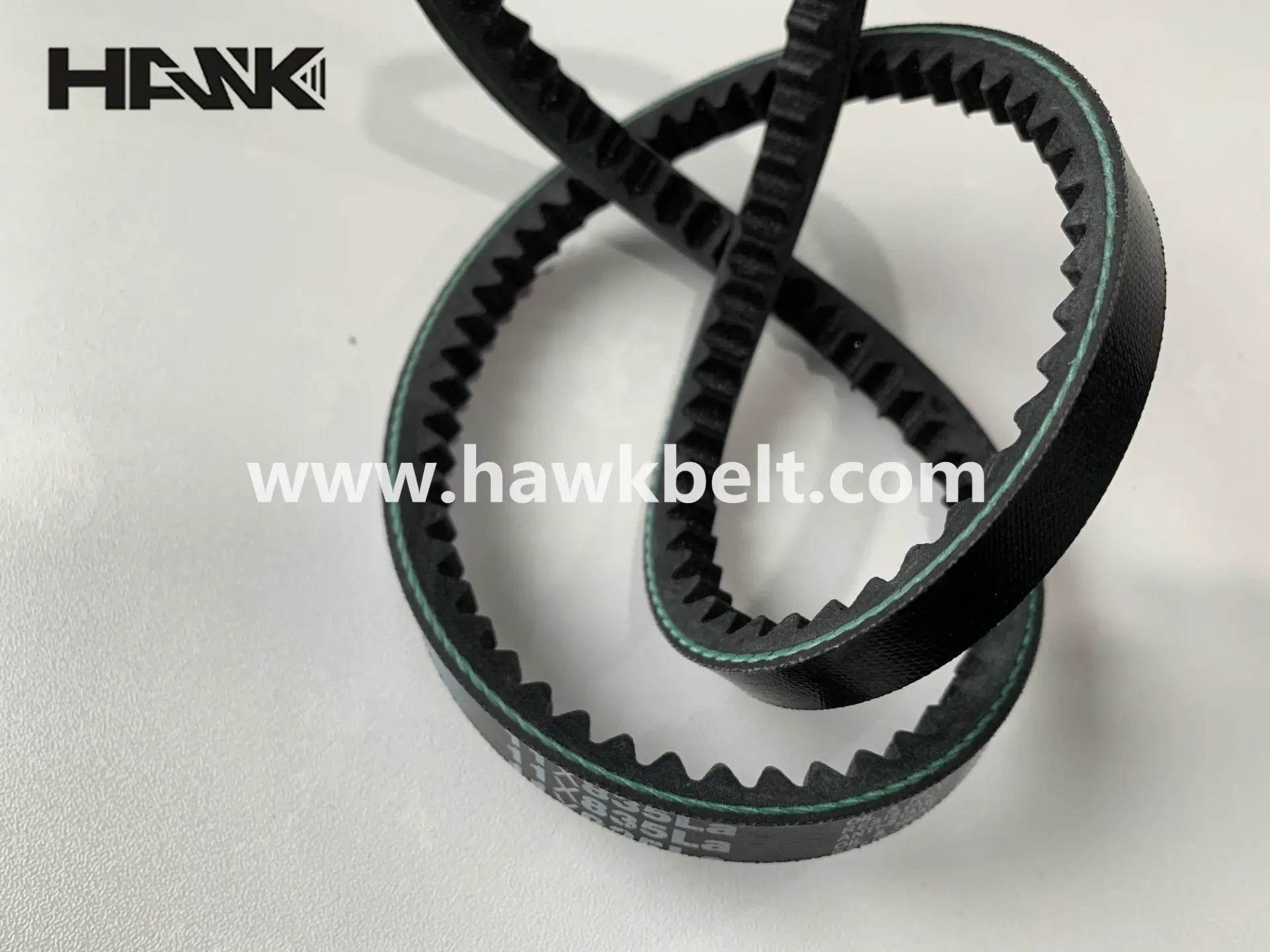
Endurance and Versatility: Advantages of Oil V Belt Technology
The oil v belt is a key innovation developed to address the challenges of working in environments prone to oil exposure. This type of belt is specifically designed with oil-resistant rubber compounds, allowing it to function reliably in engines, compressors, and hydraulic systems where conventional belts would deteriorate quickly. The structural design of the oil v belt enables a higher level of power transmission with minimal slippage, ensuring consistent torque and enhanced drive efficiency even under variable loads. Its resistance to oil saturation prevents premature degradation, extending its service life and reducing the total cost of ownership. Furthermore, the compact profile of the belt allows for installation in tight engine compartments, making it a preferred choice for modern automotive and industrial applications that require both space efficiency and durability. The oil v belt has become a staple in sectors that demand high endurance, including agriculture, mining, construction, and petroleum.
Engineered for High Precision: Nylon Sandwich Flat Belt Performance
The nylon sandwich flat belt is a specialized drive solution favored in precision applications where strength and flexibility must be balanced. Unlike traditional belts, this flat belt is constructed with layers of high-tensile nylon fabric bonded between thermoplastic materials, creating a unique sandwich structure that enhances tensile strength while maintaining elasticity. Its uniform thickness ensures excellent grip and alignment, making it ideal for high-speed transmission systems and synchronous drive applications. Industries such as textiles, packaging, electronics, and printing often rely on nylon sandwich flat belt systems due to their lightweight construction and low vibration characteristics. The belt’s chemical resistance and ability to handle varying loads without distortion also make it suitable for automated production lines. Additionally, the low-maintenance nature of this belt and its resistance to fatigue enable long-term stability in continuous operations. As automation and precision manufacturing continue to evolve, the nylon sandwich flat belt proves to be an essential component in achieving synchronized performance across complex mechanical systems.
A Nod to Tradition: The Enduring Utility of the Vintage Flat Belt
Although much of today’s focus is on high-performance materials, the vintage flat belt remains relevant for both restoration and active industrial use. These belts, typically made of leather or reinforced rubber, were once the backbone of factories and agricultural operations. Their simplicity and robust construction allowed them to operate across a wide range of pulley systems, often in dusty or unregulated environments. Modern adaptations of the vintage flat belt incorporate synthetic materials to enhance flexibility and wear resistance while maintaining the classic look and feel needed for restoration projects. Machine shops, museums, and legacy equipment operators continue to favor this style due to its compatibility with original hardware and its ability to maintain historical integrity. Beyond historical preservation, some industries still deploy flat belt systems in custom configurations where modern alternatives are either too rigid or incompatible. As a result, the vintage flat belt bridges the gap between heritage and utility, offering functional performance with a nostalgic edge.
Power Efficiency in Compact Systems: Poly Vee Belt Innovation
The poly vee belt represents one of the most efficient solutions for high-speed, high-load applications within a compact space. Designed with multiple longitudinal ribs that enhance contact surface area, this belt provides superior grip and friction, reducing the risk of slippage even under dynamic conditions. The poly vee belt is especially popular in automotive systems, including alternators, power steering systems, and air conditioning compressors, where consistent power delivery is essential. Its design minimizes energy loss and improves overall fuel efficiency by enabling seamless transmission between rotating components. Additionally, the belt’s resistance to heat, oil, and general wear ensures a longer operational lifespan compared to single-rib belts. The reduced maintenance frequency associated with the poly vee belt adds further value for fleet operators and OEM manufacturers seeking dependable, low-noise drive systems. The poly-ribbed structure also facilitates smoother startup and operation, making it a crucial component in hybrid vehicles and high-efficiency internal combustion engines alike.
Oil V Belt FAQs
What is an oil v belt and where is it used?
An oil v belt is a type of drive belt made with oil-resistant materials, typically rubber compounds reinforced with fibers. It is designed to operate in oily environments without degradation. Commonly found in internal combustion engines, industrial compressors, and agricultural machinery, it maintains performance by resisting the damaging effects of oil exposure.
How does a nylon sandwich flat belt differ from standard flat belts?
The nylon sandwich flat belt is constructed with a layered structure, featuring a nylon core between two synthetic outer layers. This design increases tensile strength and flexibility compared to standard flat belts, making it suitable for applications requiring high-speed precision, low vibration, and consistent tension control.
Why are vintage flat belts still in demand?
The vintage flat belt continues to be used in heritage machinery and equipment that require historically accurate components. It is also favored in certain niche industrial settings where its wide contact surface and simple mechanical compatibility offer practical advantages that modern belts may not provide.
What are the benefits of using a poly vee belt?
The poly vee belt offers excellent power transmission efficiency due to its multi-ribbed design, which increases contact area and traction. It provides smooth, quiet operation, resists heat and oil, and functions well in compact spaces—making it ideal for automotive and light industrial applications where space and performance are critical.
How can I determine the right type of belt for my machinery?
Selecting the right belt depends on several factors including operating environment, load requirements, rotational speed, and available installation space. If your system involves oil exposure, an oil v belt would be most suitable. For precision systems, consider a nylon sandwich flat belt, while a poly vee belt suits compact, high-efficiency needs. Restoration or legacy equipment may benefit from a vintage flat belt to preserve authenticity and mechanical compatibility.
-
Comprehensive Guide to Selecting High Performance drive belts
NewsApr.16,2026
-
Guide to Choosing the Right Fan Belt for Car Performance
NewsApr.09,2026
-
Understanding and Maintaining Your Vehicle's Serpentine Belt for Optimal Performance
NewsApr.07,2026
-
Choosing the Right Steering Belt for Optimal Vehicle Performance and Safety
NewsApr.04,2026
-
Understanding the Serpentine Belt for Optimal Vehicle Performance
NewsMar.31,2026
-
Comprehensive Guide to Understanding Your Fan Belt Car and Maintenance
NewsMar.28,2026