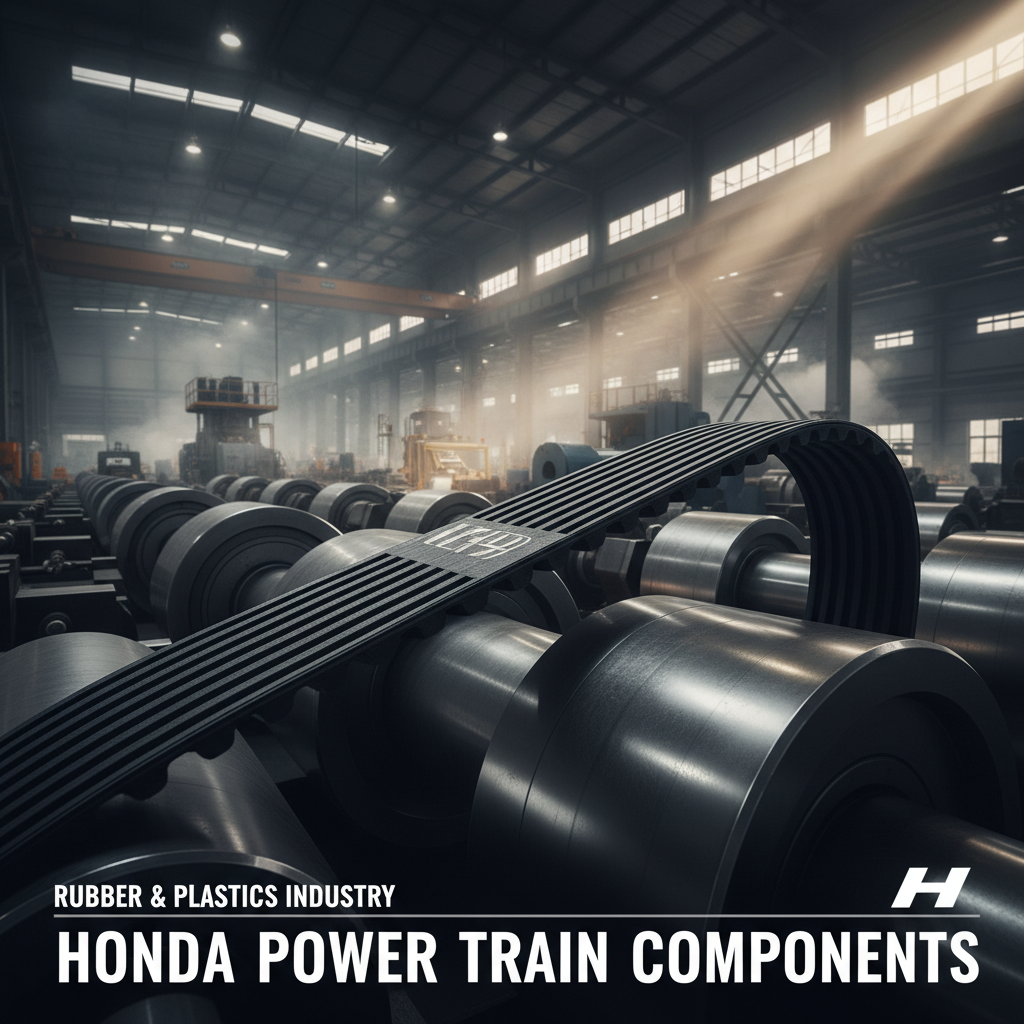
In the demanding landscape of industrial power transmission, finding a reliable source for wholesale link belt v belt solutions is critical for maintaining operational uptime. Link belts provide a modular alternative to traditional molded belts, allowing for precise length adjustments and eliminating the need for costly pulley replacements during maintenance cycles. For distributors and industrial operators, securing a high-quality wholesale supply ensures that machinery across various sectors—from automotive to heavy construction—continues to run with peak efficiency.
The global shift toward more flexible and durable rubber components has placed a spotlight on the engineering behind the V-belt. Whether it is an excavator belt operating in harsh environments or a precision timing belt in a motorcycle engine, the material composition—often leveraging EPDM or CR rubber—determines the lifespan of the component. By focusing on wholesale link belt v belt procurement, companies can standardize their inventory, reducing the lead time for critical repairs and optimizing their supply chain costs.
Understanding the nuances of link belt technology allows procurement managers to move beyond simple price comparisons and focus on Total Cost of Ownership (TCO). High-grade link belts offer superior resistance to heat, oil, and wear, which are the primary catalysts for belt failure in industrial settings. This comprehensive guide explores the technical advantages, global applications, and future trends of sourcing wholesale link belts to help you make an informed decision for your industrial infrastructure.
Global Relevance of Wholesale Link Belt V Belt
On a global scale, the demand for wholesale link belt v belt products is driven by the relentless need for mechanical reliability in emerging economies and established industrial hubs. According to international ISO standards for rubber components, the ability of a belt to withstand thermal expansion and contraction is paramount. In regions like Southeast Asia and Africa, where extreme temperatures are common, the modular nature of link belts allows for on-site adjustments without the need for specialized tensioning tools, significantly reducing downtime in remote mining and agricultural sites.
The challenge facing most industrial operators is the "planned downtime paradox," where the time taken to replace a traditional molded belt often exceeds the time the machine was actually broken. By transitioning to a wholesale link belt model, enterprises can maintain "ready-to-assemble" kits that fit multiple machine profiles. This strategic shift not only aligns with Lean Manufacturing principles but also addresses the logistical hurdles of importing thousands of different fixed-length belts, replacing them with a few standardized link sizes.
Defining the Mechanics of Link Belt Systems
At its core, a wholesale link belt v belt is a power transmission component composed of individual reinforced rubber links that are joined together to form a continuous loop. Unlike a standard V-belt, which is vulcanized into a specific length, link belts are customizable. This means a technician can add or remove a single link to achieve the perfect tension, eliminating the need for take-up pulleys or sliding motor bases in many installations.
This modularity is not just a convenience; it is a technical solution to the problem of belt stretch. All rubber belts experience some degree of elongation over time. With traditional belts, this requires manual adjustment of the entire motor assembly. With link belts, a simple addition of one link restores the optimal tension, maintaining the friction coefficient between the belt and the pulley, which prevents slippage and energy loss.
In the context of modern industry, these belts serve as the "sinews" of machinery. From the PK belts in high-performance automotive engines to the heavy-duty V-belts in industrial compressors, the link design ensures that the power transfer is smooth and consistent. This reliability is essential for humanitarian and infrastructure projects in disaster-prone areas, where machinery must be repaired quickly using minimal tools.
Core Components for Maximum Durability
The effectiveness of a wholesale link belt v belt depends heavily on its four-layer construction. The top fabric, typically made from a blend of cotton and synthetic fibers, provides the first line of defense against abrasion and heat. This layer ensures that the belt does not fray when operating at high speeds or in environments where dust and debris are prevalent.
The heart of the belt is the tension member, where polyester or Aramid fibers are used to ensure high length stability and low elongation. When sourcing wholesale link belt v belt options, the quality of this internal cord is what separates a premium belt from a budget version; Aramid cords, for instance, offer significantly higher heat resistance and strength-to-weight ratios.
Finally, the compression and bottom rubber, usually crafted from CR (Chloroprene Rubber) or EPDM (Ethylene Propylene Diene Monomer), provide the necessary grip and shock absorption. EPDM is particularly valued in the wholesale link belt v belt market for its exceptional resistance to ozone, weathering, and heat, making it the gold standard for automotive fan belts and heavy-duty industrial drives.
Performance Metrics and Efficiency Factors
When evaluating wholesale link belt v belt quality, professional engineers look at a combination of friction coefficients, tensile strength, and thermal stability. A high-performing link belt must maintain its geometry under extreme load to avoid "cupping" or uneven wear. The ability of the rubber compound to resist oil contamination is also a key metric, as oil ingress can cause the rubber to swell and lose its grip on the pulley.
Furthermore, the energy efficiency of a drive system is directly linked to the belt's ability to transfer torque without slipping. Modern wholesale link belts are designed with a precise V-angle that optimizes the wedging action in the pulley groove, ensuring that maximum power is transmitted with minimum heat generation.
Efficiency Comparison of Wholesale Link Belt V Belt Materials
Real-World Industrial Applications
The versatility of wholesale link belt v belt products allows them to be deployed across diverse environments. In the automotive sector, they are essential for alternator and water pump drives where space is limited and pulley diameters are small. The flexibility of these belts allows them to wrap around tight radii without cracking, a common failure point in cheaper molded alternatives.
Beyond the garage, these belts are indispensable in heavy machinery. In excavator belts, for instance, the link belt design allows operators in remote construction zones to replace a damaged section of the belt without dismantling the entire engine housing. This "field-repairable" quality is a game-changer for infrastructure projects in the Middle East and Southeast Asia, where the cost of downtime can run into thousands of dollars per hour.
Long-Term Value and Economic Impact
Investing in a high-quality wholesale link belt v belt supply is a strategic move for any maintenance manager. While the initial cost per link may be higher than a bulk molded belt, the long-term savings are substantial. By eliminating the need for oversized inventories (stocking every possible length), companies can reduce their warehouse footprint and capital tied up in stagnant stock.
Furthermore, the reliability of premium link belts enhances workplace safety. A snapped belt in a high-speed industrial drive can lead to catastrophic machine failure or operator injury. By using belts with reinforced Aramid cords and EPDM rubber, the risk of sudden failure is minimized, fostering a culture of trust and stability within the production facility.
From a sustainability perspective, link belts are far more eco-friendly. When a traditional belt wears out, the entire loop is discarded. With a link system, only the worn-out links need to be replaced, significantly reducing the amount of rubber waste entering landfills. This aligns with the growing global mandate for "Green Industry" and circular economy practices.
Future Innovations in Rubber Belt Technology
The future of wholesale link belt v belt manufacturing is being shaped by the integration of "smart materials." We are seeing the emergence of rubber compounds infused with nano-particles that can self-heal minor abrasions or change color when they reach a critical wear threshold. This predictive maintenance capability will allow factories to replace links before they fail, moving from reactive to proactive maintenance.
Digital transformation is also impacting the wholesale market. With the rise of 3D scanning and AI-driven inventory management, distributors can now predict exactly when a client's belt system will require adjustment based on operating hours and load data. This ensures that the correct number of replacement links is delivered just-in-time, further optimizing the supply chain.
Lastly, the push toward carbon neutrality is driving the development of bio-based rubbers. Researchers are exploring ways to replace petroleum-based EPDM with sustainable polymers that offer the same heat and oil resistance. This evolution ensures that the wholesale link belt v belt industry remains relevant in a world increasingly focused on environmental stewardship.
Comparative Analysis of Link Belt Specifications and Application Fit
| Material Type |
Heat Resistance |
Oil Resistance |
Ideal Application |
| EPDM Link |
Excellent (10/10) |
High (8/10) |
Automotive Fan Belts |
| CR Rubber |
Good (7/10) |
Excellent (9/10) |
Industrial Compressors |
| Aramid Cord |
Superior (10/10) |
Medium (6/10) |
Heavy Excavator Drives |
| Polyester Core |
Fair (5/10) |
Medium (5/10) |
Light Commercial Use |
| Synthetic Blend |
Good (7/10) |
Good (7/10) |
Agricultural Machinery |
| Nitrile Rubber |
Medium (6/10) |
Superior (10/10) |
Oil Pump Assemblies |
FAQS
The primary advantage of wholesale link belt v belt systems is their modularity. Unlike molded belts, link belts can be adjusted in length by adding or removing individual links, meaning you don't need to stock dozens of different belt sizes. This reduces inventory costs and allows for precise tensioning without needing to move the motor or pulleys, which is a significant time-saver during maintenance.
EPDM is superior for applications involving high heat and ozone exposure, making it ideal for engine compartments and outdoor machinery. CR (Chloroprene) rubber offers better resistance to oil and grease, which is critical for industrial pumps or gearboxes where oil leaks are common. When purchasing wholesale link belt v belt options, always match the material to the primary environmental stressor of your machine.
Link belts are designed for high-friction V-drive applications. While they are incredibly strong, they are not "positive drive" belts like timing belts (which have teeth to prevent slip). For high-torque, precision-timed applications, a timing belt is necessary. However, for power transmission where a small amount of slip is acceptable for safety, the wholesale link belt v belt is the more flexible and cost-effective choice.
Tension should be checked during the first 24-48 hours of operation as the belt settles. After that, a monthly inspection is recommended. Because link belts allow for the addition of a single link, maintaining tension is much faster than with traditional belts. If you notice slippage or excessive noise, simply add one link to restore the optimal tension and protect your pulleys from wear.
Yes, high-quality wholesale link belts are engineered to match the standard angles of V-pulley grooves. Whether you are using a classic A-section or a specialized AX-profile, link belts are designed to provide the same wedging action as molded belts. Always verify the cross-section dimensions (width and height) before ordering to ensure a perfect fit.
When importing wholesale link belt v belt products, it is essential to work with a manufacturer that provides full OEM capabilities and complies with ISO quality standards. Ensure that the supplier can provide material certifications (like EPDM vs CR) and offer customized branding. Utilizing a one-stop shop like Hake Rubber Products simplifies the logistics of customs and shipping for global infrastructure projects.
Conclusion
The adoption of wholesale link belt v belt solutions represents a shift toward smarter, more sustainable industrial maintenance. By combining the strength of Aramid and polyester cords with the resilience of EPDM and CR rubber, these modular systems solve the age-old problem of belt stretch and inventory bloat. From the precision required in automotive belts to the ruggedness needed for excavator drives, the link belt offers a versatility that traditional molded belts simply cannot match.
As we look toward the future, the integration of smart materials and green rubber compounds will further enhance the value of link belt technology. For businesses looking to reduce downtime and optimize their operational costs, transitioning to a professional wholesale supply is no longer optional—it is a competitive necessity. We invite you to experience the difference in quality and reliability by visiting our website: www.hawkbelt.com.