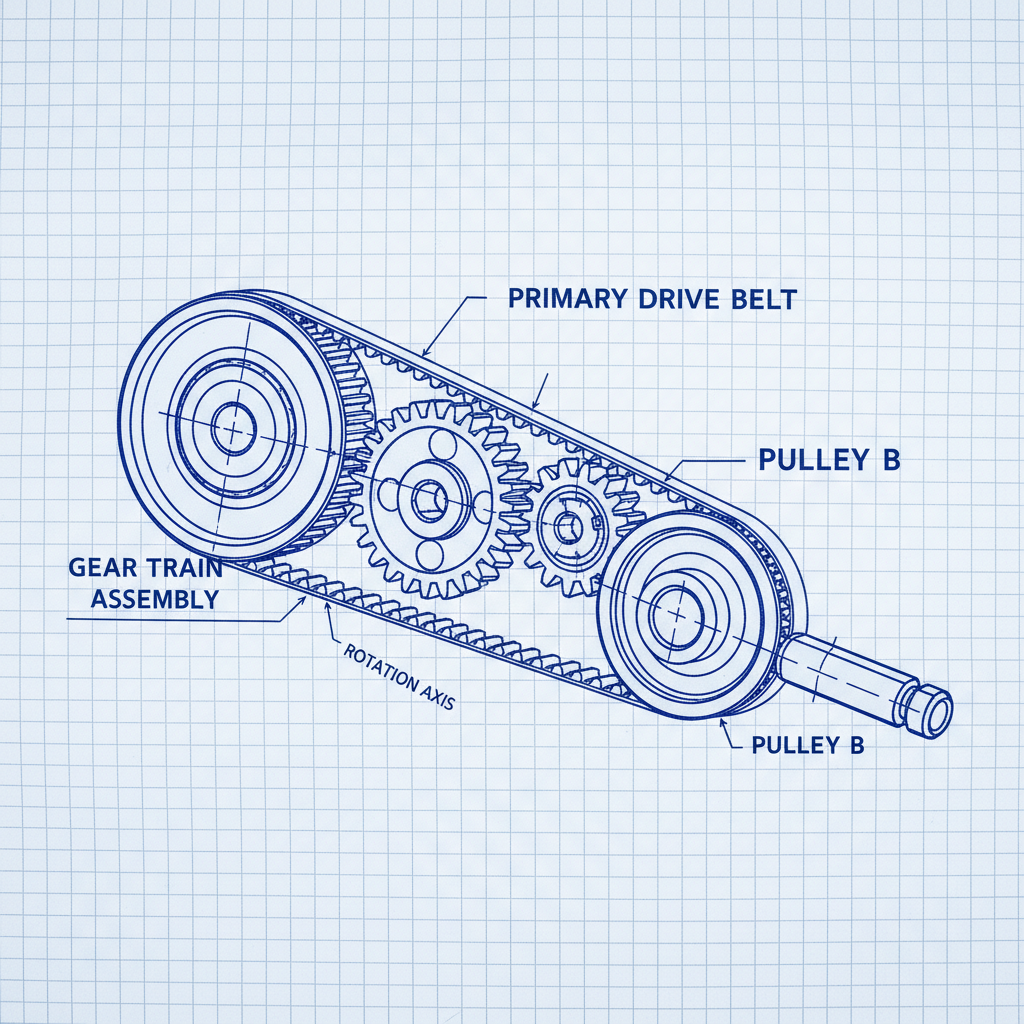
In the demanding world of heavy machinery, the reliability of engine cooling and power transmission is paramount. When a drive belt fails in the field, it can lead to catastrophic engine overheating and costly project delays, making the availability of a high-quality emergency fan belt a critical component of any fleet's maintenance strategy.
The industrial landscape, particularly in excavation and construction, relies on the seamless interaction of rubber components to transfer torque and maintain thermal balance. Choosing a belt that combines EPDM durability with precise OEM specifications ensures that machinery can withstand extreme environmental stressors without premature failure.
Understanding the technical nuances of the emergency fan belt—from its tensile strength to its heat resistance—allows operators to minimize downtime and maximize the lifespan of their equipment. By integrating genuine-standard parts like the 8PK Poly V EPDM belt, companies can ensure operational continuity even in the most rigorous conditions.
The Global Importance of High-Performance Fan Belts
Across the global construction and mining sectors, the failure of a single rubber component can halt multi-million dollar operations. ISO standards for industrial belts emphasize the need for thermal stability and fatigue resistance, as belts in excavators from Doosan, Volvo, and Caterpillar are subjected to extreme torque and fluctuating temperatures that can degrade inferior materials rapidly.
The demand for a reliable emergency fan belt stems from the necessity of "zero-downtime" goals. In remote mining sites or urban infrastructure projects, the ability to quickly replace a worn 8PK Poly V belt with a genuine-spec EPDM alternative prevents engine seizure and ensures that the cooling system maintains the optimal temperature required for heavy-duty performance.
Defining the Role of an Emergency Fan Belt in Heavy Machinery
In simple technical terms, an emergency fan belt is a high-strength drive belt designed to act as a critical backup or a high-performance replacement that restores the connection between the crankshaft and the cooling fan or alternator. Specifically, the Poly Ribbed or PK belt design allows for a larger surface area of contact, which is essential for transporting high power with minimal slippage.
Within modern industrial contexts, these belts are not merely rubber loops but engineered systems. They must integrate specifically with small pulley diameters, where thin profiles and low deformation are required to prevent the belt from slipping or cracking under the intense reverse bending designs common in compact excavator engine bays.
The connection to humanitarian and infrastructure needs is clear: in disaster relief operations, where excavators are used to clear debris, a belt failure can stop a rescue effort. Having a precise OEM part like the 2106-1019D13 ensures that these machines remain operational regardless of the environmental extremity.
Core Material Components and Engineering Factors
The effectiveness of an emergency fan belt is determined by its layered construction. The top fabric, composed of cotton and synthetic blends, provides the first line of defense against oil, wear, and cracking, ensuring the belt does not perish when exposed to engine leaks.
At the heart of the belt is the tension member, utilizing specially treated polyester cords. This core provides the high strength and shock resistance necessary to handle sudden load changes. When paired with EPDM (Ethylene Propylene Diene Monomer), the emergency fan belt achieves superior heat resistance and bending fatigue resistance compared to traditional neoprene belts.
Finally, the rubber ribs must maintain consistent adhesion to the tension member. The use of CR (Chloroprene Rubber) or EPDM ensures that the ribs do not separate from the cord under high tension, allowing for smooth driving and significant noise reduction during high-RPM operations.
Practical Applications Across Industrial Sectors
The application of the emergency fan belt extends across a wide array of heavy equipment. In the construction industry, machines from brands like Hitachi and Komatsu utilize these belts to drive water pumps and alternators. The low deformation of the 8PK Poly V belt is particularly beneficial in high-tension environments where power efficiency is critical.
In remote industrial zones, such as oil fields in the Middle East or mining operations in Southeast Asia, these belts are utilized for their ability to operate in high-temperature zones. The reduced heat generation during bending allows the belt to last significantly longer, reducing the frequency of maintenance intervals in areas where logistics are challenging.
Performance Comparison of Emergency Fan Belt Materials
Long-Term Value and Operational Advantages
Investing in a high-spec emergency fan belt provides tangible economic benefits through the reduction of unplanned downtime. By utilizing EPDM materials that exhibit excellent bending fatigue resistance, fleet managers can extend the mean time between failures (MTBF), effectively lowering the total cost of ownership for their machinery.
Beyond the logic of cost, there is the element of trust and safety. A belt that does not snap unexpectedly prevents engine overheating, which could otherwise lead to complete engine failure and potential safety hazards for the operator. The reliability of a genuine-standard belt provides the peace of mind necessary for operators working in high-pressure, time-sensitive environments.
Future Innovations in Rubber Belt Technology
The future of the emergency fan belt lies in the integration of smarter materials and digital monitoring. We are seeing a shift toward advanced synthetic polymers that can withstand even higher temperatures and more aggressive chemical exposure, ensuring that belts remain stable in the face of new, high-efficiency engine designs that run hotter.
Automation in production is also playing a key role. With advanced design concepts and precise molding technologies, manufacturers can now create belts with zero-tolerance deviations. This ensures a perfect fit for small pulley diameters, further reducing the friction and heat that typically lead to belt degradation.
Sustainability is becoming a core driver, with research focusing on bio-based elastomers that maintain the performance of EPDM while reducing the environmental footprint of rubber production. These "green" belts will allow global industries to maintain their productivity while aligning with international carbon reduction goals.
Overcoming Common Implementation Challenges
One of the most common challenges in maintaining an emergency fan belt is improper tensioning. Over-tightening can lead to premature bearing wear in the alternator or water pump, while under-tightening causes slippage and overheating. The solution lies in using precision tensioning tools and selecting belts with low deformation properties, such as the 8PK Poly V series.
Another hurdle is the proliferation of low-quality counterfeit parts that mimic OEM numbers but lack the internal polyester cord strength. To overcome this, professional operators are moving toward verified suppliers like Xingtai Hake Rubber Products, who provide documented material specifications and authorized OEM processing to ensure the belt can actually handle the rated load.
Finally, the challenge of "emergency" replacement in the field is solved by implementing standardized belt kits. By keeping a variety of EPDM belts that fit multiple models (e.g., Doosan and Cummins compatible), companies can ensure a rapid response to belt failure, transforming a potential multi-day shutdown into a quick, one-hour repair.
Technical Specification Analysis of Emergency Fan Belt Variants
|
Belt Material
|
Heat Resistance
|
Fatigue Life
|
Power Efficiency
|
| EPDM (Premium) |
Excellent (10/10) |
Very High (9/10) |
Maximum (10/10) |
| Chloroprene (CR) |
Good (7/10) |
High (8/10) |
High (8/10) |
| Standard Neoprene |
Moderate (5/10) |
Moderate (6/10) |
Moderate (6/10) |
| Poly V (Reinforced) |
High (8/10) |
Very High (9/10) |
High (9/10) |
| Synthetic Hybrid |
High (9/10) |
High (8/10) |
High (8/10) |
| Budget Rubber |
Low (4/10) |
Low (4/10) |
Low (5/10) |
FAQS
EPDM (Ethylene Propylene Diene Monomer) is specifically engineered for superior heat and ozone resistance. Unlike standard rubber, EPDM does not crack as easily under extreme temperature fluctuations and offers significantly better bending fatigue resistance, which is crucial for the small pulley diameters found in heavy machinery. This results in a longer lifespan and fewer unplanned replacements in the field.
The most reliable method is to refer to the OEM part number found in your machine's manual or printed on the existing belt. For example, the Doosan part number 2106-1019D13 or 65.96801-0130 corresponds to a specific 8PK Poly V belt. Always verify the "PK" number (e.g., 8PK), which indicates the number of ribs, to ensure the belt fits the pulleys perfectly.
While a generic belt might get you moving temporarily, it is risky for long-term use. Generic belts often lack the specific tension members (like treated polyester cords) and EPDM compounds required for heavy-duty machinery. This can lead to rapid slippage, overheating, or premature snapping. It is always recommended to use a genuine-spec emergency fan belt to protect your engine's internal components.
Look for visual cues such as glazing (a shiny appearance on the ribs), cracking across the ribs, or fraying edges. Auditory signs include a high-pitched squealing sound during startup or acceleration, which indicates slippage. If you notice a rise in engine temperature or a drop in alternator output, the belt may be slipping or stretched beyond its functional limit.
A V-belt has a single, wide wedge-shaped cross-section, whereas a Poly Ribbed (PK) belt consists of multiple smaller V-shaped ribs. The ribbed design provides a much larger surface area for grip without increasing the belt's thickness. This allows the belt to wrap around smaller pulleys more efficiently, reducing heat buildup and providing higher power transmission efficiency.
Yes, professional manufacturers like Xingtai Hake Rubber Products offer strong OEM capabilities. They can customize the rubber material (EPDM or CR), the rope/cord material for specific tension needs, and even the color or branded LOGO. This is ideal for companies operating specialized equipment that does not follow standard OEM dimensions.
Conclusion
Maintaining a high-performance emergency fan belt is not just about replacing a part; it is about safeguarding the heart of your machinery. By prioritizing materials like EPDM and adhering to strict OEM specifications such as the 8PK Poly V design, operators can ensure maximum power efficiency, noise reduction, and thermal stability. The synergy between a high-strength polyester core and heat-resistant rubber creates a component capable of enduring the world's harshest industrial environments.
As the industry moves toward more compact and powerful engine designs, the reliance on precision-engineered rubber components will only increase. We suggest that fleet managers transition from reactive replacements to a proactive maintenance strategy by stocking genuine-standard belts. Ensuring your equipment is equipped with the right belt today prevents the costly failures of tomorrow. For more information and high-quality replacements, visit our website: www.hawkbelt.com