

- Arabic
- French
- Russian
- Spanish
- Portuguese
- Turkish
- Armenian
- English
- Albanian
- Amharic
- Azerbaijani
- Basque
- Belarusian
- Bengali
- Bosnian
- Bulgarian
- Catalan
- Cebuano
- Corsican
- Croatian
- Czech
- Danish
- Dutch
- Afrikaans
- Esperanto
- Estonian
- Finnish
- Frisian
- Galician
- Georgian
- German
- Greek
- Gujarati
- Haitian Creole
- hausa
- hawaiian
- Hebrew
- Hindi
- Miao
- Hungarian
- Icelandic
- igbo
- Indonesian
- irish
- Italian
- Japanese
- Javanese
- Kannada
- kazakh
- Khmer
- Rwandese
- Korean
- Kurdish
- Kyrgyz
- Lao
- Latin
- Latvian
- Lithuanian
- Luxembourgish
- Macedonian
- Malgashi
- Malay
- Malayalam
- Maltese
- Maori
- Marathi
- Mongolian
- Myanmar
- Nepali
- Norwegian
- Norwegian
- Occitan
- Pashto
- Persian
- Polish
- Punjabi
- Romanian
- Samoan
- Scottish Gaelic
- Serbian
- Sesotho
- Shona
- Sindhi
- Sinhala
- Slovak
- Slovenian
- Somali
- Sundanese
- Swahili
- Swedish
- Tagalog
- Tajik
- Tamil
- Tatar
- Telugu
- Thai
- Turkmen
- Ukrainian
- Urdu
- Uighur
- Uzbek
- Vietnamese
- Welsh
- Bantu
- Yiddish
- Yoruba
- Zulu
सप्टेंबर . 04, 2025 11:24 सूचीकडे परत
Choose the Right Toothed Drive Belts for Every Truck Engine
In the fast-paced world of logistics and commercial transport, the health of a vehicle's engine components can make or break operations. Among these components, the truck fan belt, often underestimated, plays a pivotal role in ensuring optimal functionality. Whether navigating highways or tackling rugged terrain, truck engines must operate under high pressure and temperature for long hours. It is here that high-quality दात असलेला ड्राइव्ह बेल्ट step in, providing the needed durability and performance. A worn-out belt can lead to overheating, battery failure, or even complete engine shutdown. Therefore, understanding the importance of a reliable truck engine belt is not just a matter of maintenance—it's a matter of operational survival.
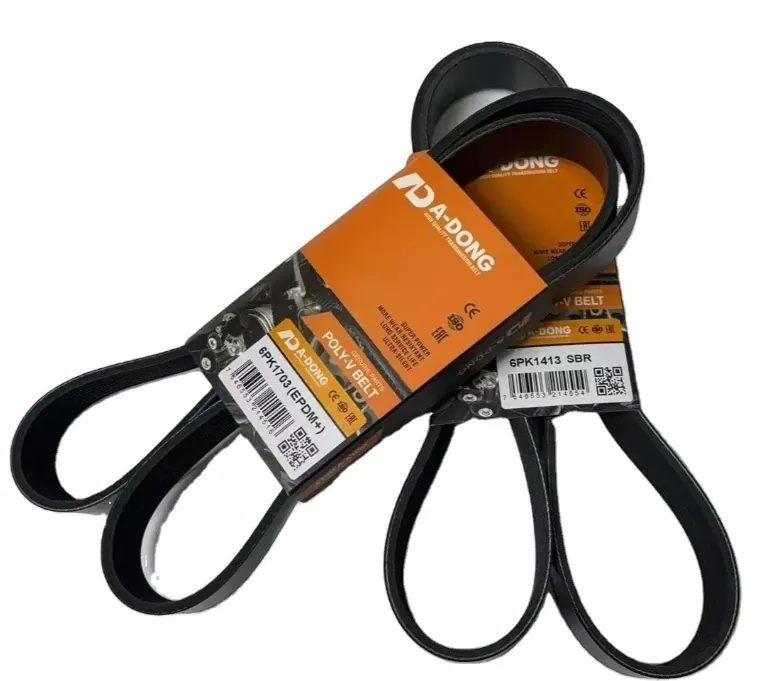
Choosing the Right Truck Fan Belt for Maximum Efficiency
Selecting the right truck fan belt is not as simple as matching part numbers. Each vehicle's engine design requires specific belt dimensions, tension tolerances, and structural characteristics. A belt that's too loose can slip, while one that's too tight can strain the bearings and components it powers. Modern diesel engine belts are engineered with precision to avoid these issues, offering optimal performance across various engine models. The market now offers belts that incorporate temperature-resistant rubber compounds and high-tensile synthetic cords, making them ideal for trucks operating under demanding conditions.
Additionally, the design of the truck engine belt has evolved to improve contact with pulleys and enhance grip. The result is a belt system that minimizes power loss, reduces slippage, and operates more quietly. When looking for a replacement, one should also consider the type of load the truck typically carries and the climate in which it operates. For example, in colder regions, a belt with improved flexibility and resistance to brittleness is preferable. Investing in a high-quality truck fan belt ensures uninterrupted engine performance and extends the life of other key components, reducing maintenance costs over time.
The Engineering Behind Modern Truck Engine Belts
Today's truck engine belt is more than just a rubber loop—it’s a product of sophisticated engineering. These belts are designed to transmit torque effectively across multiple components. Their toothed or ribbed surfaces help align and grip the pulley system, creating synchronized movement essential for efficient engine performance. Especially in heavy-duty applications, the use of दात असलेला ड्राइव्ह बेल्ट has become more prevalent due to their superior grip and reduced risk of slippage under high loads.
Advanced materials such as EPDM rubber, aramid fibers, and polyester cords are commonly used to manufacture diesel engine belts. These materials provide not only flexibility but also resistance to oil, heat, and aging. Furthermore, modern belts undergo rigorous testing to meet OEM specifications, ensuring they can withstand prolonged use in harsh environments. The result is a truck fan belt that not only delivers consistent performance but also offers excellent cost efficiency through its extended lifespan. Truck owners and fleet operators benefit from reduced downtime and enhanced engine reliability, making these belts a smart choice in fleet management.
Performance Advantages of Toothed Drive Belts in Diesel Engines
The introduction of दात असलेला ड्राइव्ह बेल्ट into the trucking industry has revolutionized how power is transferred within diesel engines. These belts, characterized by their interlocking teeth and precision alignment, reduce friction and slippage, resulting in a more efficient power transmission. Unlike traditional belts, they maintain constant synchronization between the crankshaft and camshaft, which is essential in ensuring optimal fuel injection timing in diesel engines. This level of precision translates to improved fuel efficiency, smoother engine operation, and reduced emissions.
Moreover, दात असलेला ड्राइव्ह बेल्ट are less prone to stretching or warping under tension, making them more reliable in high-performance applications. Their resistance to wear and ability to maintain shape under pressure significantly reduces maintenance frequency. For vehicles operating in long-haul logistics or construction sectors, this reliability is indispensable. Investing in top-tier diesel engine belts not only supports smoother vehicle operations but also ensures compliance with increasingly strict environmental regulations. By reducing wear on adjacent engine components, these belts contribute to a more sustainable and cost-effective engine lifecycle.
Ensuring Longevity Through Preventive Maintenance of Diesel Engine Belts
Even the best diesel engine belt cannot perform its function without proper maintenance. Routine inspections are essential to detect early signs of wear such as cracks, fraying, or glazing. Since these belts operate under constant tension and high temperature, their degradation may be gradual but irreversible. Failure to replace a worn truck fan belt in time can result in serious engine failure, especially if the belt controls critical functions like water pumps or the cooling fan.
Proper tensioning is another crucial aspect. An overtightened truck engine belt can lead to premature bearing failure, while an under-tightened belt may slip or disengage. Using a tension gauge can help ensure accuracy during installation. Furthermore, it’s vital to replace the belt as per manufacturer recommendations or based on mileage intervals. In many cases, proactive replacement of दात असलेला ड्राइव्ह बेल्ट has saved fleets from costly breakdowns and schedule disruptions.
Fleet managers should consider implementing a scheduled maintenance program that includes regular belt checks and timely replacements. The investment in high-quality truck fan belts is best supported by a maintenance strategy that maximizes their lifespan and keeps engines running at peak efficiency. As technology continues to evolve, integrating digital tracking tools or diagnostic software to monitor belt performance could further enhance maintenance outcomes and minimize the risk of failure.
Truck Fan Belt FAQs
What is a truck fan belt and why is it important?
A truck fan belt is a component that connects the engine's crankshaft to accessories like the cooling fan, alternator, and water pump. It is essential for circulating air and coolant, thus preventing engine overheating and ensuring proper electrical system performance. Without it, the truck would quickly overheat and lose power to critical systems, leading to complete engine shutdown. Therefore, it plays a key role in engine health and overall vehicle reliability.
How often should a truck engine belt be replaced?
The lifespan of a truck engine belt varies based on the material, driving conditions, and engine load, but most belts should be replaced every 60,000 to 100,000 kilometers. However, it's best to consult the vehicle’s manufacturer specifications or use diagnostic tools to assess belt wear. Preventive replacement can help avoid unexpected breakdowns and extend the life of other engine components. Visual inspections for cracks, frays, or oil contamination are also helpful in determining when replacement is due.
What makes toothed drive belts more efficient than traditional belts?
Toothed drive belts offer superior grip and synchronization due to their interlocking teeth, which prevent slippage even under high torque. This design ensures more accurate timing and efficient power transfer, especially in diesel engines that demand precision. Additionally, their robust construction and high resistance to wear make them ideal for long-term use in harsh conditions. Their performance advantage becomes especially clear in high-load, high-temperature applications where traditional belts may stretch or fail prematurely.
Are diesel engine belts compatible with all truck models?
Not all diesel engine belts are universally compatible. Different truck models have varying engine configurations, pulley sizes, and tension requirements. It's essential to select a belt that meets the specific dimensions and operational demands of the vehicle. Consulting with a qualified mechanic or supplier and referencing OEM specifications is key to ensuring the correct fit. Using an incorrect belt can lead to subpar engine performance or even mechanical failure, making compatibility a top priority.
What are the signs of a failing truck fan belt?
Common signs of a failing truck fan belt include squealing noises, overheating, dimming headlights, or a loss of power to engine accessories. You might also notice visible damage such as cracks, frays, or glazing on the belt's surface. Ignoring these signs can result in serious engine damage. If any of these symptoms appear, the belt should be inspected and possibly replaced immediately to avoid further complications. Proactive monitoring is always the best defense against unexpected failures.
-
Comprehensive Guide to Selecting High Performance drive belts
बातम्याApr.16,2026
-
Guide to Choosing the Right Fan Belt for Car Performance
बातम्याApr.09,2026
-
Understanding and Maintaining Your Vehicle's Serpentine Belt for Optimal Performance
बातम्याApr.07,2026
-
Choosing the Right Steering Belt for Optimal Vehicle Performance and Safety
बातम्याApr.04,2026
-
Understanding the Serpentine Belt for Optimal Vehicle Performance
बातम्याMar.31,2026
-
Comprehensive Guide to Understanding Your Fan Belt Car and Maintenance
बातम्याMar.28,2026