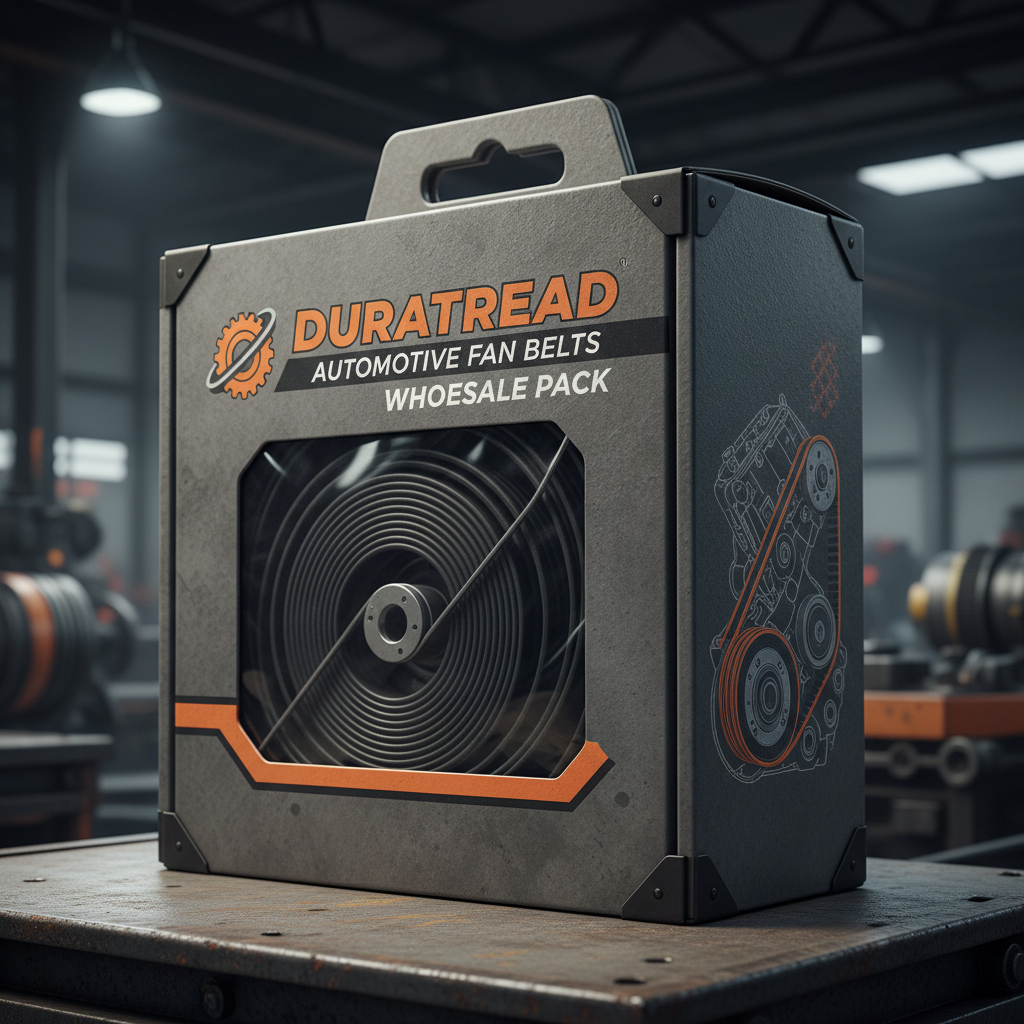
Honestly, things have been moving fast lately. Everyone's talking about miniaturization, right? And higher precision. It’s like every engineer wants to squeeze more power out of less space. But, you know, squeezing too hard often breaks things. We’ve been seeing a lot of demand for more compact timing belts, especially for robotics and those tiny CNC machines everyone’s building in their garages these days. It's good business, sure, but it also means we're pushing the materials to their limits.
I've noticed, a lot of designers get caught up in the theoretical performance numbers – the tensile strength, the elongation, all that jazz. But they forget about the feel of the material. How it handles in the cold, how it reacts to grease and grime… That's the stuff that matters on a construction site, or even in a clean workshop. Last time I was at the Yantai factory, they were showing off this new polymer blend that looked fantastic on paper. But when I actually tried to work with it, it felt…sticky. Like trying to thread a needle with mittens.
We primarily use polyurethane for the 3m-352-9 industrial timing belt, but not just any polyurethane. It has to be a specific durometer – 95A is our sweet spot for most applications. It smells…well, like polyurethane, kind of sweet and chemical-y, if you're up close. The cords inside, those are fiberglass, and they've gotta be perfectly tensioned. If they’re not, you’ll get harmonic vibrations that’ll drive you insane. And speaking of insane, have you noticed how everyone wants “lifetime” belts now? Like, they think a timing belt will last forever.


Strangely enough, the biggest trend right now isn’t about making things better, it's about making them cheaper. Everyone is under pressure to reduce BOM costs, and that often means compromising on quality. We're seeing a lot of requests for thinner belts, lower-grade materials, and tighter tolerances. Which, you know, is a recipe for disaster. It's like trying to build a skyscraper out of popsicle sticks. You might get it to stand, but you wouldn't want to live in it.
The biggest pitfall? Underestimating the dynamic loads. Designers will calculate the static tension just fine, but they forget that a timing belt isn't just sitting there doing nothing. It's accelerating, decelerating, reversing direction… all that puts a huge strain on the belt and the pulleys.
Figuring out the right pitch is crucial. It's not just about the gear ratio. You need to consider the speed, the load, and the precision requirements. Generally, a finer pitch offers higher precision but lower speed and load capacity. I usually recommend starting with a standard pitch and then adjusting it based on the specific application. Always check the pulley alignment, too – even a slight misalignment can cause premature wear.
There's no hard and fast rule, honestly. It depends on the operating conditions. But as a general guideline, inspect the belt regularly for cracks, wear, and tension loss. If you notice any signs of damage, replace it immediately. Ignoring it could lead to catastrophic failure. And trust me, you don't want that. A good rule of thumb is to have a spare on hand, just in case.
It depends on the specific material. Standard polyurethane belts aren’t great with strong solvents, like I mentioned before. But we offer belts made from specialized materials that can withstand harsh environments. For high-temperature applications, we have belts made from HNBR (Hydrogenated Nitrile Butadiene Rubber). It’s pricier, but it’ll hold up much better.
Definitely not getting the tension right. Too loose, and the belt will slip. Too tight, and you'll overload the bearings. There's a sweet spot, and it takes a little experience to find it. A tension gauge is a good investment. Also, make sure the pulleys are aligned properly. Even a slight misalignment will cause premature wear and tear. And for heaven’s sake, don't use a hammer to install it!
Absolutely. We can cut belts to almost any length you need. Just provide us with the precise dimensions, and we'll take care of the rest. We can also add custom features, like notches or holes. But keep in mind that custom belts usually have a longer lead time and may be more expensive than standard sizes.
Store them flat, away from direct sunlight, heat, and chemicals. Don't bend them too sharply, or you'll damage the cords. And keep them in a clean, dry place. Basically, treat them with respect. They’re not indestructible, you know? A little care goes a long way.
So, yeah, wholesale 3m-352-9 industrial timing belt. It's not the most glamorous part of manufacturing, but it's essential. It's about understanding the materials, the applications, and the real-world challenges. It's about finding the right balance between performance, cost, and reliability. It’s about knowing when to stick with the tried-and-true and when to innovate.
Ultimately, whether this thing works or not, the worker will know the moment he tightens the screw. And if it runs smooth and quiet, then we’ve done our job right. If you're looking for a reliable timing belt supplier, give us a shout at Hawkbelt. We’ll get you sorted.