
Mobile Phone
+8615369985502
Call Us
+8615369985502
E-mail
mike@hawkbelt.com

Premium pk belt Solutions for Turkey's Automotive Market

Engineering high-performance rubber transmission components tailored for the diverse climate and rigorous road conditions of the Turkish automotive sector.

Premium pk belt Solutions for Turkey's Automotive Market

Delivering world-class rubber parts manufacturing precision to ensure maximum durability and efficiency for Turkey's commercial and private vehicle fleets.

Automotive Rubber Parts Landscape in Turkey

Analyzing the impact of geography and economy on transmission belt demand.

Turkey's unique position as a bridge between Europe and Asia has fostered a robust automotive hub. However, the extreme temperature fluctuations—from freezing Anatolian winters to scorching Mediterranean summers—place immense stress on an auto v belt, necessitating rubber compounds with superior thermal stability.

The region's heavy reliance on logistics and commercial transport means that belts are subject to continuous high-load cycles. This environment accelerates the wear of the alternator belt, driving a market shift toward EPDM-based materials that resist cracking and stretching under heavy duty.

Furthermore, the burgeoning urban mobility trend in cities like Istanbul and Ankara has led to a surge in two-wheeler usage, significantly increasing the localized demand for high-torque motorcycle belt replacements that can handle stop-and-go traffic patterns.

Evolution of Rubber Belt Manufacturing in Turkey

From traditional molding to high-precision synchronized engineering.

Market Development History

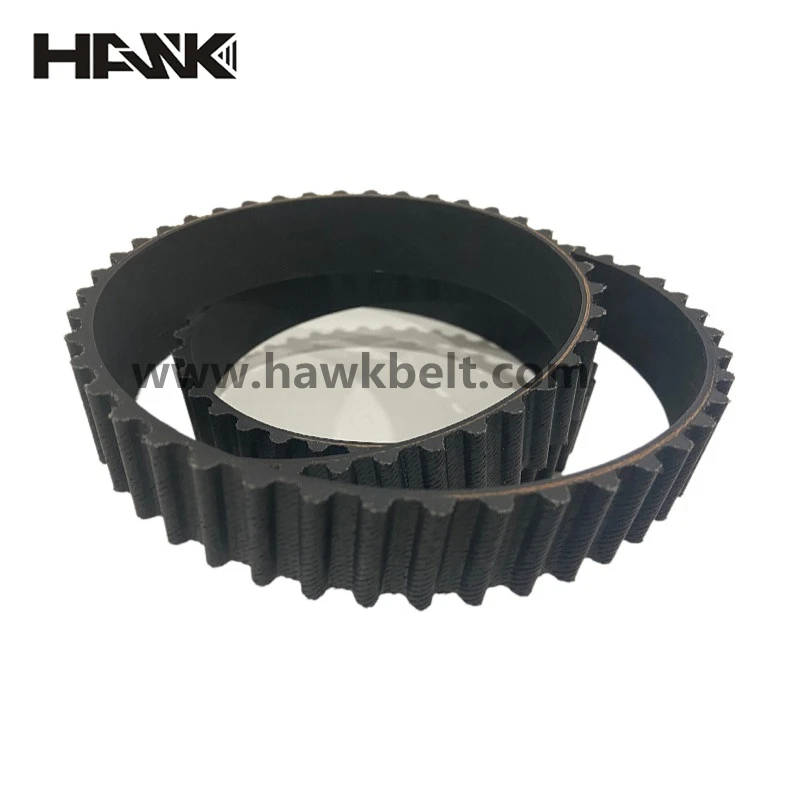
In the 1990s, the Turkish market primarily relied on basic vulcanized rubber belts. These early versions of the auto rubber timing belt lacked the precise tooth geometry required for modern overhead cam engines, leading to frequent replacements.

By the mid-2000s, the integration of European automotive standards pushed the industry toward "Poly-V" technology. This era saw the mass adoption of the multi-ribbed profile, optimizing power transmission and reducing noise levels across the domestic fleet.

From 2015 to the present, the focus has shifted toward "Smart Rubber" chemistry. Manufacturers now utilize advanced polymers that provide autonomous tension adjustment and increased resistance to oil and chemical leaks common in older engine bays.

Future Development Trends

Sustainable Bio-Polymers

Driven by EU environmental regulations affecting Turkish exports, there is a move toward integrating sustainable elastomers to reduce the carbon footprint of belt production.

Hybrid Transmission Systems

As electric and hybrid vehicles enter the Turkish market, rubber belts are being redesigned to handle the instantaneous torque spikes of electric motors.

AI-Driven Wear Prediction

Integration of sensor-compatible belt materials that allow vehicle diagnostics to predict failure before a snap occurs, increasing road safety.

Industry Trends & Future Outlook

Strategizing for the next generation of rubber component engineering.

Extreme Thermal Resistance
Developing compounds that maintain elasticity from -40°C to +150°C to suit Turkey's diverse climate.
Precision Tooth Geometry
Reducing slippage and noise through micron-level precision in timing belt molding processes.
Anti-Aging Polymers
Integrating ozone-resistant additives to prevent premature aging in high-pollution urban environments.
Lightweighting Tech
Using high-tensile cords to reduce belt thickness and weight without compromising torque capacity.

Industry Outlook

Based on regional search data and automotive trends, Turkey is seeing a sharp increase in the demand for premium aftermarket components. As the average age of vehicles in the region rises, the need for high-reliability replacements like the pk belt will outperform general economy options.

The trajectory suggests a convergence toward "Zero-Maintenance" components. Future rubber parts manufacturing will prioritize materials that eliminate the need for manual tensioning, aligning with the global trend of reducing vehicle downtime.

Localized Application Scenarios in Turkey

Real-world performance tests across the Turkish landscape.

01. Long-Haul Logistics in Central Anatolia

Heavy-duty trucks crossing the plateau require belts that resist extreme temperature swings. Our high-grade auto v belt ensures consistent power delivery during steep climbs.

02. Urban Delivery Scooters in Istanbul

The dense traffic of Istanbul demands belts with exceptional friction and heat dissipation. Our reinforced motorcycle belt prevents slippage during frequent acceleration.

03. Coastal Tourism Fleet Maintenance

High humidity and salt air in Antalya and Izmir can corrode pulleys and degrade rubber. We provide specialized coatings for the alternator belt to prevent premature cracking.

04. Industrial Machinery in Kocaeli

Turkey's manufacturing heartland requires timing belts that can run 24/7 without losing synchronization. Our auto rubber timing belt is optimized for industrial-grade endurance.

05. Agricultural Equipment in the Aegean Region

Dust and debris in olive groves can act as abrasives. Our multi-ribbed pk belt features an anti-abrasion outer layer to extend service life.

Brand Story

The Global Development Journey of Xingtai Hawk Rubber and Plastic Products Co., Ltd.

Foundation of Excellence

Started with a mission to solve the instability of rubber transmission, focusing on precision molding and material purity.

Technological Breakthrough

Introduced advanced EPDM vulcanization processes, significantly increasing the lifespan of belts under high-heat conditions.

Global Expansion

Expanded operations to serve the Asia-Turkey corridor, adapting products to meet diverse regional climate standards.

Quality Certification

Achieved international ISO standards, ensuring every rubber part manufactured meets stringent safety and performance criteria.

Future Vision

Committing to sustainable manufacturing and AI-integrated rubber components for the next generation of mobility.

Turkish Market FAQ: Rubber Parts

Expert answers to common technical queries in the region.

How often should I replace an alternator belt in Turkey's climate?

Due to extreme temperature swings in Anatolia, we recommend a professional inspection every 40,000 km and replacement every 60,000 to 80,000 km to avoid sudden failure.

Can an auto v belt handle high-load commercial transport?

Yes, provided it is made from high-tensile EPDM. Our belts are specifically engineered to resist stretching under the heavy loads common in Turkish logistics.

What are the signs that an auto rubber timing belt is failing?

Look for visible cracks, fraying edges, or a distinct ticking sound from the engine. In Turkey's dusty environments, surface glazing is also a common sign of wear.

Why is the pk belt preferred for modern passenger cars?

The multi-ribbed design of a pk belt offers a larger surface area for grip, reducing slippage and increasing the efficiency of accessories like AC compressors.

Is a specialized motorcycle belt necessary for urban commuting?

Absolutely. Urban commuting involves constant gear shifts and acceleration, which generates heat. A reinforced belt prevents premature snapping in heavy traffic.

How does rubber quality affect fuel efficiency in Turkey?

High-precision belts reduce parasitic loss. By ensuring a perfect fit and minimal slip, the engine spends less energy on transmission, slightly improving overall fuel economy.

Get Expert Consultation

Ready to optimize your vehicle's performance with world-class rubber components? Our specialists are ready to support the Turkey market.

Contact Us Now

If you are interested in our products, you can choose to leave your information here, and we will be in touch with you shortly.