Mobile Phone
+8615369985502
Call Us
+8615369985502
E-mail
mike@hawkbelt.com

Premium Auto Rubber Timing Belt Solutions for India's Automotive Market

Engineered for extreme durability and precision, delivering high-performance rubber parts for India's diverse transportation ecosystem.

Premium Auto Rubber Timing Belt Solutions for India's Automotive Market

Providing cutting-edge rubber transmission components designed to withstand high torque and harsh environmental conditions in the Indian subcontinent.

Current Landscape of Rubber Part Manufacturing in India

Analyzing the operational challenges and market demands in Asia's fastest-growing automotive hub.

The Indian automotive market is characterized by extreme thermal fluctuations and high dust levels, which accelerate the degradation of standard rubber components. For critical parts like the alternator belt, the demand for heat-resistant EPDM compounds has surged to prevent premature cracking under India's intense summer heat.

Urban congestion in cities like Mumbai and Delhi creates a "stop-and-go" driving pattern, putting immense stress on the auto v belt. This requires rubber formulations that offer superior grip and fatigue resistance to maintain efficiency across various engine RPMs.

Furthermore, the massive proliferation of two-wheelers has made the motorcycle belt a high-volume commodity, where the balance between cost-effectiveness and long-term durability is the primary competitive driver for local manufacturers.

Evolution and Trajectory of Rubber Belt Technology

From basic vulcanized rubber to advanced synthetic polymer composites.

Market Development History

In the early 2000s, the Indian market relied heavily on traditional neoprene-based belts. These were sufficient for lower-horsepower engines but struggled with the rising heat outputs of modern, compact engine designs.

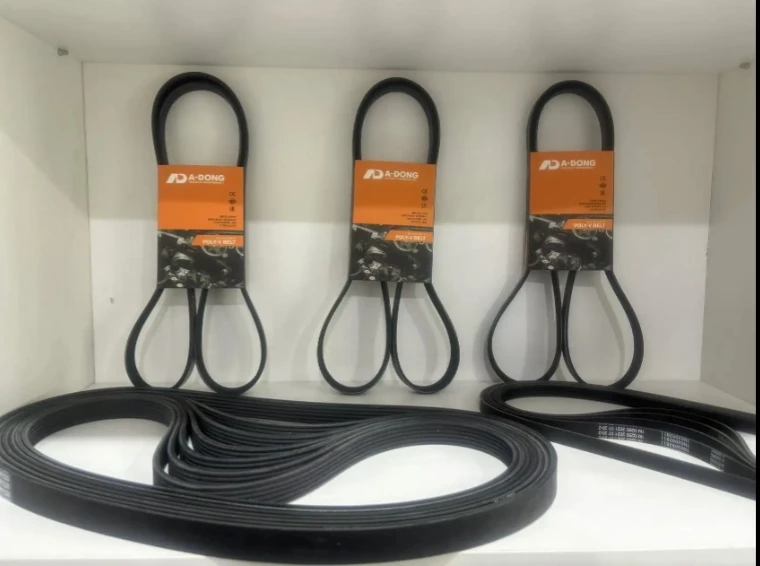
By 2010, there was a significant shift toward the pk belt (Poly-V belt). This iteration allowed for multiple ribs on a single belt, increasing the contact area and reducing slippage, which was essential for the new generation of multi-accessory engines.

From 2018 to the present, the focus has shifted to "Zero-Maintenance" goals, integrating high-tensile cords and advanced coatings to extend the replacement intervals of timing and drive belts in commercial fleets.

Future Development Trends

Bio-based Polymer Integration

Reducing dependence on petroleum-based rubber to align with India's green energy initiatives and global sustainability standards.

Smart-Sensing Belt Systems

Integration of wear-indicator materials that change color or texture when the belt reaches its critical wear limit to prevent catastrophic engine failure.

High-Temperature EPDM Evolution

Developing compounds capable of withstanding 150°C+ without loss of elasticity, specifically for heavy-duty commercial trucks in desert regions.

Industry Trends and Future Outlook

Strategic forecasts for the next 3-5 years based on automotive shifts in India.

EV Hybridization Shift
The rise of Hybrids in India increases the demand for belts that can handle frequent start-stop cycles of the ICE engine.
Material Lightweighting
Switching to reinforced carbon-fiber cords to reduce rotating mass and improve fuel efficiency in small cars.
Precision Manufacturing
Adoption of AI-driven quality control to reduce tooth pitch variance in timing belts, reducing engine noise.
Supply Chain Localization
Moving toward "Make in India" initiatives to reduce lead times for specialized industrial rubber components.

Industry Outlook

Google search trends in India indicate a growing interest in "long-life engine parts" and "fuel efficiency optimization." This signals a market shift from cheap replacements to high-value, durable components that reduce the total cost of ownership.

As India expands its commercial logistics infrastructure, the demand for heavy-duty belts that can withstand continuous operation in varied terrains will drive the next wave of R&D in the rubber parts industry.

Localized Application Scenarios in India

Real-world deployment of rubber belts across Indian transportation sectors.

1. Urban Ride-Sharing Fleets

High-mileage cabs in Bangalore and Pune utilize reinforced pk belt systems to handle the constant load of air conditioning and alternators in heavy traffic.

2. Inter-City Logistics Trucks

Long-haul trucks crossing the Thar Desert require heavy-duty auto v belt options with enhanced heat dissipation to avoid snapping during extreme temperature spikes.

3. Two-Wheeler Commuter Market

Daily commuters in densely populated cities rely on high-friction motorcycle belt components that provide smooth acceleration and high wear resistance.

4. Agricultural Machinery in Rural Areas

Tractors and harvesters in Punjab use specialized rubber belts that are resistant to oil and chemical contamination common in farming environments.

5. Luxury Passenger Vehicles

High-end cars in India's metros demand ultra-quiet auto rubber timing belt solutions to ensure a premium, noise-free cabin experience.

Brand Story

Global Development Journey of Xingtai Hawk Rubber & Plastic Products Co., Ltd.

Foundational Excellence

Established with a focus on precision rubber molding, solving the initial industry pain point of inconsistent belt tension and rapid wear.

Material Innovation

Developed proprietary EPDM and Hydrogenated Nitrile rubber blends to meet the stringent demands of international automotive standards.

Global Expansion

Extended our reach into the Asian market, specifically India, by tailoring belt specifications to local climate and vehicle types.

Technological Leadership

Integrated automated precision cutting and vulcanization lines to ensure zero-defect production for timing belt series.

Future Vision

Committed to leading the transition toward sustainable, eco-friendly rubber compounds without compromising on industrial strength.

Frequently Asked Questions for Indian Customers

Expert answers to the most common technical queries regarding rubber belts in India.

How does the Indian climate affect the lifespan of an alternator belt?

Extreme heat causes rubber to oxidize and crack. We use high-grade EPDM which is specifically designed to resist thermal degradation in tropical climates, extending the life of your alternator belt significantly.

What is the difference between a standard auto v belt and a pk belt?

An auto v belt has a single deep V-shape for power transmission, while a pk belt (Poly-V) has multiple small ribs, providing more surface area and better efficiency for multiple accessories.

When should I replace my auto rubber timing belt to avoid engine failure?

Typically every 60,000 to 100,000 km. However, in dusty Indian conditions, we recommend a visual inspection every 20,000 km for signs of fraying or glazing.

Are your motorcycle belt products compatible with Indian commuter bikes?

Yes, our motorcycle belt range is engineered to match the OEM specifications of the most popular 100cc to 250cc bikes prevalent in the Indian market.

How can I identify a low-quality rubber belt for my vehicle?

Low-quality belts often have inconsistent rib height, smell strongly of chemicals, and crack quickly under slight bending. Our products undergo rigorous stress tests to ensure uniformity.

Do you provide bulk wholesale options for rubber parts distributors in India?

Yes, we specialize in high-volume B2B supply, offering tiered pricing and customized packaging for large-scale distributors across various Indian states.

Get Expert Rubber Solutions Today

Our technical team is ready to help you optimize your vehicle performance with the best rubber parts in India.

Contact Us Now

If you are interested in our products, you can choose to leave your information here, and we will be in touch with you shortly.