
Mobile Phone
+8615369985502
Call Us
+8615369985502
E-mail
mike@hawkbelt.com

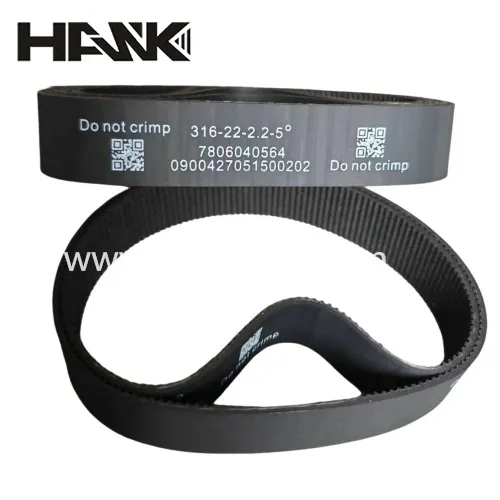
High-Performance pk belt Solutions for Zimbabwe's Automotive Sector

Engineered for durability and precision, providing the Zimbabwean transport and agricultural industry with world-class rubber power transmission components.

High-Performance pk belt Solutions for Zimbabwe's Automotive Sector

Providing specialized rubber components designed to withstand the extreme environmental challenges of Zimbabwe, ensuring maximum engine efficiency and longevity.

Current State of Rubber Belt Markets in Zimbabwe

Analyzing the impact of climate and infrastructure on rubber part degradation.

In Zimbabwe, the automotive sector faces unique challenges due to extreme temperature fluctuations and dusty road conditions. The demand for a reliable alternator belt is high, as the heat accelerates the thermal degradation of standard rubber, leading to premature cracking and slippage in commercial vehicles.

The logistics network in regions like Harare and Bulawayo relies heavily on older vehicle fleets, which creates a consistent market for the auto v belt. Local workshops often struggle with low-quality imports that cannot handle the torque requirements of heavy-duty hauling across rugged terrains.

Furthermore, the rise of two-wheeler transport for urban commuting has spiked the requirement for a durable motorcycle belt. With increased usage in delivery services, the need for rubber parts that resist oil contamination and abrasion has become a priority for local distributors.

Evolution of Rubber Component Technology

From basic rubber moldings to advanced synthetic polymers.

Market Development History

During the 1990s, the Zimbabwean market primarily utilized basic neoprene-based belts. These early iterations of the auto rubber timing belt provided basic synchronization but suffered from rapid wear under the intense African sun.

By the mid-2000s, the industry transitioned toward EPDM (Ethylene Propylene Diene Monomer) technology. This shift allowed for significantly better heat resistance and flexibility, reducing the frequency of replacements for heavy-duty machinery and passenger cars.

From 2015 to the present, the market has integrated precision-ground profiles and high-tensile cord reinforcements, moving away from generic sizes to vehicle-specific precision parts that optimize fuel efficiency and reduce noise pollution.

Future Development Trends

Eco-Friendly Polymer Integration

A shift toward biodegradable or recyclable rubber compounds to align with global sustainability goals while maintaining high tensile strength.

Smart Wear-Sensing Materials

Integration of conductive fibers within the belt structure to allow sensors to detect thinning or fraying before a critical failure occurs.

Extreme Heat Specialization

Development of specialized coatings that reflect UV radiation, specifically tailored for the high-ambient temperatures of the Southern African region.

Industry Trends and Future Outlook

Forecasting the trajectory of rubber parts manufacturing for the next 5 years.

Enhanced Thermal Stability
Developing rubber compounds that maintain elasticity up to 150°C to prevent stretching in tropical climates.
Precision Ribbed Geometry
Optimizing the rib profile of belts to reduce friction and increase power transmission efficiency by 15%.
Hybrid Material Reinforcement
Using aramid fibers combined with synthetic rubber to eliminate stretch in timing applications.
Digital Fitment Integration
Adopting QR-coded part tracking for precise fitment matching via mobile apps for local mechanics.

Industry Outlook

Google search trends indicate a rising interest in "heavy-duty automotive parts" within Zimbabwe, signaling a transition toward higher-grade industrial components. As the nation upgrades its transport infrastructure, the demand for precision rubber parts will move from generic replacements to OEM-standard specifications.

We predict that within 3-5 years, the rubber parts industry in Zimbabwe will prioritize "Long-Life" cycles over "Low-Cost" options, as the economic cost of vehicle downtime becomes more significant than the initial purchase price of a high-quality belt.

Localized Application Scenarios in Zimbabwe

Real-world usage of rubber parts across various Zimbabwean sectors.

1. Commercial Agriculture Machinery

Implementing high-torque belts in tractors and harvesters used in the Maize and Tobacco farms of Mashonaland, ensuring no slippage during peak harvest seasons.

2. Urban Delivery Motorcycle Fleets

Using reinforced belts for delivery bikes in Harare, where frequent stop-and-go traffic requires rubber components that can handle constant acceleration stress.

3. Long-Haul Mining Logistics

Installing heavy-duty rubber belts in trucks transporting minerals from Great Dyke mines to ports, where endurance against dust and vibration is critical.

4. Public Transport (Kombis)

Equipping commuter omnibuses with high-durability belts to ensure reliable operation under full passenger loads and high ambient temperatures.

5. Industrial Generator Power Systems

Utilizing precision belts in backup power generators for hospitals and offices to ensure stable electricity during grid fluctuations.

Brand Story

Global Development History of Xingtai Hawk Rubber and Plastic Products Co., Ltd.

Foundation of Excellence

Started with a commitment to solve the core problem of rubber fragility, focusing on industrial-grade rubber molding for automotive power transmission.

Technical Innovation

Introduced advanced EPDM synthesis processes to eliminate common failure points like heat-induced cracking and premature stretching.

Market Expansion

Expanded our footprint into the African market, tailoring product specifications to survive extreme environments and heavy-duty usage.

Quality Certification

Achieved international quality standards, ensuring that every belt produced meets rigorous tensile and durability benchmarks.

Global Vision

Now dedicated to providing the most resilient rubber solutions worldwide, focusing on sustainability and zero-failure engineering.

Common Questions for Zimbabwe Rubber Parts

Expert answers to the most frequent technical queries from the region.

How to extend the life of an alternator belt in hot climates like Zimbabwe?

Regularly check for tension and use EPDM-based belts which are specifically designed to resist thermal degradation and cracking under high heat.

What are the signs that an auto rubber timing belt needs immediate replacement?

Look for visible cracks, glazing (shiny spots), or fraying edges. In Zimbabwe's dusty environment, excessive grit accumulation can also accelerate wear.

Can a motorcycle belt handle the high load of urban delivery services?

Yes, provided it is a high-tensile reinforced rubber belt designed for frequent torque spikes and heat resistance.

What is the difference between a standard auto v belt and a pk belt?

A V-belt has a wedge shape for high-torque, low-speed applications, while a PK belt (poly-v) has multiple small ribs for higher efficiency and smoother operation.

Why do belts slip more often during the Zimbabwean rainy season?

Moisture and mud can contaminate the pulley surface. Using belts with high-grip compounds reduces slippage during wet weather.

How often should I inspect rubber belts on heavy-duty mining trucks?

Due to the harsh conditions in mining zones, we recommend a detailed inspection every 5,000km to prevent catastrophic failure.

Ready to Upgrade Your Fleet's Performance?

Contact our technical team today for specialized rubber part procurement and consultation for your business in Zimbabwe.

Contact Us Now

If you are interested in our products, you can choose to leave your information here, and we will be in touch with you shortly.