Mobile Phone
+8615369985502
Call Us
+8615369985502
E-mail
mike@hawkbelt.com

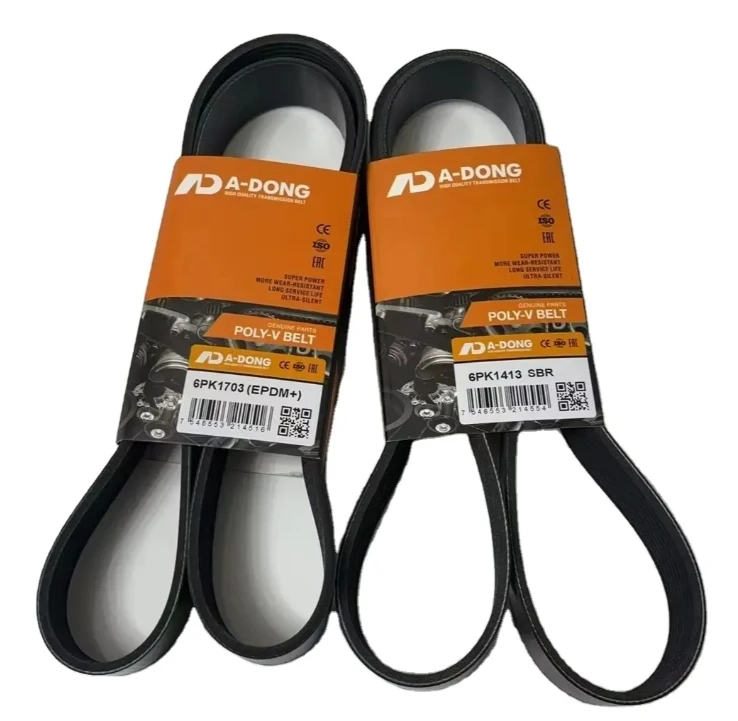
High-Performance pk belt Solutions for the US Automotive Market

Engineering precision rubber components to withstand the diverse climatic demands of North American roads, ensuring maximum power transmission and durability.

High-Performance pk belt Solutions for the US Automotive Market

Our advanced rubber parts manufacturing process delivers OEM-grade precision for the demanding US transportation sector, specializing in high-torque and high-temperature resistance.

Automotive Rubber Component Landscape in the United States

Analyzing the impact of regional geography and economy on belt durability.

The United States presents a unique challenge for rubber parts manufacturing due to its vast geographical diversity. From the freezing winters of the Midwest to the scorching heat of the Southwest, an alternator belt must maintain elasticity and grip across a temperature gradient of over 100 degrees Fahrenheit.

Economically, the US market is shifting toward higher efficiency and lower maintenance intervals. This has increased the demand for premium auto v belt designs that reduce slippage and noise, catering to both the massive fleet of light-duty trucks and the growing urban commuter vehicle segment.

Furthermore, the stringent emissions and fuel economy standards in North America drive the need for precision-engineered belts. Reducing frictional losses through advanced EPDM rubber compounds is now a critical requirement for any supplier entering the US automotive aftermarket.

Evolution of Rubber Transmission Technology

From traditional neoprene to high-performance synthetic polymers.

Market Development History

In the mid-20th century, US vehicles relied heavily on basic rubber compounds that suffered from rapid ozone cracking and thermal degradation. The introduction of the classic auto rubber timing belt marked a pivotal shift toward synchronized valve timing, enabling the development of more powerful overhead cam engines.

By the 1990s, the industry transitioned toward Poly-V profiles. This era saw the widespread adoption of the pk belt, which allowed multiple accessories—such as the alternator and AC compressor—to be driven by a single, compact belt, significantly reducing engine bay congestion.

Entering the 2010s, the focus shifted to material science. The move to EPDM (Ethylene Propylene Diene Monomer) provided superior heat resistance and a longer service life, reducing the frequency of replacements for high-mileage American drivers.

Future Development Trends

Smart Wear Sensing

Integration of conductive fibers into rubber matrices to allow real-time monitoring of belt tension and wear via the vehicle's ECU.

Eco-Friendly Bio-Polymers

Developing sustainable rubber alternatives to reduce the carbon footprint of the manufacturing process without sacrificing tensile strength.

Hybrid-Drive Optimization

Designing belts specifically for the stop-start cycles of hybrid vehicles, which create unique torque spikes and thermal fluctuations.

Strategic Industry Outlook for US Rubber Parts

Forecasting the trajectory of power transmission components through 2030.

Material Evolution
Shift toward high-modulus synthetic fibers to minimize stretch under extreme US towing loads.
Digital Precision
Using AI-driven mold design to optimize the rib geometry for noise reduction (NVH).
Diversification
Expanding into high-performance motorcycle belt systems for the luxury touring segment.
Logistics Efficiency
Implementation of JIT (Just-In-Time) delivery for US-based assembly plants to reduce overhead.

Industry Outlook

Google search trends indicate a rising interest in "long-life automotive belts" and "heavy-duty rubber components" across the US. This reflects a consumer shift toward longevity over cheap replacements, forcing manufacturers to prioritize durability and heat dissipation.

We anticipate that the integration of smart materials will become a standard for premium rubber parts, allowing US fleet managers to predict failures before they occur, thereby minimizing downtime for logistics networks.

Localized Application Scenarios in North America

Real-world deployment of our rubber components across the United States.

01. Long-Haul Logistics in the Midwest

Deployment of reinforced alternator belt systems for semi-trucks navigating extreme temperature swings from Minnesota to Kansas.

02. Luxury Touring Motorcycles in California

Custom-engineered motorcycle belt drives for high-displacement cruisers, focusing on smooth power delivery and low acoustic noise.

03. Heavy-Duty Pickups in Texas

Using high-tension pk belt configurations for Ford and Chevy trucks used in oil field operations, ensuring reliability under heavy load.

04. Urban Ride-Sharing Fleets in New York

Providing high-cycle auto v belt replacements that withstand the frequent stop-and-go thermal stress of NYC traffic.

05. Performance Tuning in the Sun Belt

Installing precision auto rubber timing belt kits for enthusiast vehicles that require strict timing accuracy under high RPMs.

Brand Story

Global Development Journey of Xingtai Hawk Rubber and Plastic Products Co., Ltd.

Foundation and Core Focus

Founded with a vision to solve the chronic failure of industrial rubber parts, we started by perfecting the vulcanization process for high-durability belts.

Technical Breakthroughs

We pioneered the use of reinforced synthetic cores, solving the common issue of belt stretching in high-torque automotive applications.

Global Market Entry

Expanding into the North American market, we adapted our formulations to meet the strict ASTM standards required for US automotive parts.

Innovation Leadership

Investing in automated precision cutting and molding, we achieved micron-level accuracy for our timing and PK belt series.

Sustainable Future

Today, our mission is to merge high-performance rubber engineering with eco-friendly materials for a greener global transport industry.

Complete Power Transmission Portfolio for the US Market

Comprehensive rubber solutions ranging from light-duty motorcycles to heavy-duty commercial vehicles.

Common Questions Regarding Automotive Belts in the USA

Technical insights to help US vehicle owners and distributors.

How often should I replace an alternator belt in extreme US climates?

In regions with extreme heat or cold, we recommend a visual inspection every 15,000 miles and replacement every 60,000 miles to prevent sudden failure.

What are the signs that my auto v belt is slipping?

Common signs include a high-pitched squealing sound upon startup or during acceleration, and visible glazing or cracking on the belt ribs.

Can a worn auto rubber timing belt cause engine failure?

Yes, in interference engines, a timing belt snap causes valves to hit pistons, leading to catastrophic engine failure. Timely replacement is critical.

Is a motorcycle belt better than a chain drive for touring?

Rubber belts offer quieter operation and require virtually no lubrication, making them ideal for long-distance US touring compared to chains.

What is the difference between a V-belt and a pk belt?

V-belts have a wedge shape for high torque, while PK belts are multi-ribbed, offering more surface area for efficiency and less slip in compact spaces.

How do I choose the right rubber part for my specific US vehicle model?

We recommend checking your vehicle's OEM specifications or providing your VIN to our technical team to ensure a perfect fit and optimal tension.

Get Expert Rubber Engineering Support

Ready to optimize your power transmission? Our engineers are available to support your business across the United States.

Contact Us Now

If you are interested in our products, you can choose to leave your information here, and we will be in touch with you shortly.