
Mobile Phone
+8615369985502
Call Us
+8615369985502
E-mail
mike@hawkbelt.com

High-Performance pk belt Solutions for Austrian Automotive Engineering

Precision-engineered rubber drive components designed to withstand the rigorous alpine climates and demanding industrial standards of Austria.

High-Performance pk belt Solutions for Austrian Automotive Engineering

Providing Austria's automotive sector with superior transmission reliability through advanced rubber compounding and precise geometry for optimal power transfer.

Current Landscape of Rubber Drive Components in Austria

Analyzing the intersection of Austrian precision engineering and extreme environmental demands.

In Austria, the automotive aftermarket and OEM sectors face unique challenges due to the drastic temperature fluctuations between the Alpine highlands and urban centers. This necessitates the use of an alternator belt that can maintain flexibility at -30°C while resisting thermal degradation during high-load uphill climbs.

The Austrian market is characterized by a high density of luxury vehicles and specialized mountain transport, increasing the demand for a high-precision auto v belt that reduces slip and noise, aligning with the local preference for quiet, efficient, and durable machinery.

Furthermore, the transition toward hybrid and electric powertrains in cities like Vienna and Graz is redefining the role of rubber parts, pushing manufacturers to develop materials that offer lower rolling resistance and higher environmental sustainability to meet strict EU emissions and waste standards.
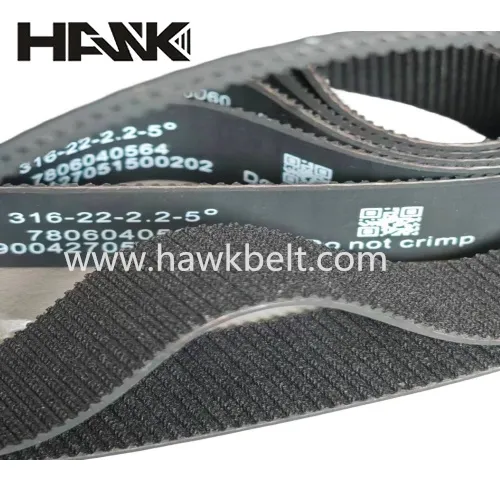
Evolution and Trajectory of Rubber Part Manufacturing

From basic vulcanization to intelligent polymer engineering in the heart of Europe.

Market Development History

During the early 20th century, Austrian rubber parts were primarily basic vulcanized compounds focusing on simple durability. By the 1970s, the introduction of synthetic EPDM rubber revolutionized the auto rubber timing belt, allowing for significantly longer service intervals and better resistance to oil and heat.

The 1990s saw a shift toward "Poly-V" profiles, where the pk belt became the industry standard for accessory drives, offering a higher power density and smaller pulley diameters compared to traditional V-belts.

Entering the 2010s, the focus shifted to "Zero-Maintenance" designs. The integration of high-tensile cords (Aramid and Polyester) ensured that belts could handle the increased torque of modern turbocharged engines without stretching.

Future Development Trends

Eco-Polymer Integration

Transitioning toward bio-based elastomers to reduce the carbon footprint of rubber production, matching Austria's aggressive "Green Deal" targets.

Smart-Wear Monitoring

Integrating conductive fibers into belt structures to allow real-time wear sensing via the vehicle's ECU, predicting failure before it occurs.

Ultra-Low Friction Compounds

Developing surface coatings that reduce parasitic loss, directly increasing the fuel efficiency of internal combustion engines.

Industry Trends and Future Outlook

Predicting the next wave of innovation in power transmission technology.

Climate-Adaptive Materials
Developing compounds that maintain a constant modulus of elasticity across temperature swings from -40°C to +120°C.
Hybrid Powertrain Compatibility
Optimizing belts for the intermittent load cycles typical of hybrid start-stop systems to prevent premature fatigue.
Noise-Damping Polymers
Integrating vibration-absorbing additives to meet the ultra-quiet cabin requirements of the luxury Austrian market.
Circular Economy Logistics
Implementing a closed-loop recycling system for spent rubber belts to align with Austrian environmental laws.

Industry Outlook

Over the next 3-5 years, we anticipate a surge in demand for high-spec motorcycle belt components as urban mobility in Austria shifts toward premium electric scooters and high-performance touring bikes.

Google search trends indicate a growing interest in "sustainable automotive parts" within Europe. Consequently, the manufacturing focus will shift from purely mechanical performance to "sustainable performance," where the longevity of the rubber part directly correlates to its environmental impact.

Localized Application Scenarios in Austria

Real-world deployments of high-durability rubber parts across diverse Austrian terrains.

01. Alpine Logistics & Transport

Heavy-duty delivery vehicles operating in the Alps require reinforced belts to handle high-torque loads during steep ascents and descents in freezing conditions.

02. Vienna Urban Micro-Mobility

Electric motorcycles and scooters in Vienna utilize specialized belts for silent operation and minimal maintenance in stop-and-go city traffic.

03. Industrial Machinery in Styria

The automotive manufacturing hubs in Styria employ high-precision drive belts for assembly line synchronization where zero-slip is critical.

04. Luxury Vehicle Maintenance

High-end automotive workshops in Salzburg require OE-grade replacement belts that meet the strict tolerances of German and Italian luxury brands.

05. Agricultural Equipment in Lower Austria

Tractors and harvesting machinery operating in rural plains require oil-resistant belts that can withstand dust and organic contaminants.

Brand Story

Global Development Journey of Xingtai Hawk Rubber and Plastic Products Co., Ltd.

Foundation of Excellence

Established with a commitment to solving the most stubborn durability issues in rubber parts, focusing on high-precision molds.

Technical Breakthroughs

Developed proprietary EPDM compounding techniques that significantly increased the lifespan of automotive drive belts.

European Market Expansion

Aligned production standards with EU regulations, successfully penetrating the demanding Austrian and German automotive markets.

Innovation Leadership

Invested in automated laser-cutting and testing facilities to ensure every belt meets micron-level precision.

Sustainability Vision

Pioneering the use of recyclable rubber composites to lead the industry toward a greener future.

Comprehensive Drive Solution Portfolio for Austria

A full range of rubber transmission components tailored for the Austrian automotive and industrial sectors.

Common Questions for Rubber Belt Applications in Austria

Expert answers to technical queries regarding belt selection and maintenance.

How does the Austrian winter affect my alternator belt lifespan?

Extreme cold can make standard rubber brittle, leading to cracks. We recommend using EPDM-based belts which maintain flexibility in sub-zero temperatures, preventing snap-failures during cold starts.

What is the main difference between an auto v belt and a pk belt?

An auto v belt has a wedge shape for high-torque, low-speed applications, while a pk belt (Poly-V) has multiple small ribs, offering higher efficiency and better grip for accessory drives.

When should I replace my auto rubber timing belt in a high-mileage vehicle?

Typically every 60,000 to 100,000 km. However, for vehicles frequently driving in the Austrian mountains, we suggest inspection every 40,000 km due to increased engine stress.

Are motorcycle belt replacements compatible across different brands?

While some dimensions are standard, tooth pitch and material composition vary. Always verify the specific part number to ensure optimal power transmission and safety.

How to identify a worn-out pk belt before it fails?

Look for "glazing" (shiny spots), fraying at the edges, or audible squealing during acceleration. In Austria, check for salt-induced corrosion on pulleys that might wear the belt faster.

Can I use a standard V-belt for high-performance automotive applications?

Not recommended. High-performance engines require the precision and heat resistance of specialized rubber compounds to avoid slippage and premature wear.

Get Expert Rubber Part Consulting

Our engineers are ready to provide customized drive solutions for your business needs in Austria.

Contact Us Now

If you are interested in our products, you can choose to leave your information here, and we will be in touch with you shortly.