
Mobile Phone
+8615369985502
Call Us
+8615369985502
E-mail
mike@hawkbelt.com

High-Performance auto v belt Solutions for Pakistan's Automotive Market

Engineered for endurance in extreme temperatures, providing unmatched reliability for the diverse transport landscape of Pakistan.

The State of Rubber Belt Demand in Pakistan

Analyzing the intersection of climate challenges and automotive maintenance needs.

Pakistan's unique geography, ranging from the humid coastal areas of Karachi to the extreme heat of Punjab, places immense stress on rubber components. The frequent temperature fluctuations accelerate the degradation of the alternator belt, leading to premature cracking and slipping in heavy-duty commercial vehicles.

Furthermore, the high density of two-wheelers in urban centers like Lahore and Islamabad has created a massive surge in demand for a durable motorcycle belt. Local workshops are increasingly seeking replacements that can withstand dust accumulation and high friction without sacrificing fuel efficiency.

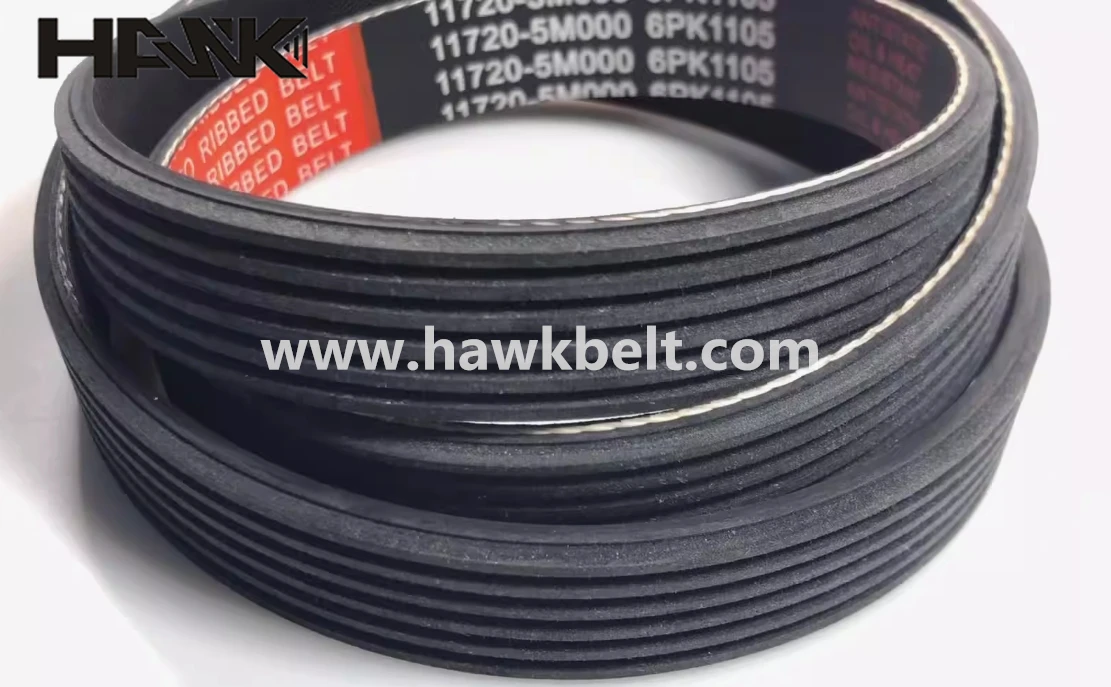
Economically, the shift towards modern engine specifications in imported vehicles has transitioned the market from basic belts to precision-engineered pk belt systems, which offer higher power transmission density and reduced noise levels for passenger cars.

Evolution of Rubber Transmission Components

From conventional rubber molding to advanced synthetic polymer composites.

Market Development History

In the 1990s and early 2000s, the Pakistani market relied heavily on standard organic rubber belts. These were prone to rapid thermal expansion, often resulting in frequent tension adjustments for an auto v belt to prevent slipping during peak summer months.

Between 2010 and 2020, the introduction of EPDM (Ethylene Propylene Diene Monomer) technology revolutionized the industry. This period saw the widespread adoption of the auto rubber timing belt, which provided significantly better resistance to heat and ozone than traditional neoprene.

Currently, the market has entered the "Precision Era," where multi-ribbed designs and high-tensile cord reinforcements are standard, ensuring that power delivery remains consistent even under the heavy loads typical of Pakistani logistics fleets.

Future Development Trends

Nano-Composite Integration

Integration of carbon nanotubes into the rubber matrix to increase wear resistance by 30%, reducing the replacement frequency of critical engine belts.

Eco-Friendly Bio-Rubbers

A shift toward sustainable, biodegradable polymers to align with global green initiatives while maintaining the mechanical strength required for heavy-duty use.

Smart Monitoring Compatibility

Development of belts compatible with sensor-based wear detection, allowing fleet managers in Pakistan to predict failures before they occur.

Industry Trends and Future Outlook

Strategic foresight for the rubber parts manufacturing sector in South Asia.

Extreme Heat Resistance
Developing polymers specifically tailored for the 45°C+ environments of Punjab and Sindh to prevent rubber hardening.
Precision Ribbing Technology
Advancing the production of PK-style belts to ensure zero-slip power transfer in modern EFI engines.
Anti-Dust Coating
Applying specialized hydrophobic coatings to reduce dust adhesion, common in Pakistan's rural roads.
OEM Standardization
Aligning local production with international ISO standards to support Pakistan's growing auto-export ambitions.

Industry Outlook

Based on current search trends and automotive registration data in Pakistan, we expect a shift toward hybrid-compatible rubber parts. As electric and hybrid vehicles slowly enter the market, the demand for specialized, low-noise belts will outpace traditional combustion engine components.

The integration of local manufacturing hubs with advanced global technology will likely reduce the reliance on imports, fostering a more resilient supply chain for critical parts like timing belts and V-belts across the region.

Localized Application Scenarios in Pakistan

Practical implementations of our rubber solutions across diverse Pakistani environments.

01. Inter-City Logistics Fleets

Heavy-duty trucks operating between Karachi and Peshawar require high-tensile belts that can withstand constant load and high ambient heat without stretching.

02. Urban Motorcycle Commuting

In densely populated cities like Lahore, our belts provide the high-frequency start-stop durability needed for millions of daily motorcycle trips.

03. Agricultural Machinery in Punjab

Tractors and irrigation pumps operating in dusty fields utilize our reinforced V-belts to ensure consistent power delivery during harvest seasons.

04. Luxury Passenger Vehicles

Modern imported cars in Islamabad utilize precision pk belt systems for quiet operation and optimal fuel economy.

05. Public Transport Buses

Local bus operators rely on our long-life alternator belts to reduce downtime and maintenance costs in grueling urban traffic conditions.

Brand Story

Global Development Journey of Xingtai Hawk Rubber and Plastic Products Co., Ltd.

Foundation of Excellence

Started with a vision to solve the common problem of rapid belt wear in industrial machinery, focusing on raw material purity.

Technological Breakthrough

Mastered the EPDM vulcanization process, allowing us to produce belts that withstand extreme temperature swings.

Global Market Expansion

Expanded our footprint into the Asia-Pacific region, specializing in customized rubber parts for diverse automotive markets.

Quality Certification

Achieved international quality standards, ensuring every belt produced meets rigorous safety and performance benchmarks.

Commitment to the Future

Now focusing on sustainable rubber manufacturing and AI-driven design to eliminate engine downtime globally.

Common Questions for Pakistan Customers

Expert answers to the most frequent technical queries regarding rubber belts.

How does the extreme heat in Pakistan affect my alternator belt?

High temperatures cause the rubber to lose plasticity and harden, leading to cracks. Using EPDM-based belts significantly extends life in hot climates.

What is the difference between a standard auto v belt and a pk belt?

A V-belt has a trapezoidal cross-section for high torque, while a PK belt is multi-ribbed, allowing for more contact surface and higher efficiency in modern engines.

When should I replace my auto rubber timing belt in a high-mileage vehicle?

Typically every 60,000 to 100,000 km, but in dusty environments like Pakistan, we recommend a visual inspection every 20,000 km.

Can a motorcycle belt be used for different brands of bikes?

Belts are designed for specific pulley diameters and lengths. It is crucial to match the exact OEM specifications for safety and performance.

Why is my belt squealing during the humid monsoon season?

Moisture can reduce friction between the belt and pulley. Our belts feature specialized compounds to maintain grip even in humid conditions.

How to identify a genuine high-quality rubber belt?

Check for consistent ribbing, a smooth finish without surface bubbles, and clear branding that matches the technical specifications.

Ready to Upgrade Your Performance?

Our technical team is ready to provide customized rubber solutions for your business in Pakistan.

Contact Us Now

If you are interested in our products, you can choose to leave your information here, and we will be in touch with you shortly.