
Mobile Phone
+8615369985502
Call Us
+8615369985502
E-mail
mike@hawkbelt.com

Advanced pk belt Solutions for Romania's Automotive Sector

Engineering high-performance rubber transmission components designed for the diverse climatic and industrial demands of the Romanian market.

Advanced pk belt Solutions for Romania's Automotive Sector

Providing Romania with precision-engineered rubber parts, from heavy-duty industrial drives to high-speed automotive transmission systems, ensuring maximum durability and efficiency.

The Current State of Rubber Parts Manufacturing in Romania

Analyzing the intersection of automotive legacy and modern rubber technology in Eastern Europe.

Romania possesses a deep-rooted automotive heritage, particularly in the manufacturing of passenger cars and commercial vehicles. However, the local demand for high-specification components like the alternator belt has shifted toward high-performance materials that can withstand extreme temperature fluctuations, from harsh Carpathian winters to hot continental summers.

The current market is characterized by a transition from basic rubber compounds to EPDM-based polymers. This shift is essential for components like the auto v belt, which must maintain tension and resist cracking under the high-stress cycles common in Romania's diverse road terrains and urban stop-and-go traffic.

Furthermore, the rise of the logistics sector in cities like Bucharest and Cluj-Napoca has increased the requirement for industrial-grade rubber parts. There is a growing emphasis on E-E-A-T (Experience, Expertise, Authoritativeness, and Trustworthiness) in sourcing, as fleet operators now prioritize certified reliability over low-cost generic alternatives to reduce vehicle downtime.
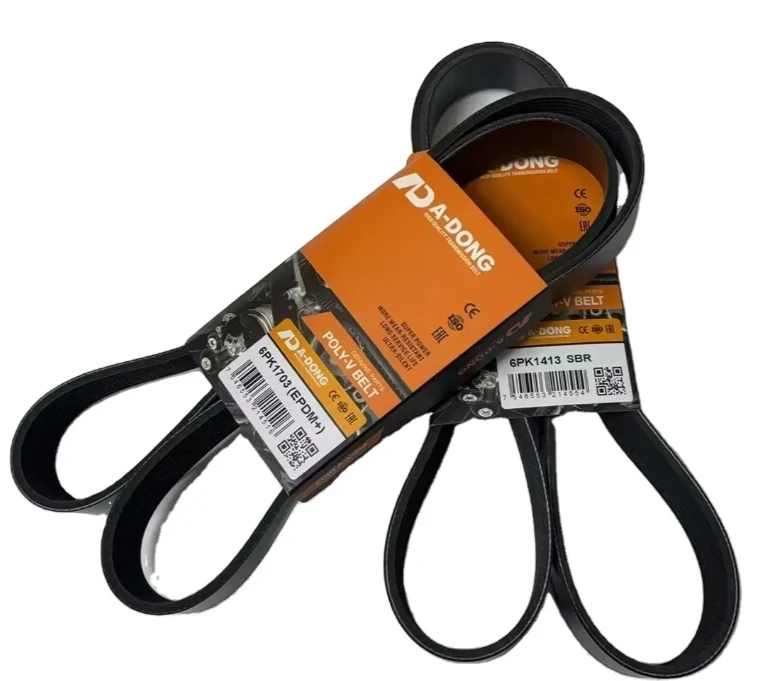
Evolution and Technical Trajectory of Transmission Belts

From basic vulcanized rubber to precision-engineered synthetic polymers.

Market Development History

In the early 2000s, the Romanian market relied heavily on standard vulcanized rubber belts. These traditional components were prone to rapid wear and lacked the thermal stability required for modern high-compression engines, often leading to premature failure of the auto rubber timing belt in extreme cold.

By 2010-2015, the industry saw a technological pivot toward multi-ribbed designs. The introduction of the "Poly-V" profile allowed for higher power transmission in smaller spaces, significantly improving the efficiency of water pumps and alternators across the European automotive fleet.

Since 2018, the integration of advanced aramid fibers and specialized coatings has become the standard. This evolution has enabled components such as the motorcycle belt to offer significantly higher torque capacity and lower noise emissions, meeting the stricter EU environmental and noise pollution regulations.

Future Development Trends

Carbon-Infused Elastomers

We predict a shift toward carbon-nanotube reinforced rubber to increase tensile strength and heat dissipation, extending the lifecycle of belts by up to 30%.

Smart Monitoring Integration

Integration of embedded wear-sensors that communicate with vehicle ECU systems to predict failure before it occurs, moving from scheduled to predictive maintenance.

Eco-Friendly Bio-Polymers

Alignment with EU Green Deal targets will drive the adoption of biodegradable or recycled synthetic rubbers without compromising the mechanical properties of the belt.

Industry Trends and Future Outlook

Navigating the shift toward electrification and sustainable materials in rubber manufacturing.

High-Thermal Resilience
Developing compounds that maintain elasticity from -40°C to +150°C to suit Romania's climatic extremes.
Precision Ribbing Tech
Implementation of laser-cut ribbing to minimize slip and noise in high-RPM engines.
Hybrid-Vehicle Adaptation
Designing belts for the unique torque surges and stop-start cycles of hybrid powertrains.
Sustainable Sourcing
Reducing carbon footprints through lean manufacturing and eco-rubber blends.

Industry Outlook

Google search trends for "efficient automotive parts" and "long-life rubber belts" in Romania indicate a clear shift toward quality-driven consumption. As the automotive sector integrates more electronics, the reliability of the mechanical links—like the belts driving the charging systems—becomes more critical than ever.

In the next 3-5 years, we anticipate that the Romanian market will move away from generic replacements toward OEM-equivalent, precision-engineered solutions. This will be driven by the increasing average age of the vehicle fleet and the need for parts that can extend the life of existing internal combustion engines during the transition to EV.

Localized Application Scenarios in Romania

Real-world implementations of our rubber solutions across various Romanian sectors.

1. Heavy-Duty Logistics in Bucharest Traffic

Our reinforced pk belt is deployed in last-mile delivery fleets, resisting the extreme heat build-up caused by constant idling and stop-and-go cycles in urban congestion.

2. Agricultural Machinery in the Danube Plain

High-torque auto v belt solutions are used in farming equipment, providing the necessary grip and durability to operate in dusty and debris-heavy environments.

3. Mountainous Terrain Vehicle Maintenance

Specialized auto rubber timing belt replacements for 4x4 vehicles operating in the Carpathian Mountains, ensuring precision timing despite extreme cold starts.

4. Urban Mobility and Delivery Scooters

High-friction motorcycle belt systems implemented in courier fleets in Cluj and Timișoara to maximize acceleration and reduce replacement frequency.

5. Industrial Manufacturing Plant Drives

Customized alternator belt configurations for industrial generators and HVAC systems in Romanian factories to ensure 24/7 operational uptime.

Brand Story

The Global Development Journey of Xingtai Hawk Rubber and Plastic Products Co., Ltd.

Foundational Excellence

Established with a focus on raw material purity, we began by solving the core issue of rubber degradation in industrial belts.

Technical Diversification

Expanded our R&D to include automotive-grade polymers, mastering the complexity of multi-ribbed belt geometries.

Global Market Expansion

Brought our precision engineering to the European market, tailoring products to meet the strict standards of EU automotive regulations.

Innovation Leadership

Invested in automated vulcanization lines to ensure zero-defect production and absolute consistency across all batches.

Sustainable Future

Currently leading the transition toward eco-friendly rubber manufacturing to support the global goal of carbon neutrality.

Frequently Asked Questions in Romania

Expert answers to common technical queries regarding rubber belt performance and maintenance.

How often should I replace my alternator belt in Romania's climate?

Given the temperature swings in Romania, we recommend a professional inspection every 20,000 km and replacement every 60,000 to 80,000 km to avoid sudden failure during winter cold snaps.

What is the advantage of a PK belt over traditional V-belts?

PK belts feature multiple ribs, which provide a larger surface area for contact. This results in higher power transmission efficiency, reduced slippage, and quieter operation compared to traditional V-belts.

Can an auto rubber timing belt be replaced without changing the tensioner?

It is highly discouraged. A worn tensioner can cause irregular pressure on the new timing belt, leading to premature wear or, in worst cases, belt jumping which can cause catastrophic engine failure.

Why do motorcycle belts wear faster in urban delivery environments?

Frequent acceleration and braking in cities like Bucharest create high heat and friction cycles. Using a high-performance composite rubber belt can significantly extend the service life.

How do I identify a failing auto v belt before it snaps?

Look for visual cues such as glazing (shiny appearance), longitudinal cracks, or fraying edges. Additionally, a high-pitched squealing sound during cold starts is a primary indicator of slippage.

Are EPDM rubber belts suitable for all vehicle types in Romania?

Yes, EPDM (Ethylene Propylene Diene Monomer) is the gold standard for automotive belts due to its superior resistance to heat, ozone, and weather, making it ideal for all vehicle types regardless of usage.

Request a Technical Consultation

Partner with the leading rubber parts manufacturer to optimize your automotive supply chain in Romania.

Contact Us Now

If you are interested in our products, you can choose to leave your information here, and we will be in touch with you shortly.